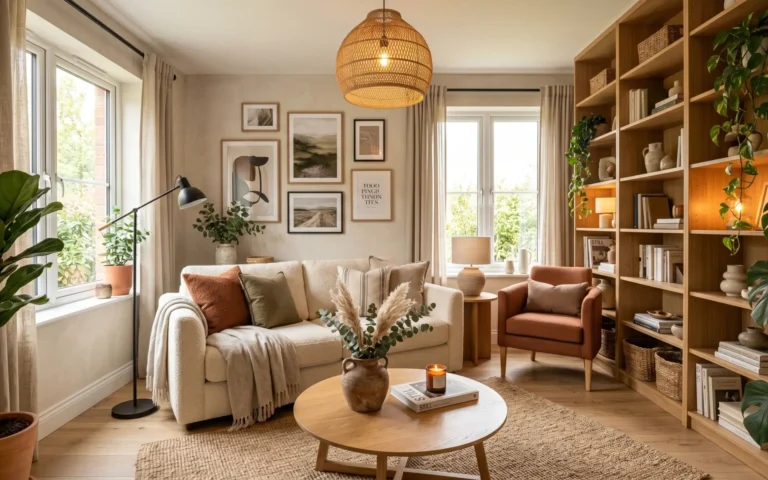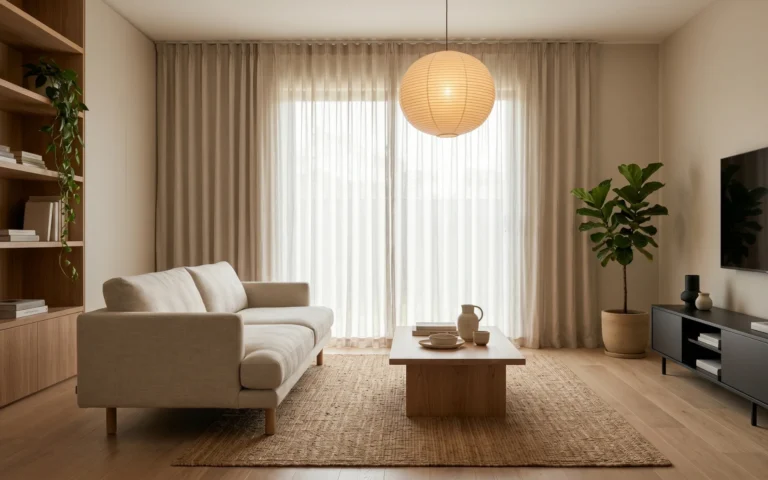
The Art of Timeless Living: How to Style a Modern Classic Living Room That Never Goes Out of Fashion
There is something deeply satisfying about walking into a living room that feels both current and enduring at the same time. A modern classic living room achieves exactly that, blending the refined elegance of traditional design with the clean, uncluttered sensibility of contemporary interiors. It is a balance that feels personal, polished, and genuinely livable. At Zendecora, the focus is always on sharing fresh inspiration for modern home decor ideas and interior styling trends that help homeowners, couples, and families create spaces they truly love. Whether you are redesigning a spacious family home or refreshing a compact apartment, the principles behind this timeless aesthetic remain the same: quality, intention, and beauty that lasts beyond every passing trend.
The Quiet Power of an Elegant Neutral Palette
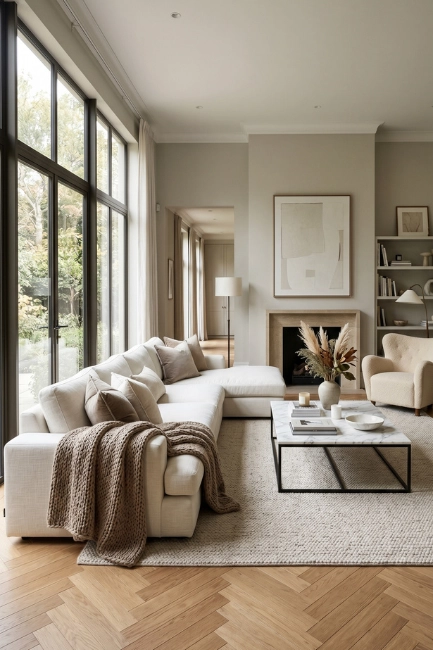
Neutral color palettes remain one of the most sophisticated choices for a modern classic living room, and their staying power is no accident. Shades of warm ivory, soft greige, muted taupe, and creamy white work together to create an atmosphere that feels simultaneously airy and grounded. These tones reflect natural light beautifully, making even modestly sized rooms feel expansive and calm. The key is layering multiple neutrals rather than relying on a single flat tone. Mixing textures such as linen, wool, and velvet within the same palette adds visual depth without introducing visual noise, keeping the overall look refined and intentional.
Wall Paneling and Molding as a Design Foundation
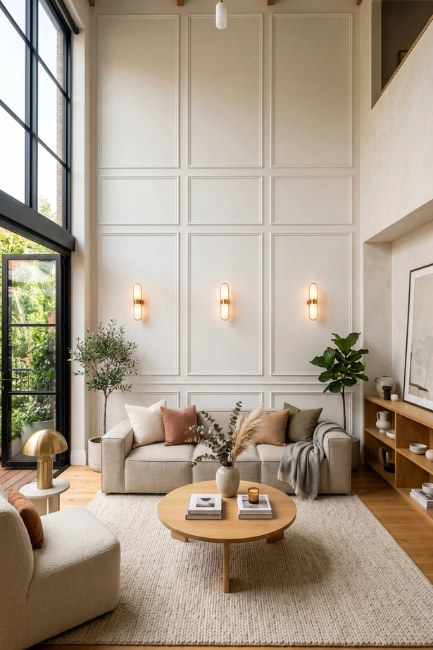
Few architectural details transform a living space as dramatically as classic wall paneling and decorative molding. In contemporary interiors, these elements are being reinterpreted in cleaner, more minimal forms. Picture board-and-batten paneling painted in a warm white, or slim rectangular panel molding framing a statement wall behind a sofa. These details add incredible depth and character to a room without demanding heavy furniture or bold color choices. When combined with modern furnishings, classic molding creates that signature tension between old and new that defines truly elevated interior design. It is an investment in the bones of your space that pays off for years.
Luxury Seating That Commands Attention
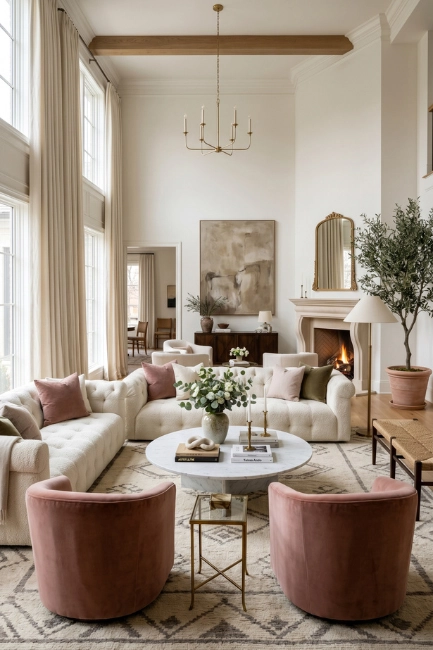
The seating arrangement in a refined living space is not just about comfort, it is about presence. Deep-seated sofas upholstered in bouclé, cashmere-blend fabric, or velvet instantly communicate a sense of luxury. Pairing a structured two-seater sofa with a pair of curvaceous accent chairs creates both symmetry and visual variety. In a modern classic living room, seating arrangements tend to be centered and conversational, often anchored by a substantial area rug that defines the zone. Tufted details, rolled arms, and turned legs add that classical character, while clean cushion proportions and minimal ornament keep the look thoroughly contemporary.
Marble and Stone Accents That Elevate Every Corner
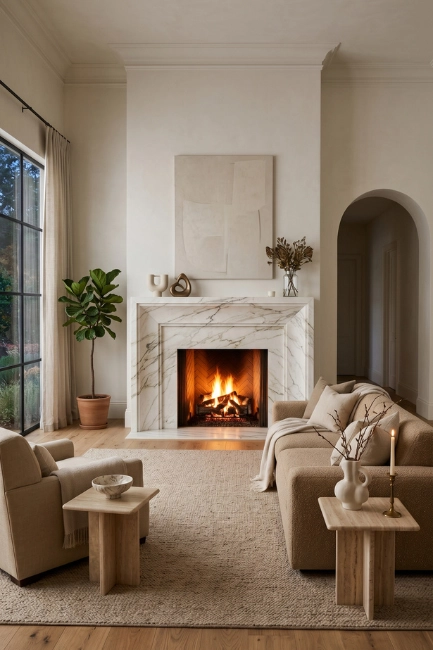
Marble has long been associated with classical grandeur, and in modern interiors it continues to earn its place with remarkable ease. Whether incorporated as a fireplace surround, a side table top, a console, or even as decorative objects, marble introduces a natural elegance that no manufactured material can fully replicate. Calacatta and Carrara varieties with their distinctive grey veining against a white ground remain perennial favorites. For a warmer look, travertine and beige stone add an earthy sophistication that pairs beautifully with linen and warm wood tones. Even a single marble accent piece is enough to shift the entire atmosphere of a room toward something genuinely luxurious.
Warm Layered Lighting for Depth and Atmosphere
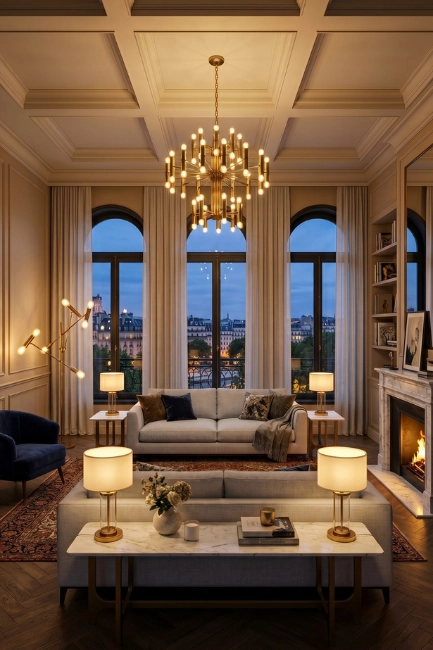
Lighting in a well-designed living room is never about a single overhead source. Truly sophisticated spaces layer multiple light sources at varying heights to create warmth, dimension, and mood. A statement chandelier or sculptural pendant anchors the ceiling level, while table lamps on side tables and console units bring light down to eye level. Floor lamps positioned in corners add a soft ambient glow that eliminates harsh shadows. In a modern classic interior, lighting fixtures themselves become part of the decor, with aged brass, antique bronze, or matte black finishes adding metallic interest. The result is a room that feels equally inviting during the day and beautifully atmospheric after dark.
High-Ceiling Living Rooms and the Art of Vertical Space
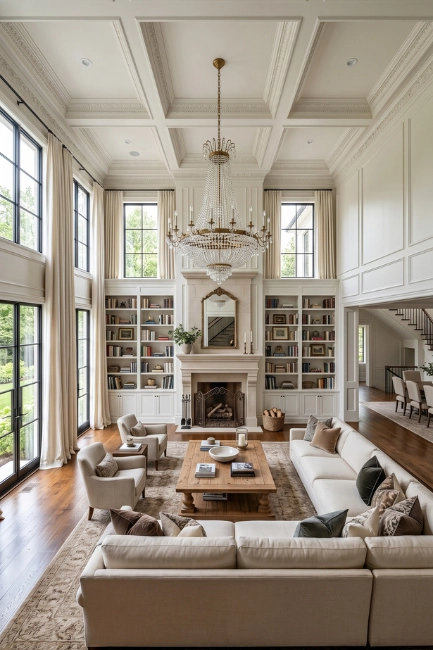
Rooms blessed with high ceilings offer a rare design opportunity that many homeowners underutilize. In a classic interior approach, vertical space is treated as a canvas. Tall floor to ceiling drapes hung close to the ceiling draw the eye upward and make the room feel even more voluminous. Built-in bookshelves that reach ceiling height add both drama and function. A statement chandelier with generous scale fills the vertical void without overwhelming the furniture below. Crown molding and decorative cornices at the ceiling line add the architectural finish that transitions the wall into the ceiling with elegance. These details together create a living room that feels genuinely palatial regardless of overall square footage.
Apartment-Friendly Modern Classic Living Room Ideas
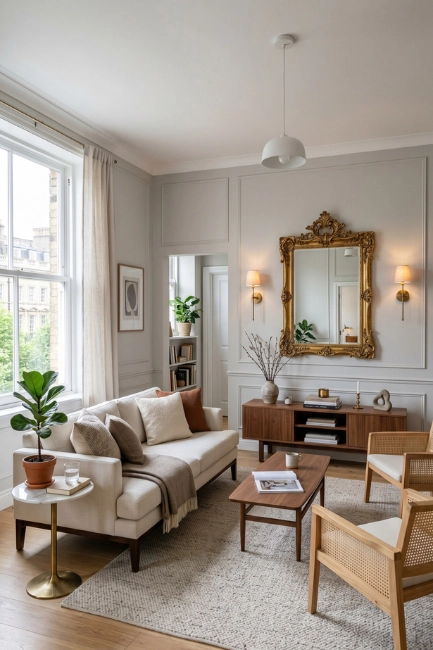
Not every stunning interior belongs to a grand estate. The modern classic living room aesthetic translates beautifully into apartment living with the right approach to scale and proportion. Opt for a sofa with a slightly slimmer profile and raised legs to keep sightlines open and the room feeling spacious. A single statement mirror in a classical frame can double the perceived depth of a compact space. Wall-mounted sconces replace floor-standing lamps to save precious floor area. A carefully edited selection of furniture and accessories rather than an abundance of pieces ensures the room feels curated and intentional. Even small apartments can achieve that sense of refined timeless elegance when each choice is made with care.
Sophisticated Color Palettes Beyond Basic White
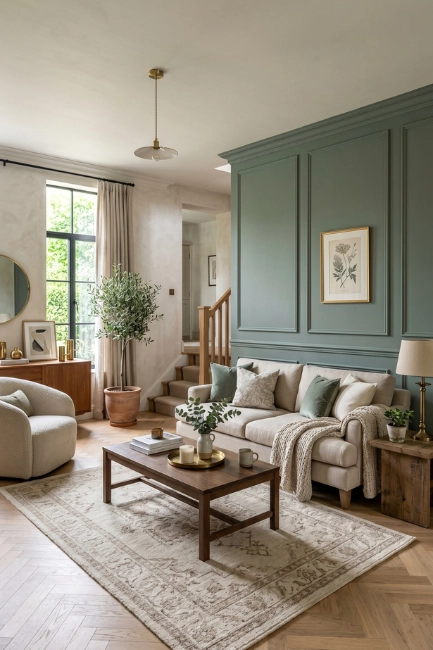
While neutral tones dominate the modern classic aesthetic, sophisticated modern classic living room also explore deeper, richer palettes used with restraint. Warm dusty sage, muted terracotta, French navy, and deep charcoal can anchor a room without losing that sense of refinement. The secret lies in using a deeper tone as a single focal accent, perhaps on one paneled wall or through a pair of upholstered chairs, while keeping surrounding surfaces soft and pale. This approach adds unexpected character and personality while maintaining the composed, elegant atmosphere that defines classic interior design. Thoughtfully chosen color can transform a beautiful room into one that feels genuinely unforgettable.
The Statement Coffee Table as a Design Anchor
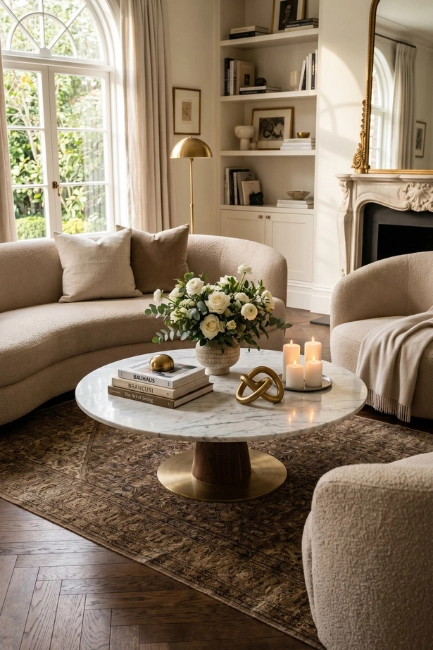
A coffee table is far more than a functional surface. In an modern classic living room, it serves as the visual and physical anchor of the entire seating arrangement. In modern classic interiors, the most compelling coffee table choices include oval and round forms in marble, aged brass, lacquered wood, or sculptural stone. Styling the surface with intention matters just as much as the table itself. A curated stack of oversized art books, a single sculptural object, a tray holding a candle and small decorative items, and a low seasonal floral arrangement come together to tell a story. The coffee table should feel styled but never overdone, edited but never empty.
Classical Symmetry in a Contemporary Setting
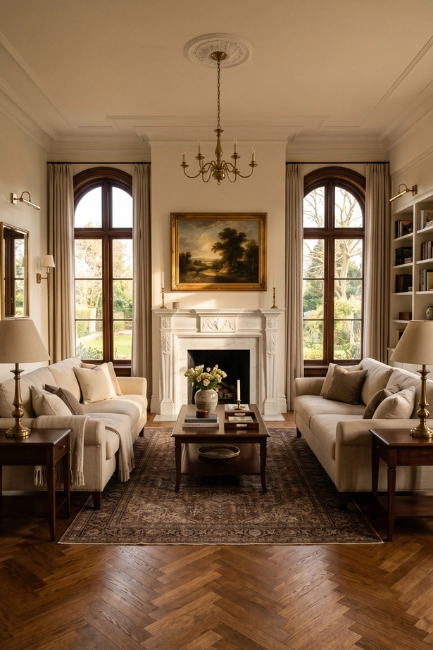
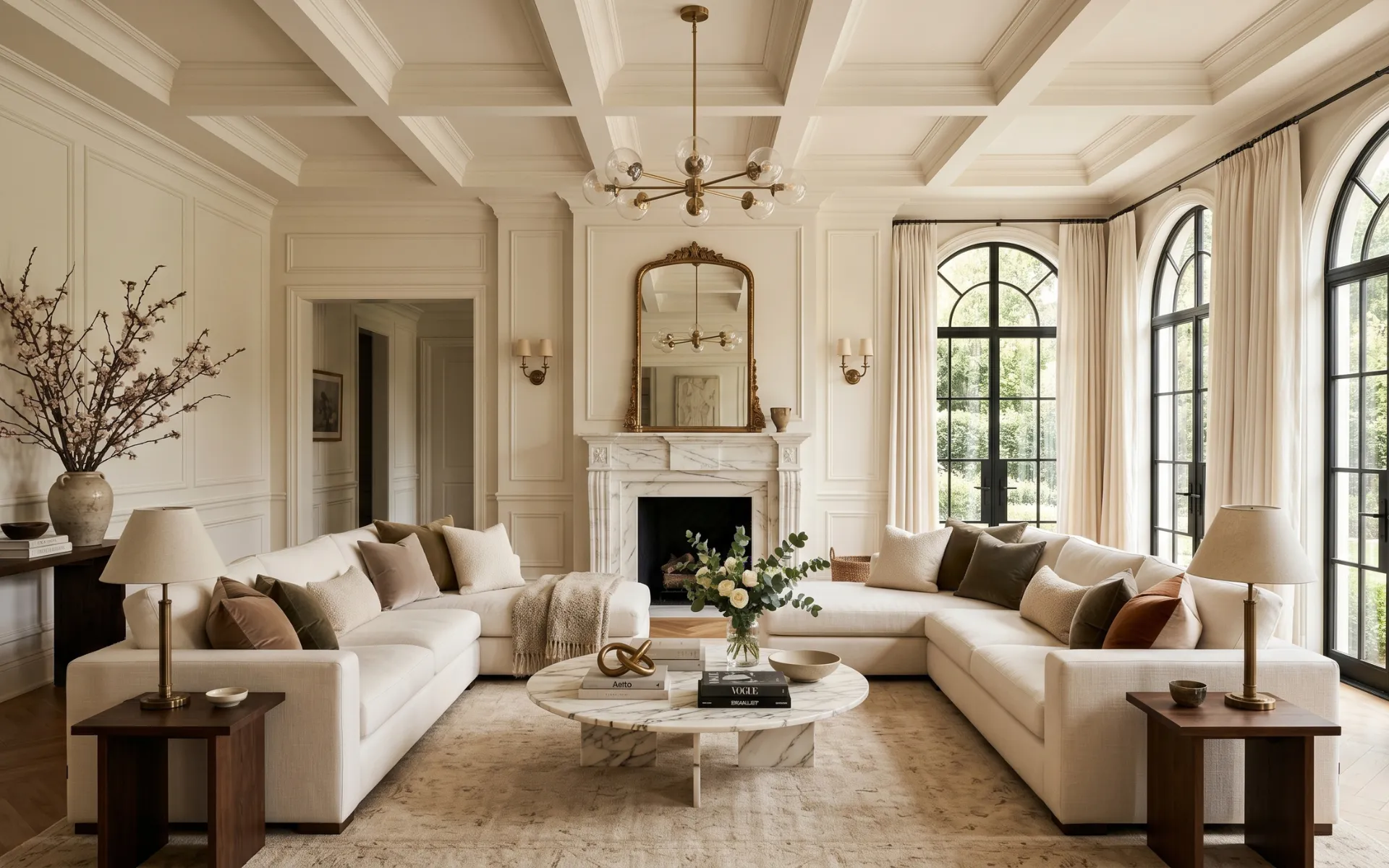
Symmetry is one of the oldest design principles in classical architecture and interiors, and it continues to carry enormous visual impact in modern spaces. A modern classic living room arrangement, with matching sofas facing each other, identical lamps flanking a sofa or fireplace, and centered artwork above a mantle, creates an immediate sense of order and calm. This visual balance reads as inherently sophisticated and is deeply satisfying to the eye. The modern interpretation softens strict symmetry with slight variations in texture or form, perhaps identical lamps on different table bases, or matching sofas in contrasting upholstery fabrics. This balance between precision and personality is what makes contemporary classic decor feel alive.
Curved Furniture Bringing Softness to Classic Spaces
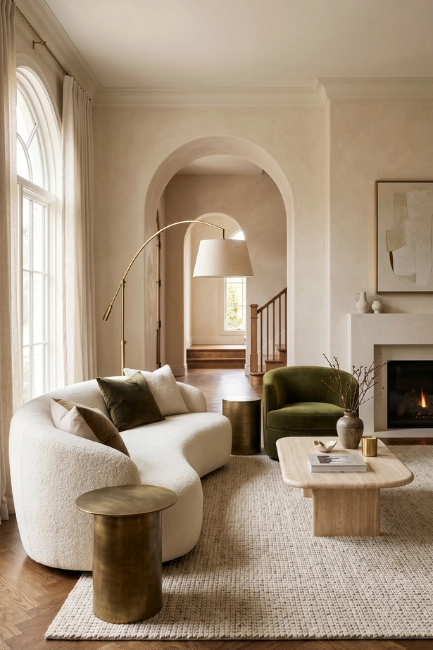
The curved furniture trend that has reshaped contemporary interiors over recent years finds its most natural home within the modern classic aesthetic. Rounded sofas, semicircular accent chairs, curved console tables, and arched doorway detailing all soften the harder architectural lines of a formal interior. Far from feeling casual, curves in a classic space introduce a sense of movement and luxury that feels deeply current. An arc floor lamp with its characteristic sweeping silhouette pairs beautifully with a tufted curved settee. When upholstered in textured bouclé or soft velvet, these pieces become both tactile and visual focal points that give the room a thoroughly modern personality within a classically structured setting.
Luxury Rug Layering for Texture and Definition
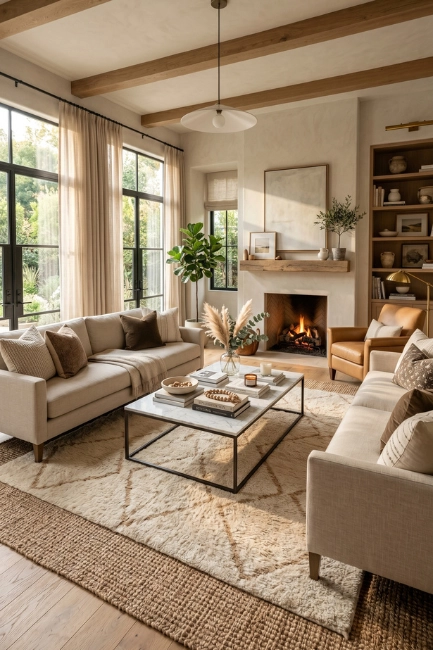
In refined interiors, rugs do far more than protect floors. They define zones, introduce texture, and add layers of visual warmth that are almost impossible to achieve through furniture alone. Layering rugs, placing a smaller decorative rug over a larger natural fiber base, is a technique that adds dimension and visual complexity without introducing color chaos. In a modern classic living room, a jute or sisal base layer topped with a soft wool or silk-blend patterned rug in warm tones creates an incredibly rich floor foundation. Geometric, trellis, and subtle floral motifs echo classical design references while reading as fresh and current. The layered rug approach also grounds the seating arrangement beautifully.
Art and Wall Decor Arrangements That Tell a Story
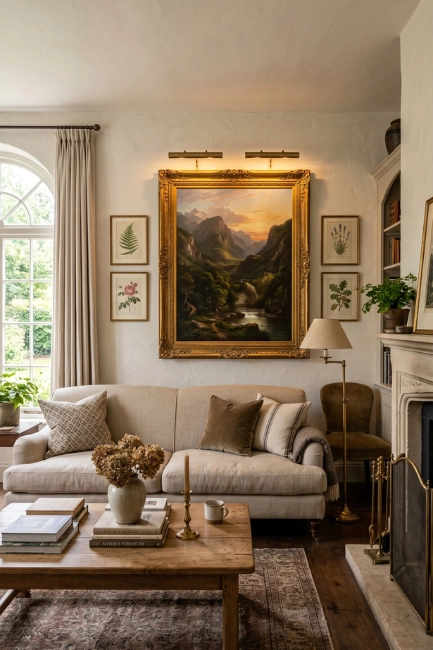
The walls of a beautifully modern classic living room deserve the same level of attention as its furniture. Art and wall decor arrangements have the power to introduce color, personality, and narrative into a refined space. In contemporary classic interiors, a single oversized oil painting or print in a classical gilt or natural wood frame above the sofa or fireplace remains eternally effective. Gallery wall arrangements using matching frame styles in varying sizes add character and intellectual interest. Sculptural wall objects, antique mirrors, and architectural prints all contribute to that layered, curated feeling that separates a truly designed space from a simply furnished one. The wall is never an afterthought here.
Refreshing Your Living Room With Seasonal Styling Updates
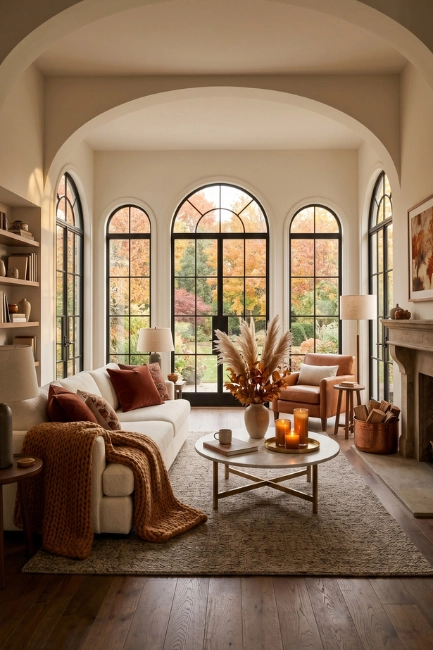
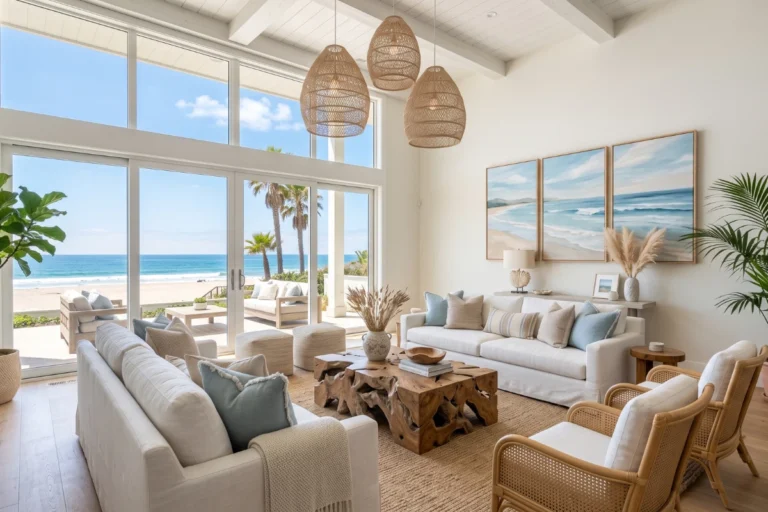
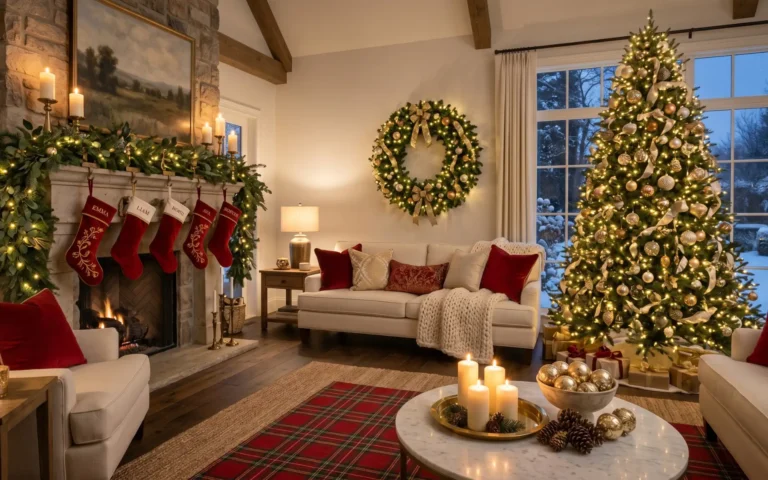
One of the most practical and enjoyable aspects of interior design is the ability to refresh a space with the seasons without undertaking a full redesign. In a modern classic living room, seasonal updates work beautifully because the foundational palette and furniture remain constant. In autumn, layer in deep terracotta velvet cushions, a chunky wool throw, and a bowl of seasonal botanicals. For summer, shift toward crisp white linen cushions, a light rattan tray, and simple leafy greenery. Winter calls for rich textures, candlelight, and perhaps a deep navy accent. Spring brings fresh florals, light throws, and natural light with sheers removed. These simple swaps keep the room feeling alive and personally connected to the rhythm of the year.
Fireplace-Centered Living Room Layouts
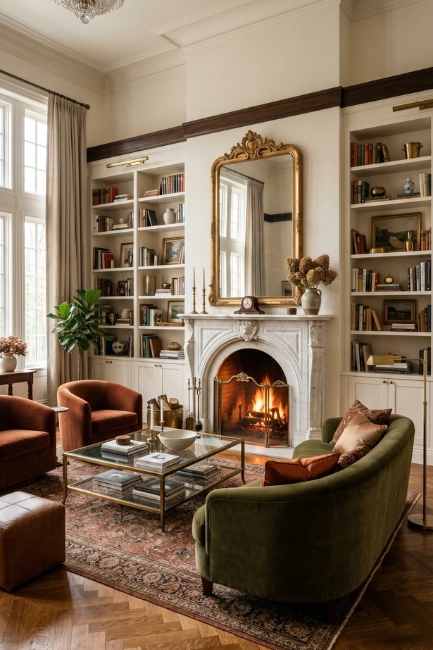
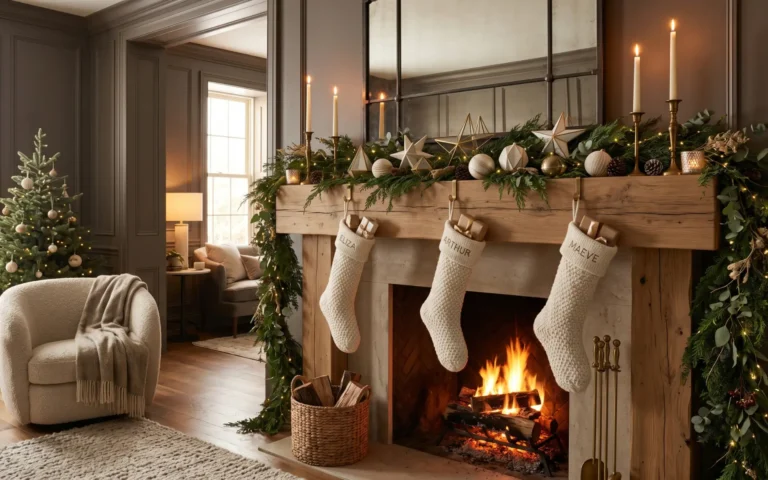
There is an undeniable romance and authority to a fireplace-centered living room. Whether the fireplace is a traditional wood-burning hearth or a contemporary gas insert framed in marble or limewashed plaster, it provides a natural focal point around which the entire room can be organized. Furniture is arranged to face or gather near the fireplace, creating an intimate and inviting conversation area. A statement mirror or large artwork above the mantle reinforces the focal hierarchy. Symmetrical shelving or cabinetry flanking the chimney breast adds architectural weight and practical storage. A well-designed fireplace wall transforms the entire energy of a modern classic living room, making it feel anchored, generous, and full of warmth.
Open-Concept Living Rooms With Defined Design Zones
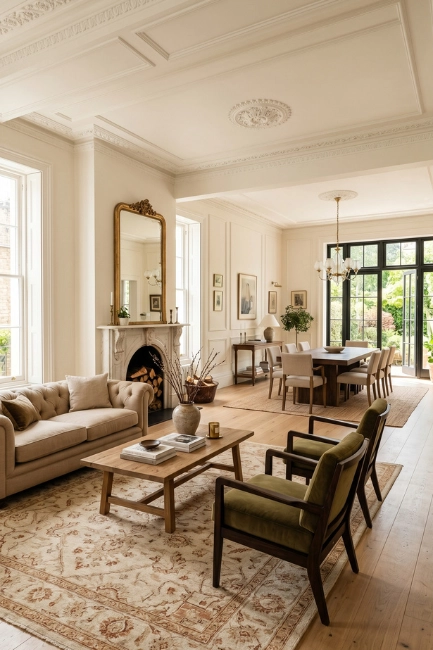
Open-plan living spaces present a specific design challenge: how to create a room that feels cohesive but also clearly delineated from dining and kitchen areas. In a modern classic living room, this is achieved through thoughtful use of rugs, furniture arrangement, and architectural framing rather than physical walls. A generously sized area rug defines the living zone immediately. Furniture placement facing inward rather than outward communicates the boundary of the conversation space. A transition in ceiling treatment, such as a coffered area above the seating zone, reinforces the separation beautifully. Consistent materials and a unified palette across the open floor plan maintain overall harmony while still allowing each zone its own distinct character and function.
Textured Fabrics and Upholstery Choices That Add Depth
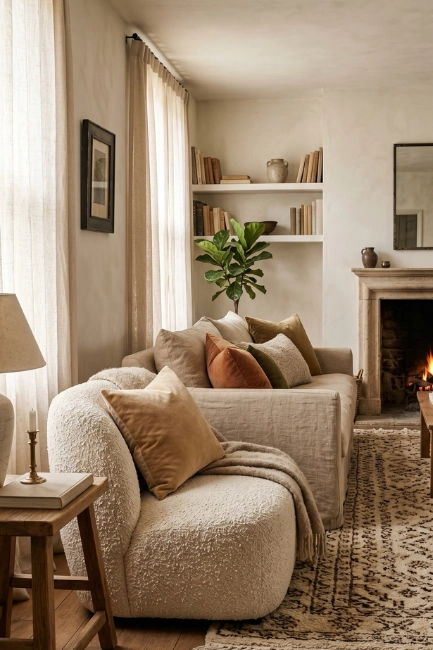
In elevated interior design, texture is often the single most powerful tool available, and it operates entirely through feel and visual richness rather than color. The modern classic living room embraces a rich vocabulary of textured fabrics: nubby bouclé on a curved armchair, smooth velvet on a pair of throw cushions, loosely woven linen on a sofa, and a hand-knotted wool rug underfoot. The interplay of these textures across a neutral or restrained palette creates a room that feels endlessly interesting without ever feeling busy. Upholstery detailing such as hand-stitching, button tufting, and contrast piping adds craftsmanship and quiet luxury that only becomes more beautiful with time.
Gold and Brass Accents as a Signature of Refinement
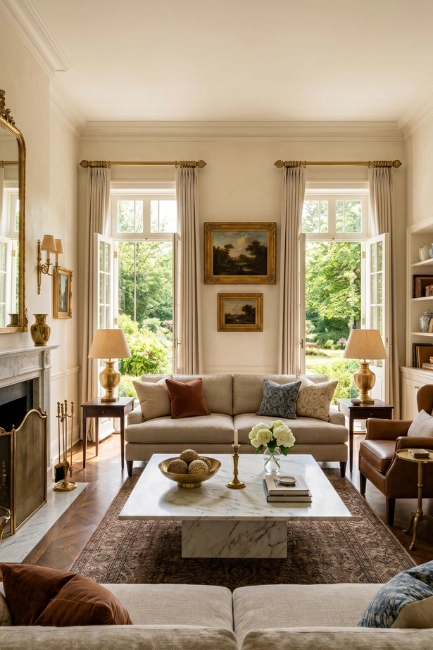
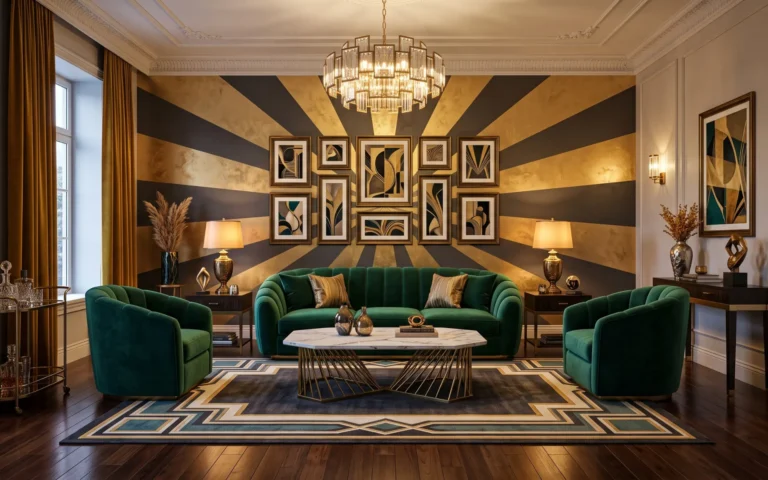
Few metallic finishes communicate elegance as effectively and warmly as gold and brushed brass. In a modern classic living room, these finishes appear throughout the space in a collected, naturally layered way rather than as a matching set. Brass appears in table lamp bases, picture frame edges, door hardware, curtain rod finials, decorative objects, and light fixtures. The warmth of these finishes acts as a visual thread that connects disparate elements of the room into a coherent whole. Aged or unlacquered brass adds a patina and depth that feels genuinely antique and artisan. When balanced against pale plaster, white molding, and natural linen, gold and brass accents become the quiet punctuation marks of a beautifully written interior.
Family-Friendly Luxury That Stands the Test of Time
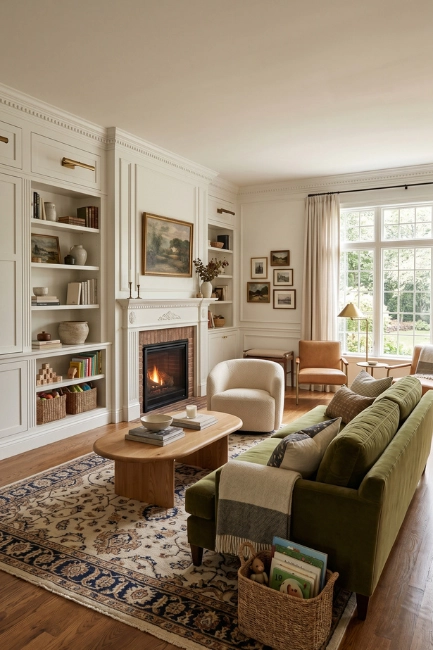
One of the most common misconceptions about elegant interior design is that it cannot coexist with the realities of family life. A well-designed modern classic living room can absolutely be both beautiful and functional for families with children of all ages. The key lies in choosing materials with intelligence: performance velvet and bouclé fabrics that resist staining and clean easily, solid hardwood or stone floors that age gracefully, and furniture with rounded edges that prioritize safety without sacrificing style. Storage is incorporated with elegance through built-in cabinetry and decorative baskets. Durable but luxurious area rugs in patterned designs handle everyday wear while maintaining the room’s visual sophistication. Beauty and practicality are never opposites when design decisions are thoughtful.
Timeless Interior Details That Define the Whole Room
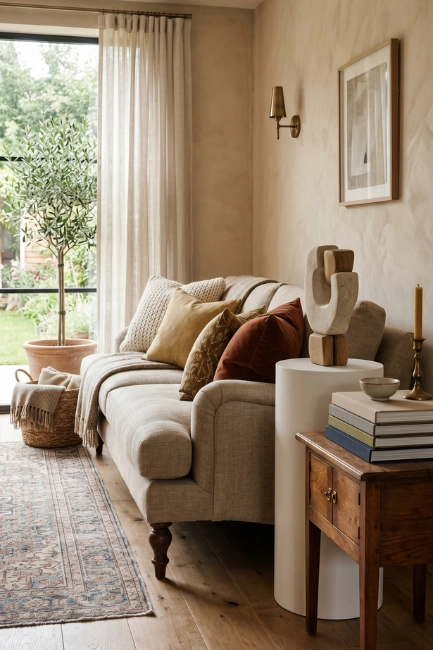
It is often the smallest and most considered details that elevate a modern classic living room from pleasant to extraordinary. In contemporary classic interiors, these details include things like hand-turned wooden legs on a sofa, a perfectly proportioned plinth beneath a sculptural object, a stack of linen-bound books arranged by height, and the precise alignment of cushions in contrasting but complementary fabrics. The door hardware, the trim profile around a window, the finish of a light switch plate, and the choice of tassel versus plain cushion edge all contribute to the overall experience of the space. Timeless interior details are never accidental. They reflect the care, knowledge, and confidence of someone who understands that great design lives in the specifics.
Conclusion
The modern classic living room is not defined by a single rule or a rigid formula. It is defined by an attitude toward design: one that values quality over quantity, timelessness over trend, and character over uniformity. Every element, from the marble accent piece to the layered rug, from the brushed brass lamp to the sculptural coffee table, contributes to a space that tells a story of refined living. Whether you are starting from scratch or simply refreshing what you already have, these ideas offer a powerful foundation for creating something genuinely lasting. Zendecora is always here to inspire your next chapter of beautiful, intentional home design.