The Calm You Have Been Craving Starts With Japandi Living Room Decor
Most living rooms are designed to impress. Japandi living room decor ideas are designed to restore. This beautifully balanced aesthetic blends the warmth of Scandinavian design with the discipline of Japanese minimalism, creating interiors that feel genuinely peaceful rather than performative. If you have been searching for a calmer, more considered way to style your living room, japandi living room decor is the answer that keeps delivering. At Zendecora, the focus is entirely on sharing modern home decor inspiration and interior styling trends that feel real and achievable. Every idea here is practical, beautiful, and rooted in the kind of intentional simplicity that makes a home feel like a true sanctuary.
Warm Neutral Color Palettes That Define Japandi Living Room Decor Ideas
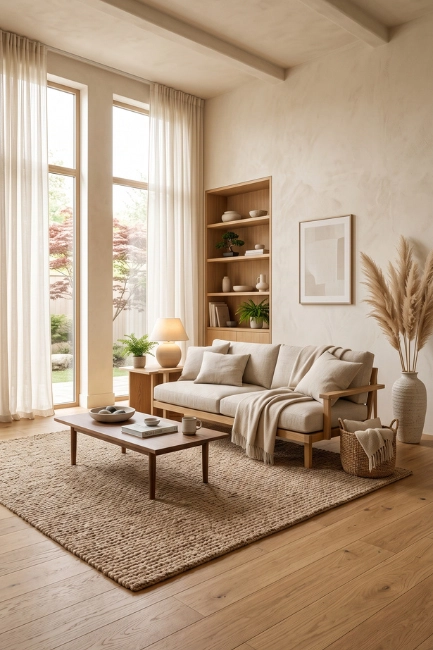
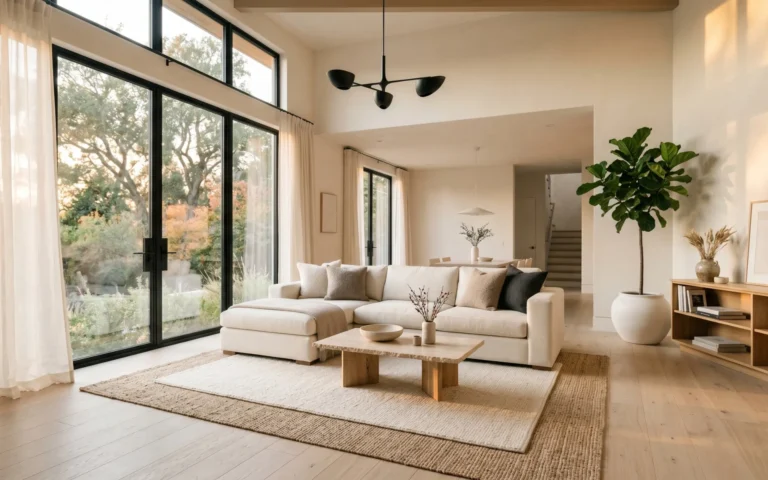
Color in japandi living room decor ideas is never loud and never cold. The palette lives within a carefully curated range of warm whites, soft creams, sandy beiges, warm taupes, muted charcoals, and the occasional dusty sage or muted terracotta used as a quiet accent. These tones work together because they reflect the natural materials they surround, making wood warmer, linen softer, and stone more grounded. Choose one dominant neutral for the walls and layer complementary shades through textiles, furniture, and accessories. The result is a living room that feels cohesive and deeply calm without any single element competing for attention.
Low Profile Wooden Sofa Frames That Set the Japandi Tone
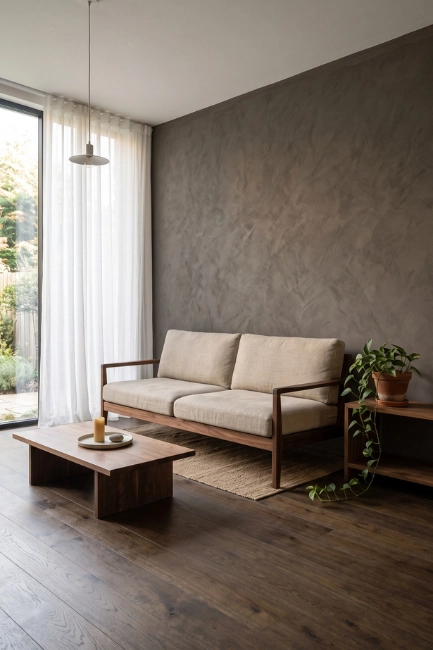
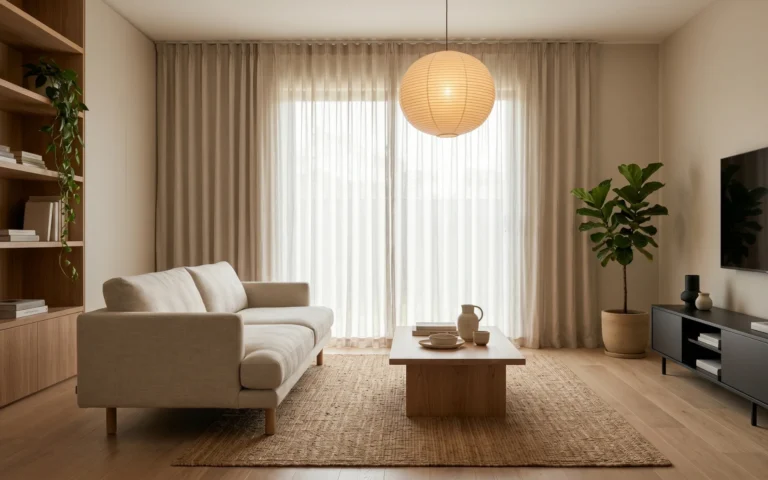
Furniture silhouette is everything in japandi living room decor ideas. Low profile wooden sofa frames with clean horizontal lines and minimal ornamentation communicate the aesthetic the moment someone enters the room. Solid oak, ash, or walnut frames in a natural or lightly oiled finish bring warmth and authenticity while keeping the visual weight close to the ground. This low profile quality is deeply rooted in Japanese interior tradition and creates a sense of spaciousness and calm that taller, bulkier sofas simply cannot replicate in the same disciplined and considered way.
Linen Upholstery Styling That Feels Soft and Considered
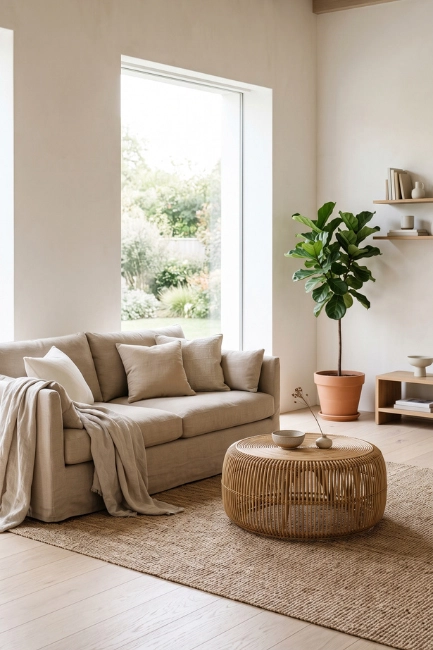
Linen upholstery is the textile backbone of japandi living room decor ideas and one of the most important material choices you will make in this aesthetic. Natural linen in warm oat, undyed cream, dusty sand, or warm grey tones adds a softness to sofa and armchair surfaces that synthetic fabrics cannot replicate. Linen also ages beautifully, developing a relaxed and lived in character that perfectly suits the wabi sabi influenced side of japandi design philosophy. Choose loose cover styles where possible for an effortlessly relaxed finish, and layer in a textured linen throw draped casually across one armrest to add an extra dimension of warmth and comfort to the overall seating arrangement.
Minimalist Coffee Table Arrangements That Anchor the Living Room
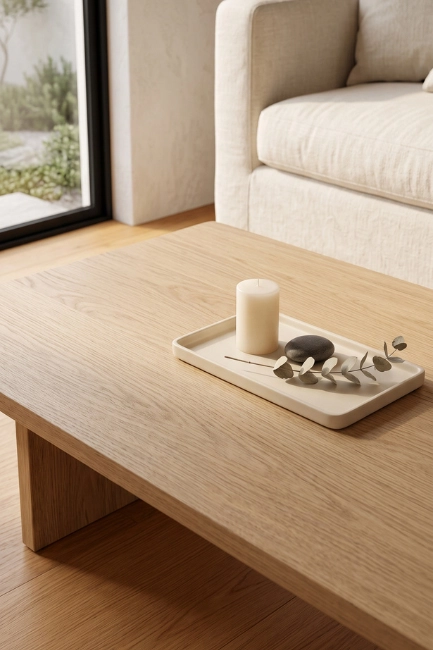
In japandi living room decor the coffee table is more than a surface. It is a curated moment that communicates the design philosophy of the entire space. Keep the arrangement minimal and intentional. A single ceramic tray holding a small candle, one smooth river stone, and a short dried stem is enough. The negative space on the table surface matters as much as the objects placed on it because that open space communicates restraint. Choose a coffee table in solid wood or with a stone top for a natural material grounding.
Natural Wood Wall Panels That Add Warmth and Architecture
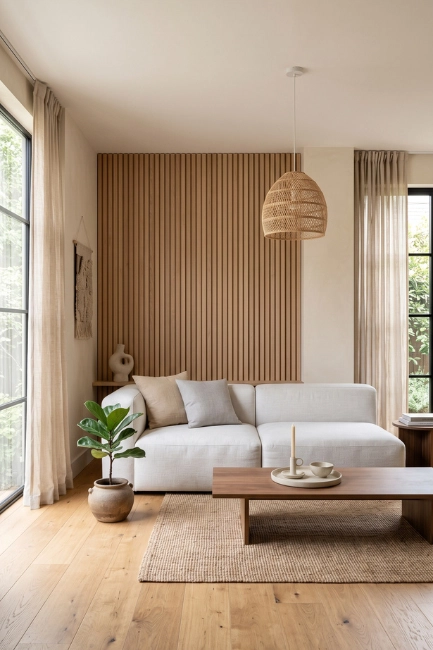
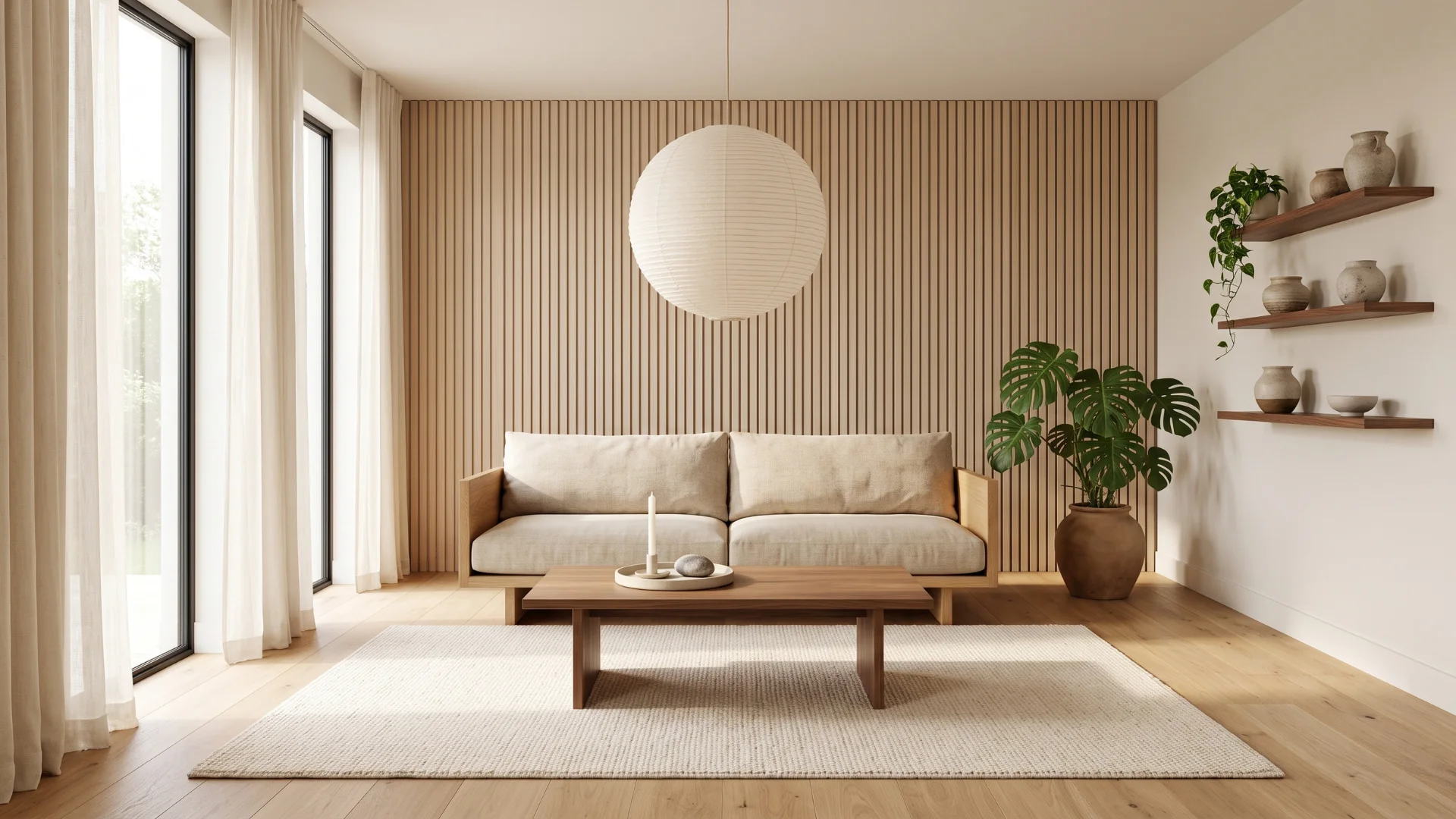
Wood paneling is one of the most architecturally significant moves in japandi living room decor ideas. Vertical or horizontal timber slat panels in natural ash, pale oak, or warm walnut bring texture, warmth, and an organic quality that paint alone cannot achieve. The panels create a visual rhythm across the surface while making the room feel more considered and designed. Position the paneled wall directly behind the sofa as a feature backdrop that frames the seating arrangement beautifully. Add minimal wall art or leave it completely bare to let the wood speak for itself.
Handmade Ceramic Decor That Brings Japandi Living Room Decor Ideas Together
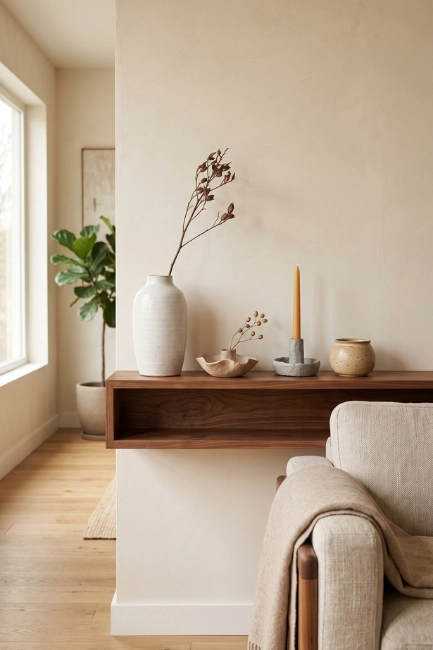
Handmade ceramics are among the most beloved finishing details in japandi living room decor ideas because they embody wabi sabi, the Japanese appreciation for imperfection and the beauty of natural irregularity. A hand thrown vase with an uneven rim, a pinched ceramic dish holding a dried stem, or a rough textured candle holder in a muted glaze tone all contribute to a layered, human quality that mass produced accessories cannot replicate. Display ceramics in small, considered groupings on a coffee table, open shelf, or console rather than spreading them across multiple surfaces. Keeping them clustered allows each piece to be appreciated individually while collectively creating a cohesive and intentional decorative moment within the room.
Woven Pendant Lighting That Transforms the Japandi Atmosphere
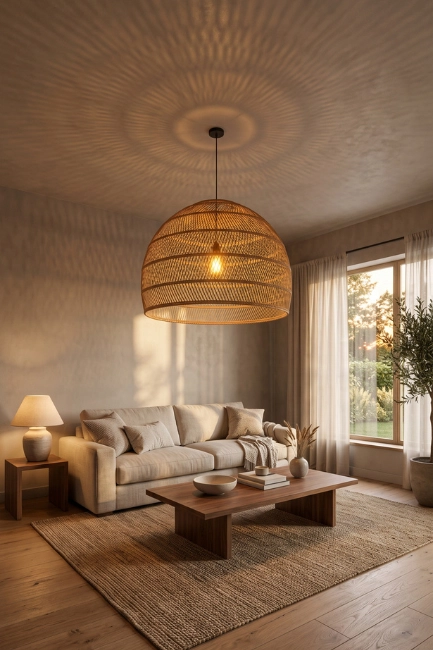
Lighting is one of the most underestimated elements in japandi living room decor and woven pendants are among its most powerful tools. A large rattan, bamboo, or washi paper pendant hung above the seating area casts warm diffused light that softens the entire room while adding organic texture overhead. Light filtering through natural woven fibers creates dappled patterns on the ceiling and walls that shift throughout the day. Always choose a pendant proportionally generous for the room because undersized lighting above a seating arrangement feels tentative rather than intentional.
Textured Area Rugs That Ground the Japandi Living Room Layout
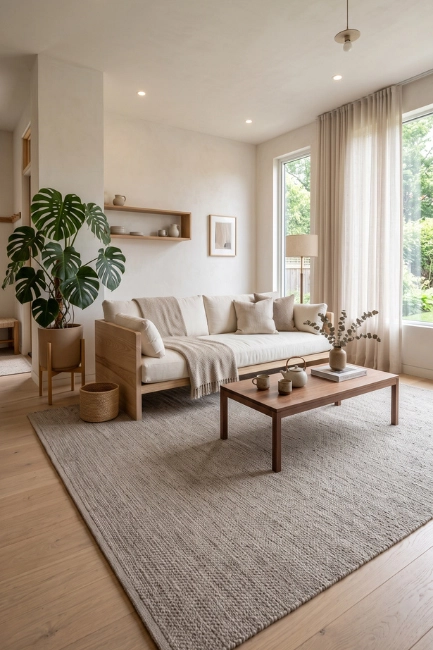
A rug in japandi living room decor ideas is never an afterthought. It is a structural element that defines the seating zone, introduces texture at ground level, and connects every piece of furniture into one cohesive composition. Natural fiber rugs in jute, wool, or flatweave cotton in warm cream, sandy grey, or muted charcoal tones suit this aesthetic best. Always size up rather than down because a rug that extends generously beyond the sofa and coffee table legs anchors the arrangement in a way a smaller rug simply cannot achieve.
Indoor Greenery Placement That Enhances Japandi Living Room Decor
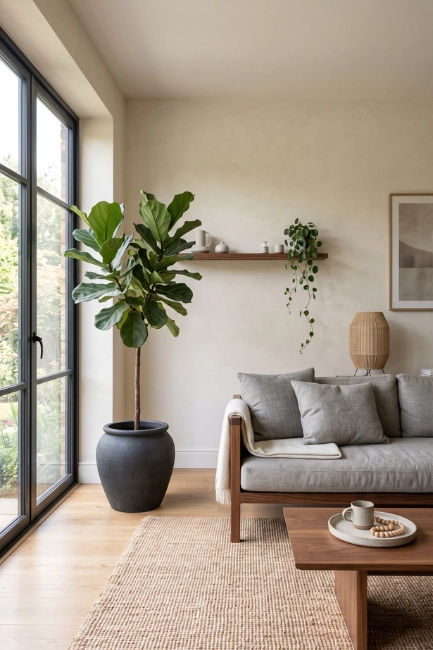
Plants in a japandi living room are never decorative clutter. They are intentional living elements that connect the interior to the natural world in a way that is deeply aligned with both Japanese and Scandinavian design philosophies. A single large statement plant like a fiddle leaf fig or a monstera placed in a corner in a handmade ceramic or clay pot carries enormous visual weight without requiring any additional accessorizing around it. Smaller plants can be used on open shelves or beside a window where natural light allows them to thrive. The key is restraint. Two or three well placed plants will always feel more intentional than a room filled with competing greenery arrangements.
Open Shelving Displays That Reflect Japandi Design Philosophy
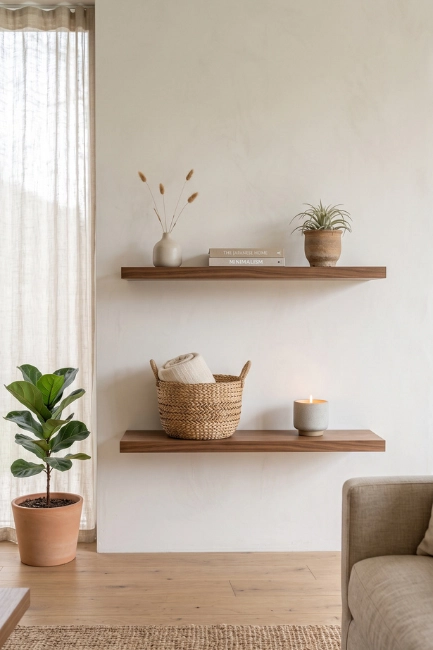
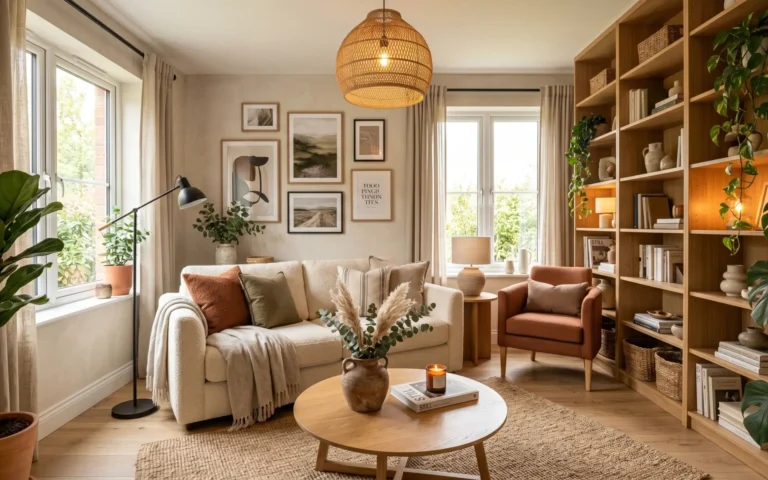
Open shelving in a japandi living room decor context is a design statement that requires discipline. Every object on an open shelf must earn its place through beauty, function, or meaning. The display typically includes a small grouping of handmade ceramics, one or two books stacked horizontally, a single small plant, and perhaps a woven basket tucked into a lower shelf for soft storage. The negative space between objects is as important as the objects themselves. Floating shelves in solid walnut or pale oak mounted directly on a plaster wall without visible brackets look the most refined and architecturally clean within the japandi interior language.
Stone and Wood Material Combinations That Feel Naturally Japandi
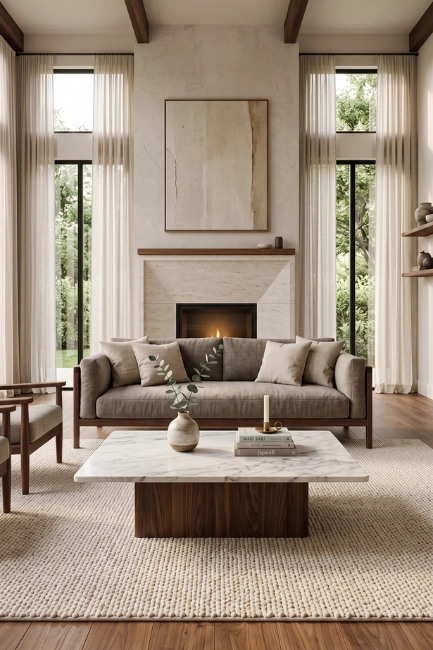
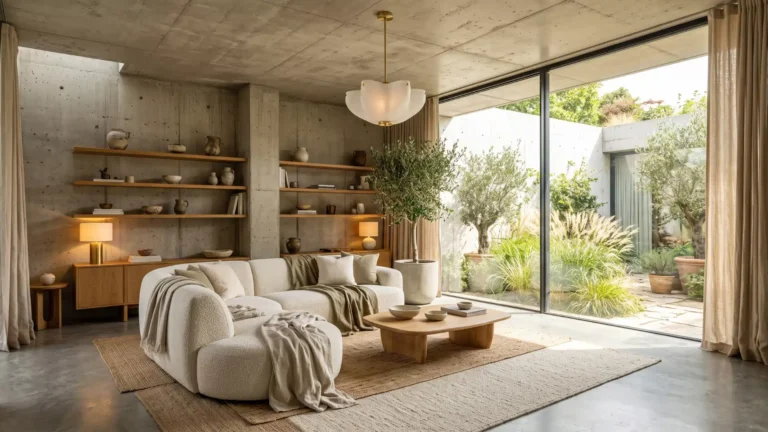
The combination of stone and wood is one of the most defining material pairings in japandi living room decor ideas. Together they create a tactile tension between the smoothness of stone and the warmth of grain that is visually rich without ever feeling busy or overwhelming. A marble or slate topped coffee table paired with a solid wood base is one of the most accessible ways to introduce this pairing. Alternatively a stone hearth or fireplace surround paired with timber wall panels brings the combination into the architecture of the room itself. Either approach grounds the living room in natural materiality in a way that defines the japandi aesthetic at its most elemental and honest level.
Functional Minimalist Layouts That Maximize Calm and Space
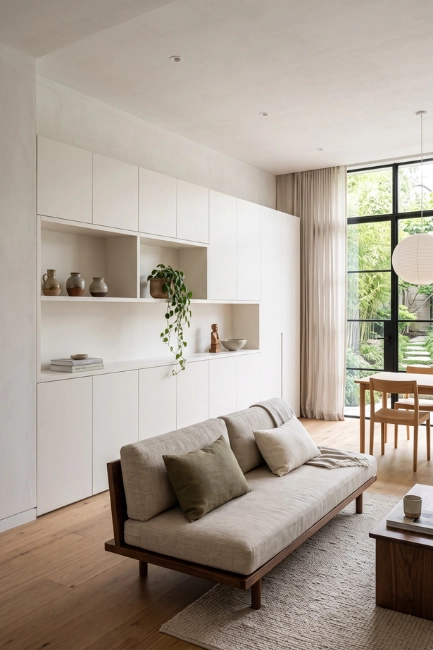
The furniture layout of a japandi living room decor space is deliberately simple. The seating arrangement centers around a low sofa and two low armchairs positioned to face each other or angle gently toward a shared focal point such as a fireplace, a paneled wall, or a large window. There is no excess furniture. Every piece has a clear purpose and a defined position. Wide open floor areas between pieces of furniture are intentional rather than incomplete because visible floor space in a japandi room communicates breathing room and calm. Avoid pushed against the wall arrangements and instead float the furniture slightly away from walls to create a more refined and considered sense of spatial balance.
Statement Paper Lantern Lighting That Celebrates Japanese Influence
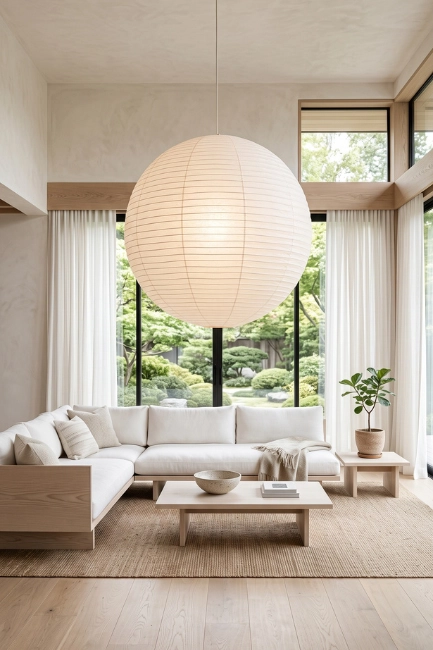
The paper lantern is one of the most iconic elements of Japanese interior design and in a japandi living room it functions as both a lighting source and a sculptural object. Large washi paper pendants in a drum, globe, or elongated teardrop shape cast the softest and most diffused quality of light of any pendant type, creating a glow that feels almost like filtered daylight rather than artificial illumination. A single oversized paper lantern pendant centered in the living room makes an immediate and confident design statement that bridges the Japanese and Scandinavian influences of the japandi aesthetic with quiet authority. Keep the rest of the lighting minimal so the lantern remains the undisputed focal point overhead.
Built In Storage Solutions That Maintain Japandi Cleanliness
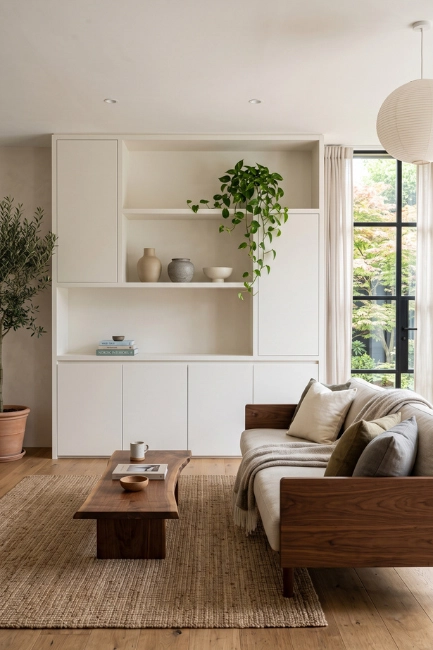
Clutter is the enemy of japandi living room decor ideas and built in storage is the most effective permanent solution to keeping the living room visually clean and calm. A full wall of built in cabinetry in a flat front painted finish or a natural wood veneer provides enormous storage capacity while reading as a single cohesive architectural surface rather than a collection of individual furniture pieces competing with each other. Lower cabinets with push to open doors keep surfaces completely handle free for the cleanest possible appearance. Upper open sections can display a curated selection of ceramics, plants, or books.
Nature Inspired Wall Art That Completes the Japandi Living Room Decor
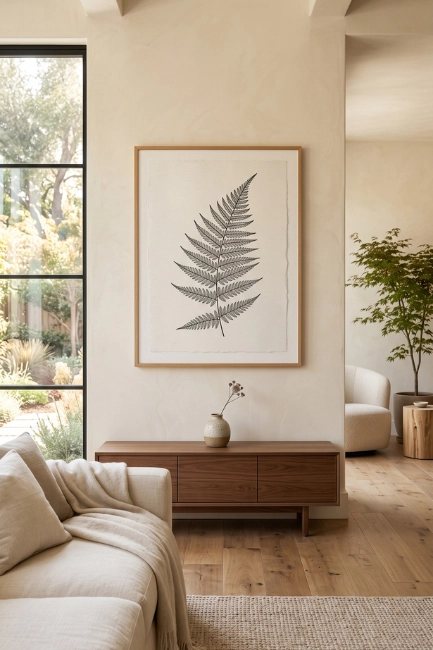
Art in a japandi living room decor context is never bold, graphic, or visually aggressive. It is quiet, nature connected, and intentionally understated. A single large format botanical print in a simple natural wood frame. A small abstract ink painting with organic brushstroke marks in warm grey and black. A pressed leaf arrangement behind glass in a slim black frame. These are the kinds of artwork choices that enrich a japandi wall without disrupting the calm of the overall composition. Hang one single piece with generous breathing space around it rather than creating a dense gallery wall. The solitary placement of artwork in this aesthetic communicates confidence and restraint in equal measure.
Cozy Reading Corner That Fits the Japandi Aesthetic Perfectly
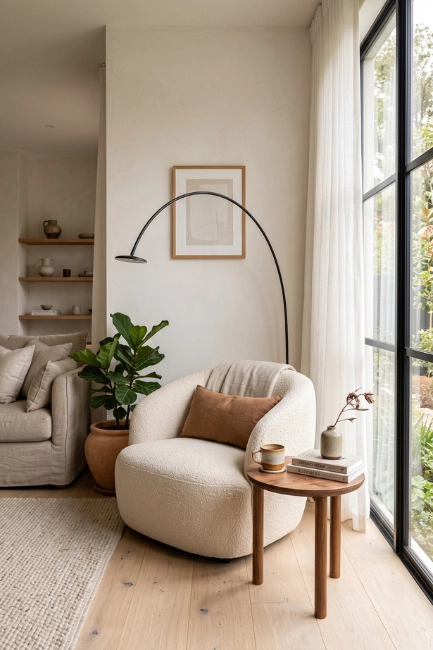
A reading corner within a japandi living room decor space is a natural extension of the hygge influenced Scandinavian side of the aesthetic. Position a low armchair in a natural material such as undyed boucle, woven rattan, or pale cotton canvas beside a window where natural light is most abundant. Add a slim floor lamp in a matte black or brushed steel finish for evening reading. A small side table in solid walnut or pale oak beside the chair holds a ceramic mug and one or two books. Keep the surrounding area completely clear so the corner reads as a deliberate retreat within the larger room rather than a leftover corner filled by default.
Calm and Balanced Japandi Living Room Decor With Layered Lighting
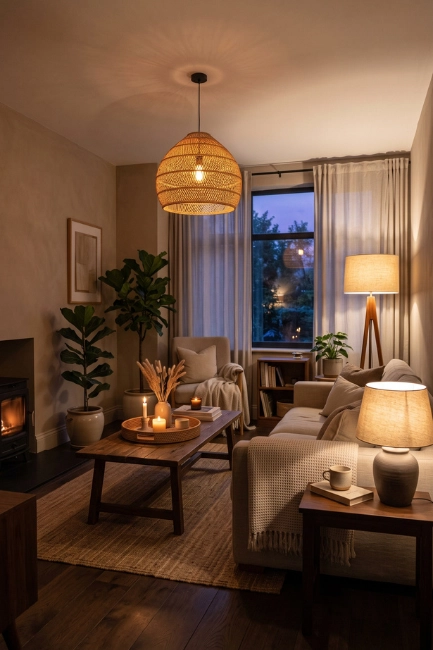
Lighting in japandi living room decor ideas is always layered and always warm. Relying on a single overhead source creates a flat and clinical atmosphere that undermines the calm the aesthetic is designed to produce. Instead build a lighting scheme from at least three sources: a diffused overhead pendant for ambient light, a ceramic or wooden table lamp beside the sofa for warm task light, and a floor lamp in the reading corner for a lower accent layer. All bulbs should be warm white at around 2700K or lower. Dimmer switches on every source allow the room to transition from a bright and open daytime space to a soft and intimate evening retreat with complete ease and no additional effort required.
Organic Modern Styling That Elevates Japandi Living Room Decor Ideas
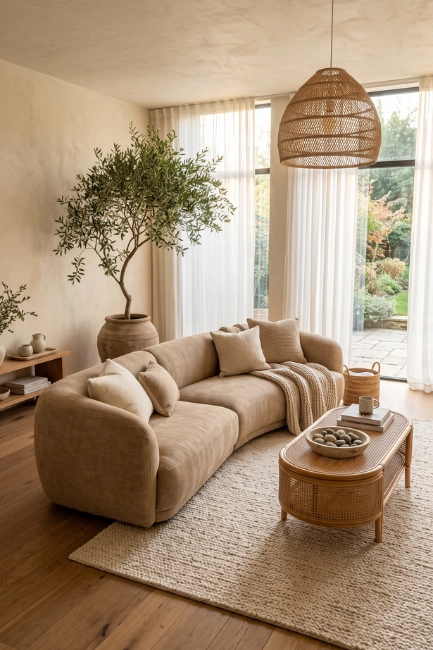
Organic modern styling is the natural evolution of japandi living room decor ideas for those who want the calm and materiality of japandi but with slightly more visual warmth and expressive texture. Where pure japandi is highly disciplined, organic modern allows a little more layering of natural textiles, a slightly looser arrangement of botanicals, and the occasional curved form introduced through a rounded armchair or an oval coffee table. The discipline of japandi provides the foundation and the organic modern layer adds the warmth and approachability that makes the space feel genuinely livable rather than purely aspirational. Together the two directions produce living rooms that are calm, beautiful, and completely comfortable to actually spend time in every day.
Japandi Living Room Decor Ideas for Small Spaces Done Right
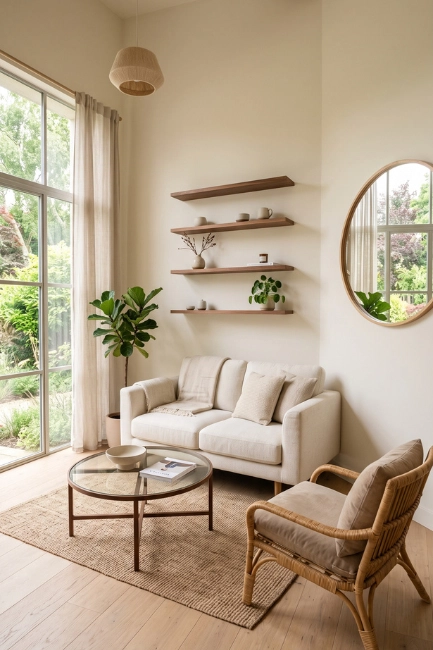
Small living rooms benefit enormously from japandi living room decor ideas because the aesthetic is built on the principle that less space well used is more powerful than more space poorly considered. Keep the furniture count low and the profile slim. A two seater sofa and one armchair is often enough. Choose a glass or open base coffee table to maintain visual lightness at the center of the room. Mount shelving on the walls rather than using freestanding units that eat into floor area. Use a large mirror in a simple natural wood frame to reflect light and visually double the perceived depth of the room. Every decision should serve both function and calm simultaneously without compromise or excess.
CONCLUSION
Japandi living room decor ideas work because they are rooted in something universal: the human need for calm, order, and connection to the natural world. Every element explored here, from low profile wood furniture and linen upholstery to woven lighting and handmade ceramics, serves that single guiding purpose. Japandi living room decor does not ask you to sacrifice comfort for style. It asks you to choose both more intentionally. At Zendecora, every idea shared is designed to feel achievable and genuinely beautiful in real homes and real lives. Start with one piece, one material, or one corner and let the quiet confidence of this aesthetic grow from there naturally.