Living Inside the Earth: How Cave Homes Are Redefining Architecture, Comfort, and Interior Elegance
Some of the most extraordinary homes in the world are not built upward but carved inward, into the earth itself. Cave homes represent one of the most fascinating intersections of natural architecture, human ingenuity, and deeply personal interior design, creating living spaces that feel simultaneously ancient and thoroughly modern. The raw beauty of exposed stone, organic curved walls, and naturally regulated temperature creates a living environment unlike anything conventional construction can offer. At Zendecora, the mission is always to share fresh inspiration for modern home decor ideas and interior styling trends that push the boundaries of beautiful living. This guide explores every dimension of cave home living with clarity and genuine creative inspiration.
Modern Cave Home Living Rooms That Balance Raw and Refined
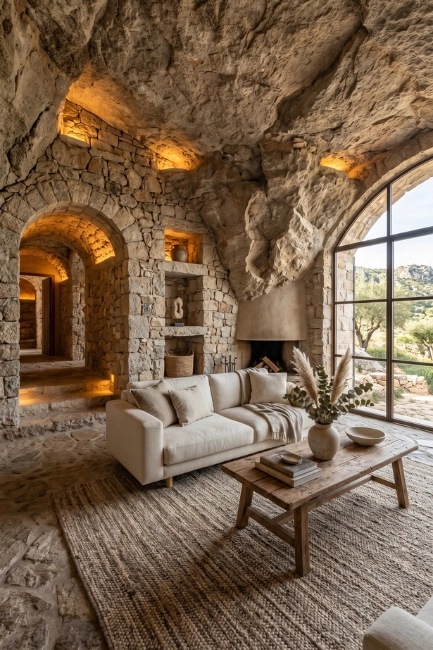
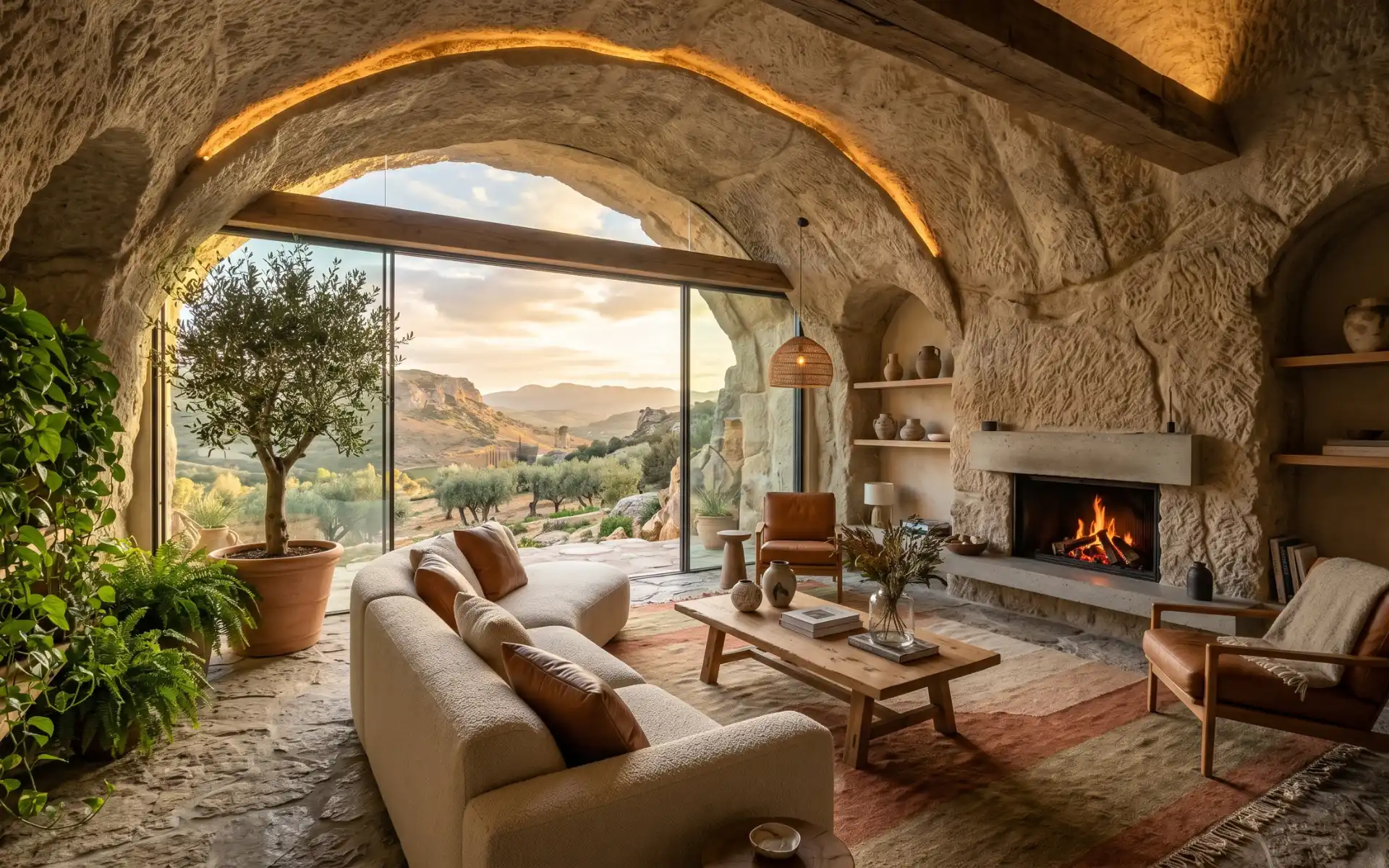
The living room in a modern cave home is where the tension between raw natural architecture and refined contemporary design finds its most compelling expression. Exposed stone walls with their irregular textures and organic curves become the dominant design feature, requiring furniture and accessories that complement rather than compete with their natural authority. Low profile sofas in warm linen or leather sit close to the ground, respecting the visual weight of the stone surroundings. A simple concrete or reclaimed wood coffee table anchors the seating arrangement. Soft area rugs in earthy tones add warmth underfoot, while carefully positioned ambient lighting embedded into the rock ceiling creates a warm and atmospheric glow that transforms the space after dark.
Luxury Cave Inspired Interiors for the Discerning Homeowner
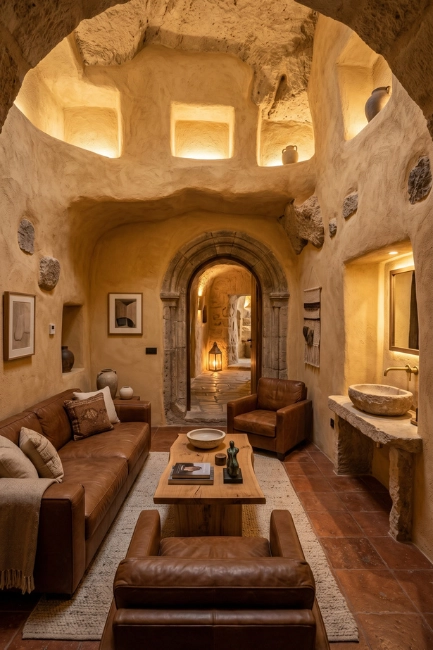
Luxury and cave architecture are not contradictions. In fact, the most aspirational cave home interiors achieve their status precisely because of their rarity, their material authenticity, and the extraordinary skill required to create comfort within such a dramatically natural environment. Bespoke furniture pieces in hand stitched leather, custom stone basins, hand plastered walls in warm ochre, and ceiling niches carved directly into the rock and fitted with soft lighting all contribute to an interior that communicates genuine luxury through the quality of every material decision. These spaces prove that luxury is not about excess but about the refinement of what is already extraordinary, in this case, the earth itself.
Natural Stone Wall Styling for Maximum Architectural Impact

The stone walls of cave homes are their single greatest design asset, and treating them with intentionality is the foundation of any successful interior scheme. Natural stone walls are left entirely exposed, cleaned and sealed but never painted or covered. A single large abstract artwork leaning against the stone rather than hung on it respects the surface while adding cultural depth. Simple wooden shelving bolted directly into the rock creates integrated functional storage. Trailing greenery softened against rough stone surfaces creates a contrast of organic textures that is endlessly and effortlessly beautiful.
Organic Texture Layering That Celebrates Natural Materials
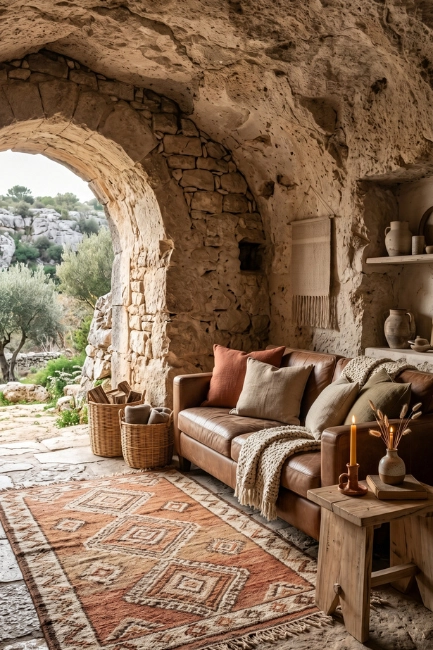
In a cave home environment, the concept of layering textures takes on a richer and more complex dimension than in any conventional interior. The stone itself provides the foundational texture, rough, cool, and deeply three dimensional. Against this, every additional material choice either amplifies or softens that rawness. Hand knotted wool rugs in warm sand and terracotta tones add softness underfoot. Linen cushions and throws on leather furniture introduce a lighter organic touch. Rattan and woven baskets provide storage while continuing the natural material vocabulary. Raw ceramic bowls, beeswax candles, and unfinished wood objects complete the layered approach. The result is an interior that feels deeply tactile, authentically natural, and richly considered in every material choice.
Minimalist Cave Home Aesthetics With Quiet Confidence
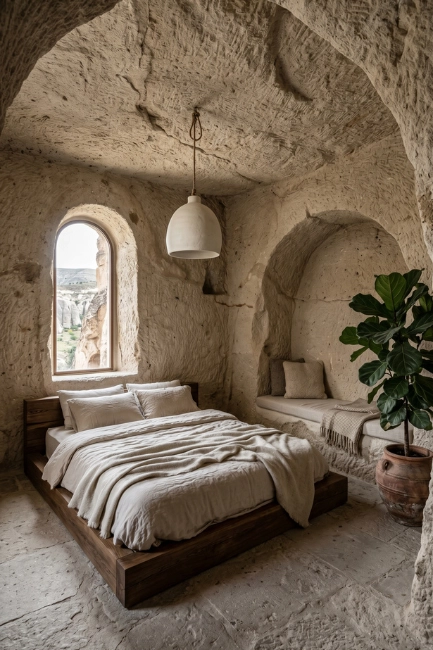
Minimalism finds one of its most natural expressions within cave homes architecture. When the architecture itself is this visually dominant, interior styling requires very little to complete the picture. A minimalist cave home strips away every unnecessary element, leaving only pieces that genuinely serve a purpose or add meaningful beauty. A ceramic pendant light hanging from carved stone, a low linen platform bed, a stone bench built into the wall, and one indoor plant in a terracotta pot are all this space needs. The architecture does the work, and the silence creates something truly unforgettable.
Warm Ambient Lighting Concepts That Enhance Natural Stone
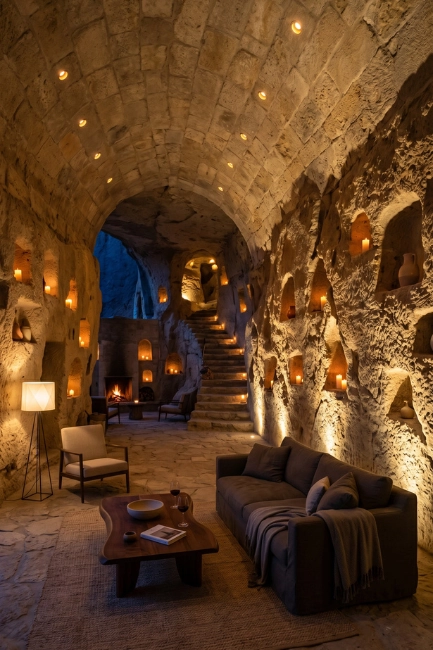
Lighting in cave homes serves a purpose far beyond illumination. It is the tool through which the extraordinary beauty of natural stone is revealed and celebrated. The irregular surface of rock responds to light in a way flat painted walls simply cannot, creating shifting shadows and warm visual depth. Recessed warm LED lights embedded into the ceiling create a soft amber wash across the stone surface. Wall mounted niches carved into the rock and fitted with candles add intimate warmth at eye level, transforming the entire space into a living piece of natural architecture.
Open Concept Cave Home Layouts and Spatial Flow
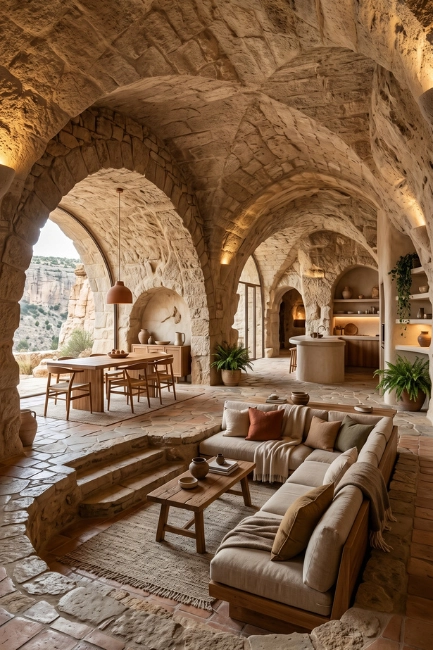
The open concept layout translates with extraordinary power into cave homes, where natural stone ceilings and walls create a continuous and uninterrupted visual journey. The transition from living to dining to kitchen happens through changes in floor level, ceiling height, and furniture arrangement rather than walls. A sunken seating area carved directly into the floor defines the living zone with an intimacy no conventional sofa arrangement can replicate. A stone arch framing the dining area creates a sense of arrival without enclosing the space, making open concept cave homes one of the most architecturally thrilling interior experiences available.
Rustic Modern Cave Home Bedroom Retreats for Deep Rest
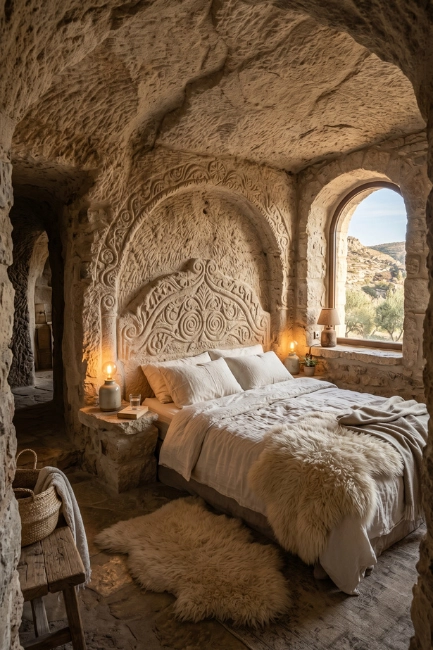
The bedroom in a cave home is perhaps the most naturally suited room of the entire dwelling to the concept of sanctuary. The thick stone walls provide natural insulation, creating a temperature regulated and acoustically quiet environment that promotes extraordinarily deep rest. A rustic modern bedroom in a cave home combines the raw honesty of the stone surroundings with carefully chosen contemporary comforts. A hand carved stone headboard built directly into the wall eliminates the need for a separate piece of furniture while creating an unmistakably architectural sleeping environment. Premium linen bedding in warm ivory, a sheepskin throw, and a pair of simple ceramic bedside lamps complete a bedroom that feels both primordially grounded and thoroughly luxurious.
Mediterranean Cave Architecture and Its Timeless Interior Appeal
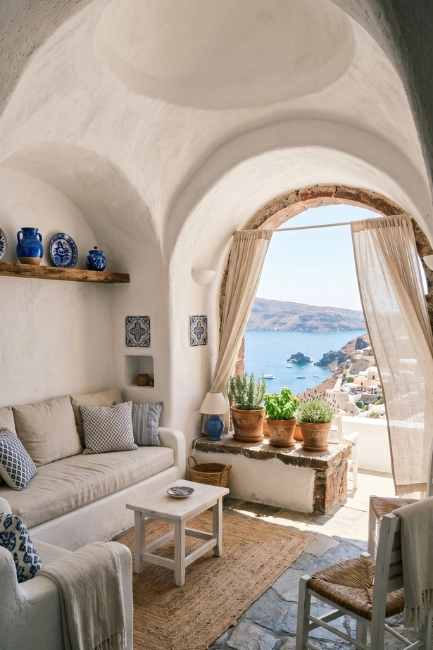
The cave homes of the Mediterranean, carved into the cliffs of Santorini, the tufa landscape of Matera, and the volcanic terrain of Cappadocia, represent some of the most visually iconic residential architecture on earth. Their whitewashed interiors, arched doorways, and domed ceilings have inspired interior designers worldwide for generations. In a Mediterranean cave home, the palette is simple and sun bleached: brilliant white walls contrasting with cobalt blue accents, terracotta herb pots, hand painted ceramic tiles, and natural linen textiles moving gently in the sea breeze. The beauty is effortless because it is entirely authentic.
Earth Tone Color Palettes That Feel Rooted and Warm
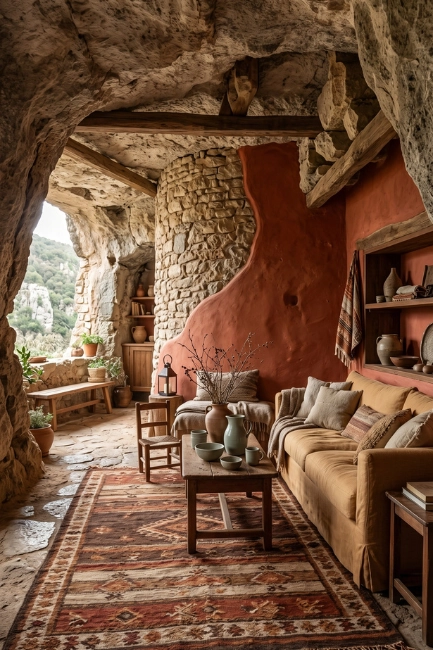
Color in cave homes is drawn directly from the earth that surrounds them, making an earth tone palette feel less like a design decision and more like a natural inevitability. Warm terracotta, raw sienna, sandy ochre, deep umber, and dusty sage all appear in the natural rock itself and can be amplified through textiles, ceramics, and wall finishes. These colors work because they already exist in the architecture, meaning nothing feels imposed or artificial. The result is an interior that feels genuinely rooted, organically coherent, and warmly inviting in every corner.
Built In Stone Furniture That Defines Cave Home Living
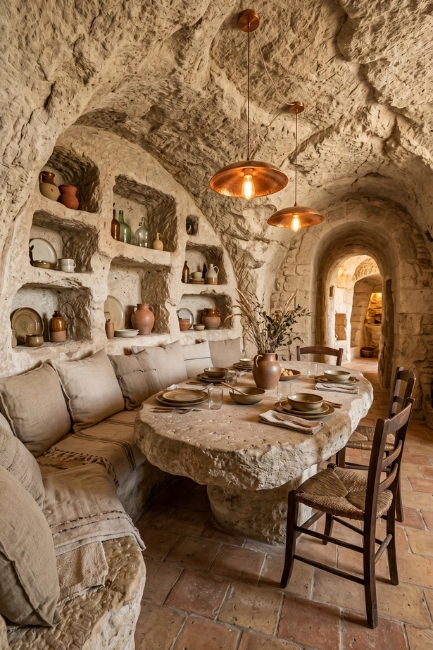
One of the most extraordinary design opportunities within cave home architecture is the ability to integrate furniture directly into the stone structure of the dwelling itself. Built in stone benches along a living room wall, a stone dining table emerging from the floor as a single continuous surface, carved stone shelving recessed into a wall, and a stone bathing platform in a bathroom are all examples of how furniture and architecture can become a single unified element. This approach not only creates a visually seamless interior but also eliminates the need for many conventional furniture pieces, reducing visual clutter and allowing the extraordinary natural material of the cave itself to remain the dominant aesthetic presence throughout every room.
Vaulted Stone Ceilings as the Ultimate Architectural Statement
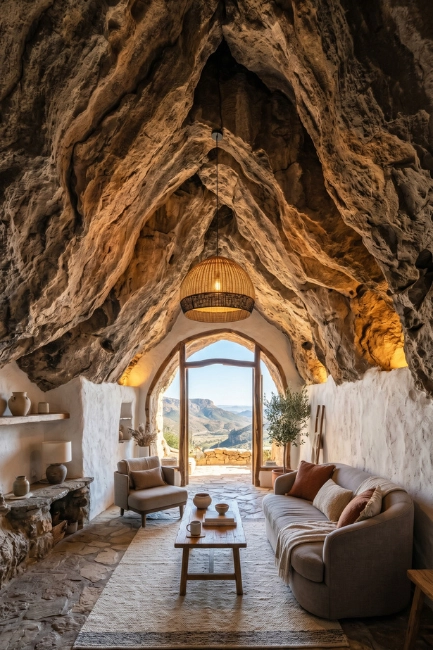
Few architectural features command as much visual authority as a vaulted stone ceiling in cave homes. These ceilings are not constructed but revealed, formed naturally by the rock above, creating overhead drama no conventional building technique can replicate. The key to decorating beneath one is understanding that the ceiling itself is the decoration. Furniture, lighting, and accessories should serve it rather than compete with it. A simple pendant light hung from the highest point draws the eye upward, while keeping walls and floors simple ensures the full architectural impact is never diluted.
Nature Inspired Decor Elements That Complete the Cave Aesthetic
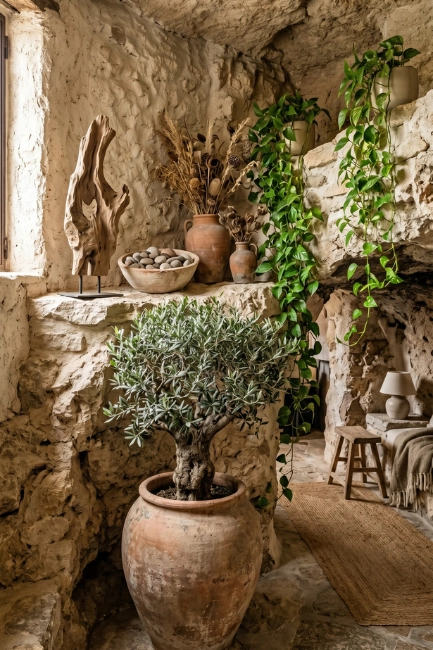
In a cave home environment, decor elements drawn from the natural world feel not like a stylistic choice but like a logical extension of the architecture itself. Large indoor plants including olive trees, fig trees, and trailing pothos bring living organic softness into a space defined by hard stone surfaces. Driftwood sculptures, river stones arranged in ceramic bowls, dried botanical arrangements, and large geode objects all speak the same material language as the cave walls surrounding them. Unglazed terracotta pots, hand thrown ceramic vessels, and objects made from raw materials such as horn, shell, and natural fiber complete an interior that feels genuinely connected to the natural world in every detail and every corner.
Cave Home Dining Spaces That Make Every Meal an Experience
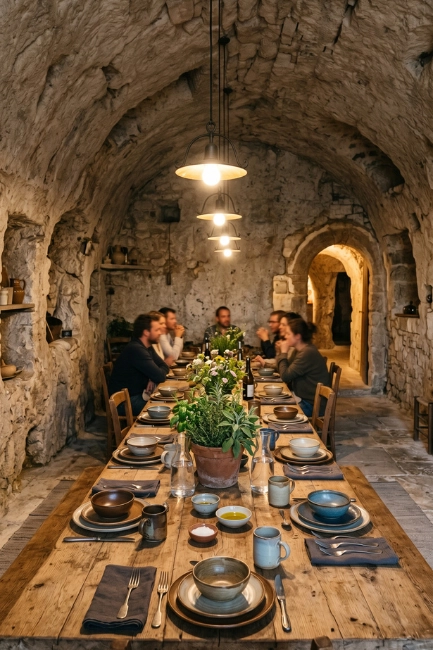
Dining in cave homes is an experience that goes far beyond the meal itself. Arched stone ceilings, intimate lighting, and the profound sense of being inside the earth create a dining atmosphere no conventional restaurant can replicate. A long reclaimed wood dining table centered beneath a vaulted stone ceiling becomes an instant gathering space of extraordinary character. Ceramic pendant lights hung low above the table create a warm focused glow. Mismatched earthy glazed tableware, linen napkins, and a simple centerpiece of fresh herbs complete a table that feels genuinely special every single evening.
Indoor-Outdoor Living Integration in Cave Home Design
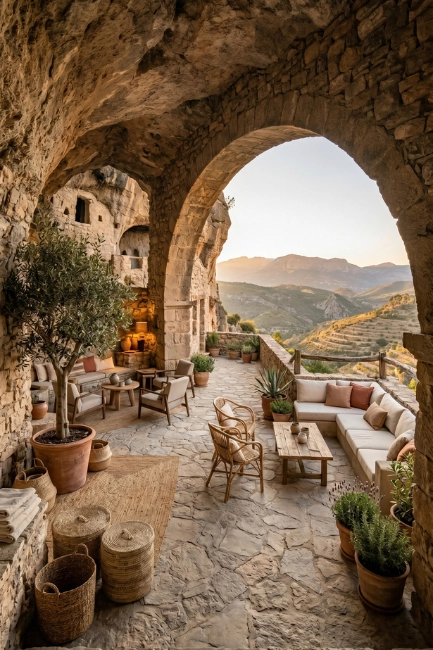
The relationship between interior and exterior space in cave homes is one of their most architecturally compelling dimensions. Many cave homes are built into cliff faces, creating the extraordinary opportunity for interior rooms to open directly onto terraces or dramatic natural landscapes through large arched openings. This indoor outdoor integration blurs the boundary between living inside the earth and within the landscape itself. Continuous stone flooring flowing from interior to exterior reinforces the visual connection, while stone benches, timber loungers, and linen upholstered outdoor pieces allow the living space to expand naturally into the open air.
Contemporary Cave Home Kitchens With Organic Sophistication
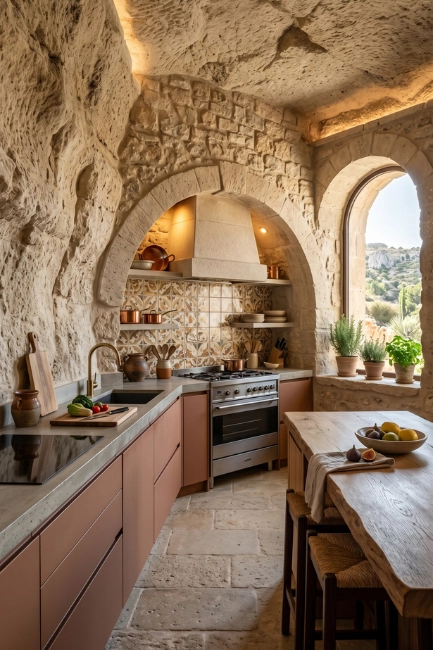
The kitchen in contemporary cave homes presents a fascinating design challenge: introducing modern precision within an environment defined by organic irregularity and natural stone. The most successful cave home kitchens resolve this tension through materials that bridge both worlds. Concrete countertops echo the cool tonality of stone while offering workable flat surfaces. Handleless cabinetry in matte clay disappears against plastered walls. A stone arch above the cooking area frames the zone with architectural drama, while hand painted ceramic tile splashbacks introduce color and craft. The result feels thoroughly contemporary yet deeply rooted in its natural context.
Cozy Reading Corners Carved Into the Stone
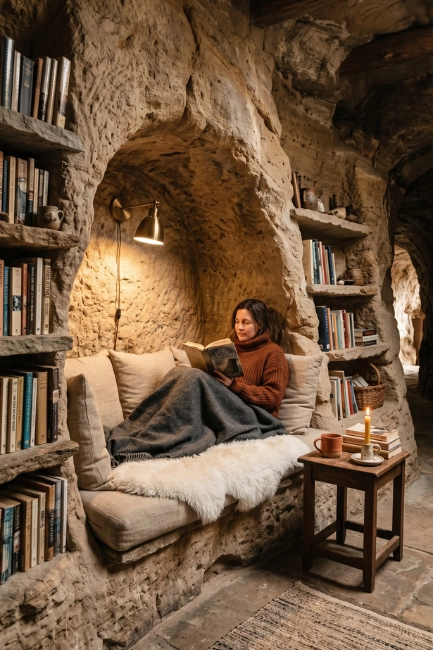
One of the most intimate spaces cave homes can offer is a reading corner carved directly into the natural rock. A nook fitted with a cushioned bench, carved stone bookshelves, and a single warm reading lamp creates a retreat within a retreat that feels utterly unique and deeply personal. The acoustic quality of stone naturally absorbs sound, making these corners extraordinarily peaceful. A sheepskin throw, a small wooden side table, and a candle in a ceramic holder complete a reading space that combines architectural wonder with the simple pleasures of quiet and warmth.
Sustainable Natural Materials That Honor the Cave Environment
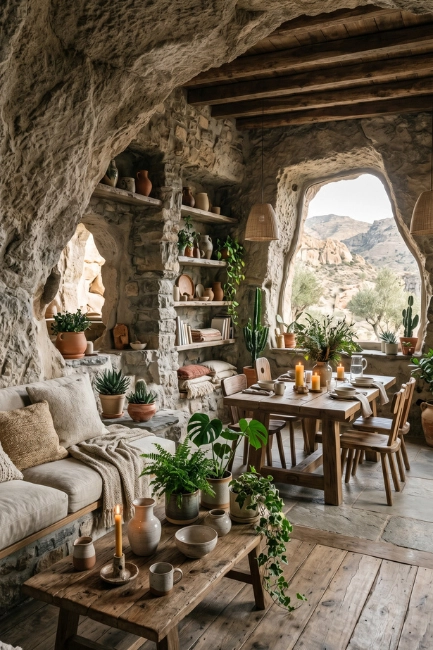
Cave homes are inherently among the most sustainable residential typologies available, utilizing the natural thermal mass of the earth to regulate interior temperature without mechanical heating or cooling. The most thoughtful cave home interiors amplify this sustainability through deliberate material choices that honor the environmental values already present in the architecture. Reclaimed timber, hand thrown local ceramics, natural stone, beeswax candles, and organic linen textiles all contribute to an interior that treads lightly on the earth while achieving extraordinary beauty. This level of material consciousness represents one of the most genuinely sustainable approaches to residential design available today.
Spa-Inspired Cave Home Bathrooms for Ultimate Sensory Escape
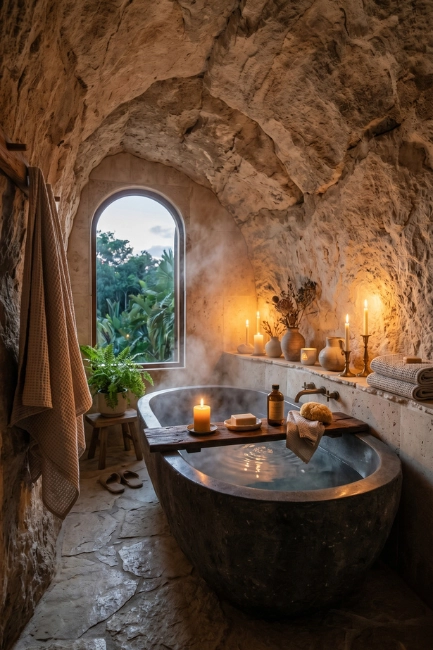
The bathroom in cave homes represents one of the most extraordinary opportunities in residential interior design. Natural stone, warm water, soft lighting, and organic materials create a bathing experience that borders on the transcendent. A freestanding stone bathtub beneath a vaulted rock ceiling lit by warm candlelight is an image of almost mythological beauty. Walls of natural travertine require no additional decoration. A wooden bath caddy, organic ceramic vessels, and a linen towel draped over a timber rail complete a bathroom that functions as a genuine spa retreat and a deeply restorative daily ritual.
Luxury Architectural Details That Elevate Cave Home Interiors
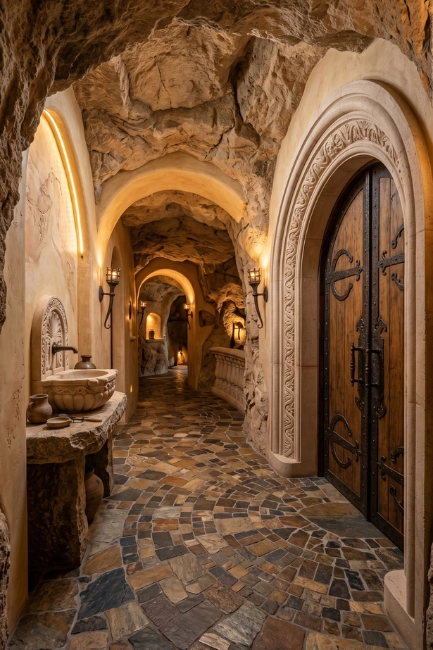
In the most refined cave home, luxury is expressed not through opulent objects but through the extraordinary quality of architectural details integrated seamlessly into the natural structure. Hand carved stone archways, custom forged iron door hardware, hand laid mosaic floors, bespoke carved stone basins, and hand applied plaster wall finishes all elevate cave homes from the merely unusual to the genuinely magnificent. These details require time, skill, and investment, but create an interior built to a standard of craft and quality that will remain beautiful and meaningful for generations to come.
Conclusion
Cave homes represent something rare and deeply valuable in the world of contemporary residential design: a living environment that is simultaneously ancient and modern, natural and sophisticated, humble in its origins and extraordinary in its potential. From vaulted stone ceilings and built in rock furniture to spa-inspired bathrooms and indoor-outdoor terraces with dramatic landscape views, the cave homes explored in this guide demonstrate that the most compelling interiors are often those that work with nature rather than against it. The earth itself becomes the architect, and the role of the interior designer is simply to honor what is already there with intelligence, restraint, and genuine creative vision.
At Zendecora, the inspiration for cave home living and every other form of beautiful interior design is always here, waiting to help you imagine and create the home of your dreams.