Quiet Beauty: Calming Japandi Living Room Ideas for a Serene Home
There is a quiet kind of beauty that comes from blending two design philosophies that share the same deep respect for simplicity and natural materials. Japandi living room ideas bring together the warmth of Japanese minimalism and the cozy functionality of Scandinavian design to create spaces that feel genuinely calm and effortlessly elegant. This approach values craftsmanship, texture, and restraint over excess or trend driven decoration. At Zendecora, the focus is purely on sharing modern home decor inspiration and interior styling trends. No products or services, just thoughtfully curated japandi living room ideas to help you create a space that feels peaceful, intentional, and beautifully balanced.
Low Profile Wooden Furniture for a Grounded Aesthetic
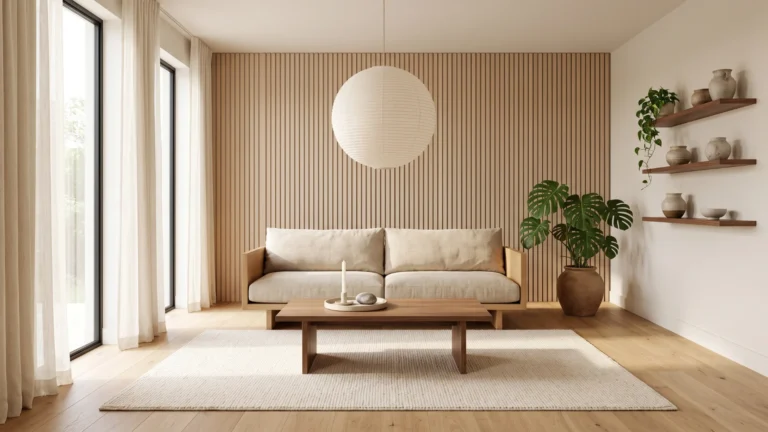
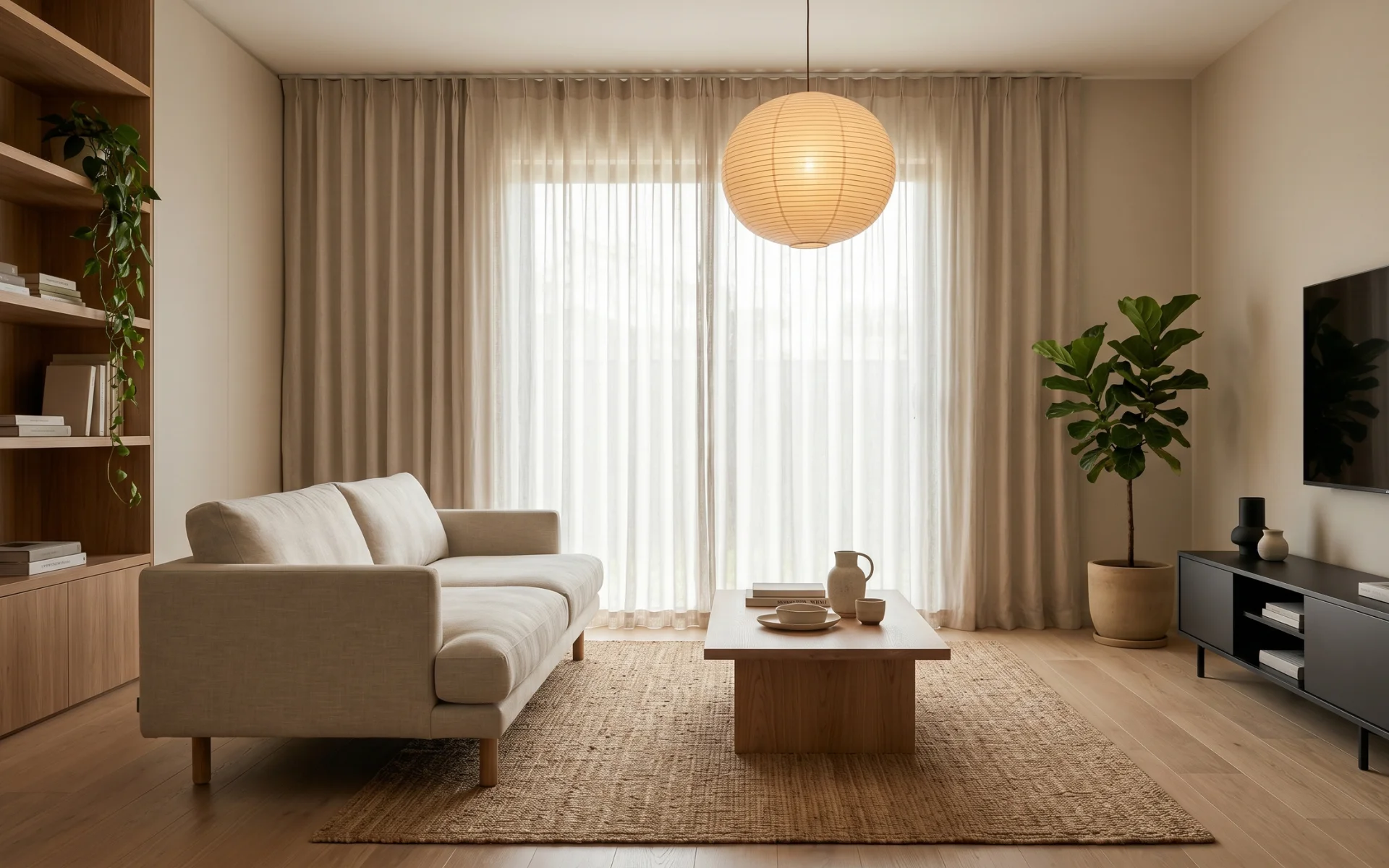
Low profile wooden furniture is one of the defining characteristics of any successful japandi living room ideas approach because it keeps sightlines open and creates a sense of calm spaciousness throughout the room. Choose a sofa with a low back and slim wooden legs in natural oak or walnut, paired with a coffee table that sits close to the floor. This grounded furniture arrangement echoes traditional Japanese seating while maintaining the practical comfort that Scandinavian design always prioritizes. The result feels intentional, uncluttered, and deeply connected to the natural materials that define the entire aesthetic.
Warm Neutral Color Palettes That Set a Calm Tone
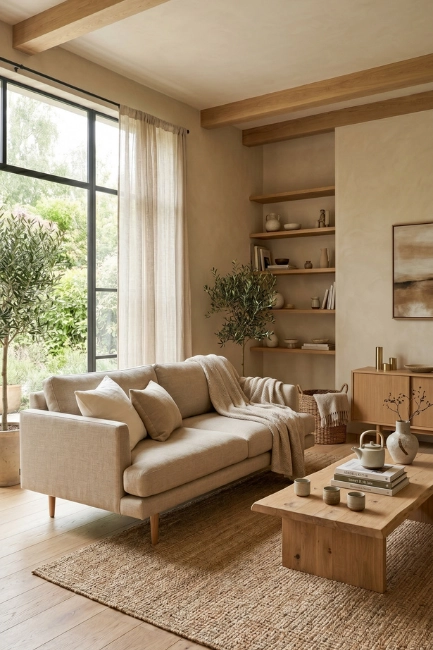
A warm neutral color palette forms the visual foundation of nearly every successful japandi living room ideas scheme because it allows natural materials and texture to remain the primary focus rather than competing with bold color choices. Build the palette around warm white, soft beige, oatmeal, and natural wood tones with the occasional touch of muted charcoal or deep forest green. Avoid stark white or cool grey tones that can feel clinical rather than calming. This restrained palette creates a backdrop that feels timeless, soothing, and effortlessly sophisticated regardless of the season or current design trends.
Linen Upholstered Sofas for Effortless Natural Texture
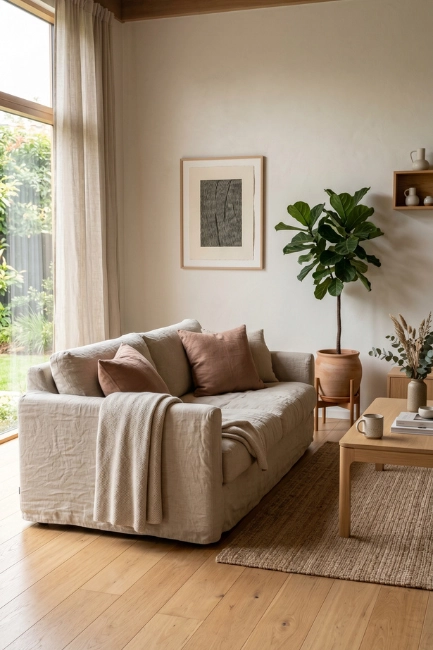
Linen upholstery brings a relaxed and breathable quality to seating that synthetic fabrics simply cannot replicate and choosing it is one of the most tactile japandi living room ideas available for anyone building a calm and natural living space. Select a sofa in a soft oatmeal, warm white, or muted clay tone and allow the fabric to drape naturally rather than appearing overly structured or stiff. Add one or two cushions in a complementary linen or cotton blend for subtle texture variation. The slightly imperfect, lived in quality of linen aligns beautifully with the wabi sabi philosophy at the heart of Japandi design.
Natural Wood Accents That Bring Warmth to Every Surface
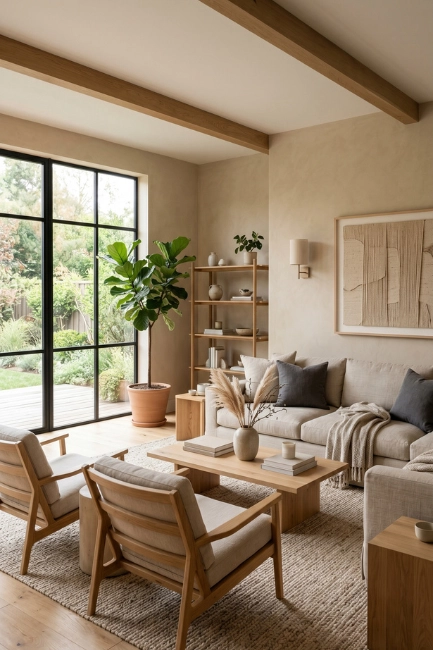
Natural wood accents are essential to achieving the warmth that distinguishes japandi living room ideas from purely minimalist or purely Scandinavian interiors on their own. Introduce wood through a slatted media console, a simple wooden side table, and a floating shelf in matching natural oak or ash tones. Allow the grain and texture of the wood to remain visible rather than covering it with heavy paint or stain. This consistent use of natural wood throughout the room creates a cohesive and grounding visual thread that ties every element of the space together beautifully
Handmade Ceramic Decor With Genuine Character
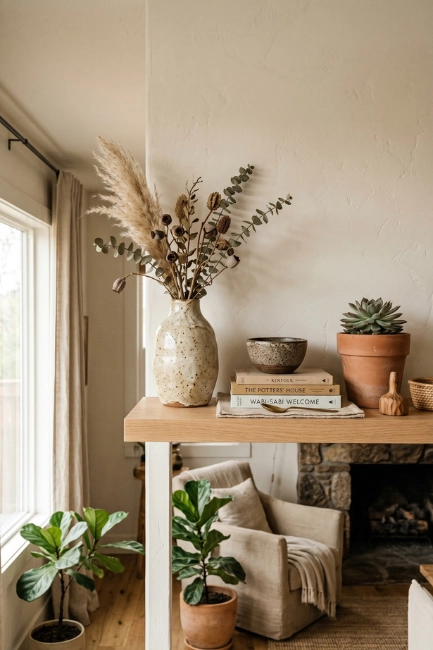
Handmade ceramic decor introduces a sense of craftsmanship and individuality that mass produced objects simply cannot offer, making it one of the most meaningful japandi living room ideas for personalizing a calm and minimal space. Choose a few pieces such as an irregularly shaped vase, a small textured bowl, or a simple unglazed pot and display them with intention rather than abundance. Allow visible imperfections in the glaze or form to remain part of the object’s appeal rather than seeking flawless symmetry. These handmade touches add warmth, story, and a quiet sense of authenticity to the room.
Minimalist Coffee Table Styling for a Considered Surface
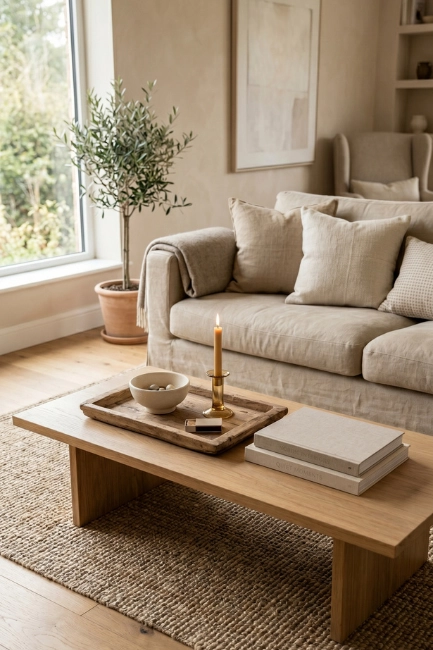
The coffee table in a Japandi living room deserves a restrained and considered styling approach rather than the layered abundance often seen in more traditional decorating styles. Use a low wooden tray to anchor the surface and place just two or three objects on top such as a small ceramic bowl, a single candle, and a stack of two books with neutral covers. Leave generous empty space around each object so every piece can be appreciated individually. This disciplined approach to coffee table styling reflects the broader philosophy of intentional simplicity found throughout japandi living room ideas.
Organic Textured Rugs That Soften the Floor
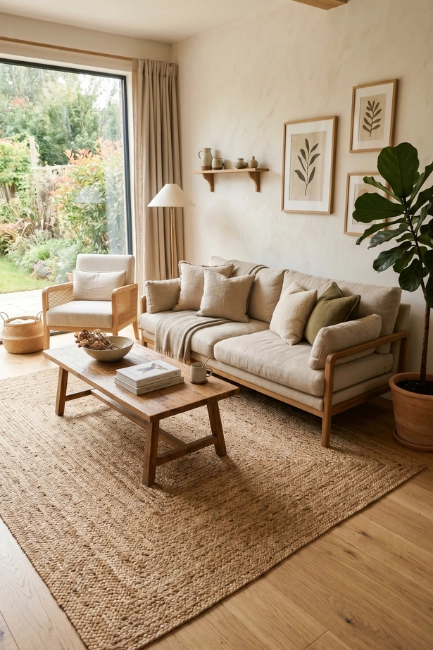
An organic textured rug grounds the seating area while introducing a layer of tactile warmth that hard flooring alone cannot provide. Choose a rug in a natural fiber such as jute, wool, or a low pile weave in warm neutral tones that complement the surrounding furniture and wood finishes. Avoid busy patterns or high contrast designs that could disrupt the calm visual rhythm of the room. Position the rug so it extends generously beneath the front legs of the sofa and seating pieces, creating a cohesive and softly textured foundation for the entire living area.
Soft Ambient Lighting for a Calm Evening Atmosphere
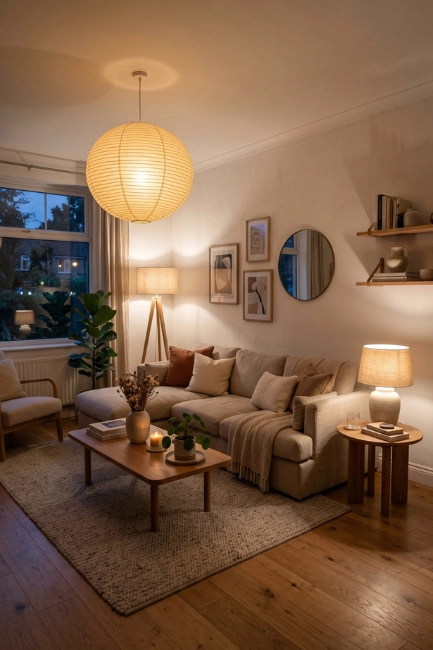
Lighting plays an essential role in creating the calm and contemplative mood that defines the best japandi living room ideas once natural daylight begins to fade. Choose a paper or linen shade pendant light with a warm toned bulb as the primary fixture rather than a bright overhead spotlight. Add a simple wooden floor lamp beside the seating area and a small table lamp on the side table for layered, low level illumination. This soft ambient approach keeps the room feeling gentle and restful throughout the evening hours rather than harshly lit or overly bright.
Indoor Greenery Arrangements That Bring Life Into the Room
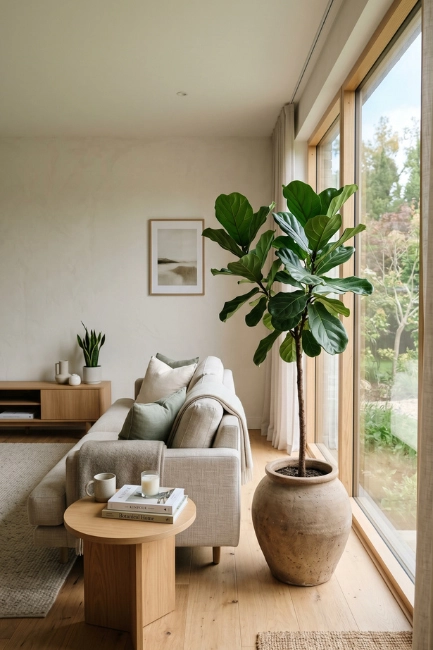
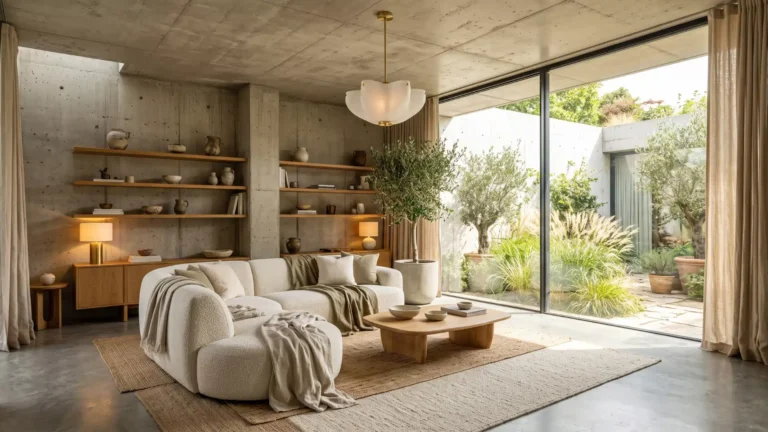
Plants introduce a living and breathing quality to a Japandi living room that complements the natural materials already present throughout the space. Choose one or two larger architectural plants such as a fiddle leaf fig or an olive tree in a simple unglazed ceramic pot rather than scattering many small plants throughout the room. Position the plant near a window where it can receive adequate natural light while also softening the corner of the room visually. This restrained approach to greenery keeps the space feeling calm rather than cluttered with too many competing organic elements.
Floor to Ceiling Curtains for a Soft Architectural Frame
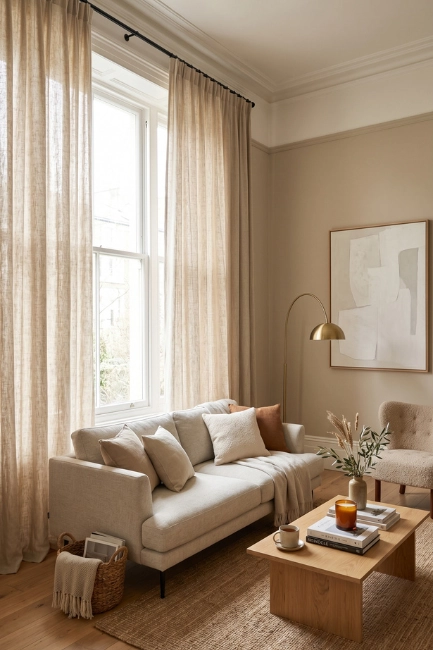
Floor to ceiling curtains add height, softness, and a sense of quiet luxury to any Japandi living room while maintaining the understated elegance that defines the overall aesthetic. Choose curtains in natural linen or cotton in a warm white or soft beige tone that allows diffused daylight to filter gently into the room throughout the day. Hang them from a slim, unobtrusive rod mounted close to the ceiling to maximize the perceived height of the space. This simple architectural detail frames the window beautifully while reinforcing the calm and natural material palette found elsewhere in the room.
Wabi Sabi Inspired Details That Embrace Imperfection
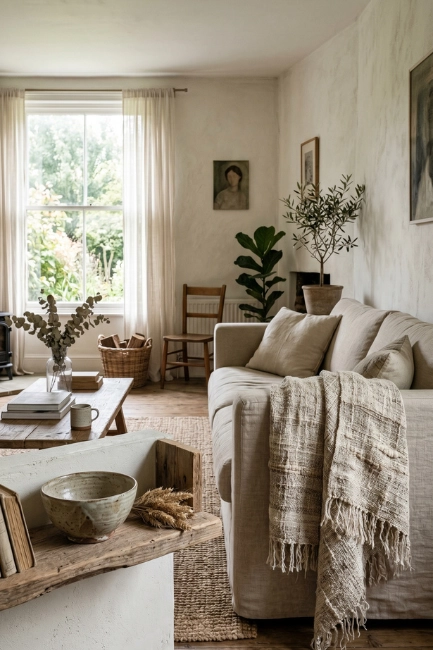
The wabi sabi philosophy celebrates imperfection, asymmetry, and the natural aging of materials, and incorporating these principles is one of the most meaningful japandi living room ideas for creating a space that feels genuinely authentic. Choose a slightly uneven handmade bowl, a piece of raw edged wood used as a shelf, or a textile with visible natural variation in weave or dye. Resist the urge to seek out perfectly matched or symmetrical objects throughout the room. This embrace of natural imperfection creates a living room that feels warm, human, and quietly meaningful rather than sterile or overly polished.
Open and Airy Layouts That Encourage Calm Movement
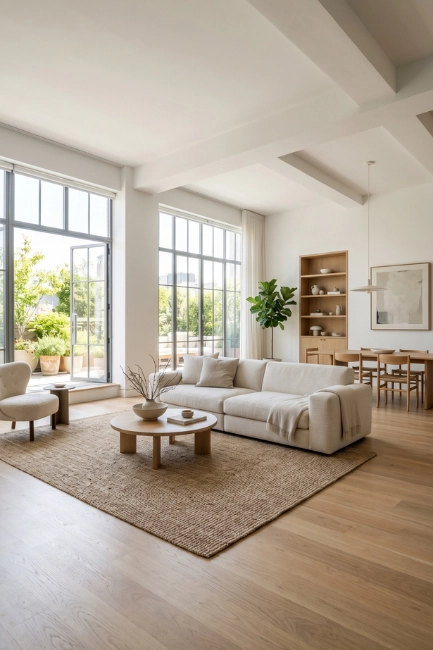
An open and airy layout is fundamental to the sense of calm that defines successful japandi living room ideas because cluttered or overly furnished spaces work directly against the philosophy’s core principles. Keep furniture pieces minimal and ensure generous walking space between each item. Avoid placing too many decorative objects on visible surfaces and allow negative space to remain a deliberate part of the room’s composition. This open approach to layout makes even a modestly sized living room feel significantly more spacious, peaceful, and easy to move through comfortably throughout the day.
Sculptural Decor Elements That Add Quiet Interest
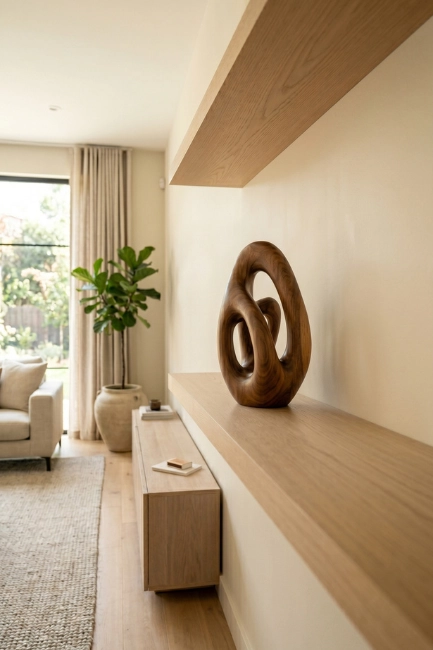
A single sculptural decor element can introduce visual interest and personality into a Japandi living room without disrupting the overall sense of calm and restraint. Choose one piece such as a carved wooden sculpture, a simple stone form, or an abstract ceramic object and place it on a shelf or side table where it can be appreciated without competing with other decorative items nearby. Avoid grouping multiple sculptural pieces together, as the power of this styling choice comes specifically from its singularity and the negative space surrounding it.
Stone and Wood Combinations for Natural Material Harmony
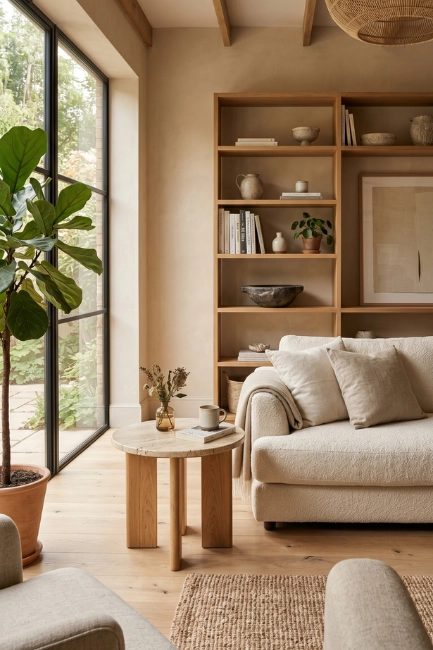
Pairing stone with wood creates one of the most visually grounding and texturally rich material combinations found throughout japandi living room ideas because both materials share a deep connection to the natural world. Introduce stone through a side table with a honed marble or travertine top paired with wooden legs, or a simple stone bowl placed on a wooden shelf. The contrast between the cool, smooth quality of stone and the warm, grained texture of wood creates a quiet visual tension that feels sophisticated and deeply intentional throughout the entire living space.
Built In Shelving Ideas for Seamless Storage Solutions
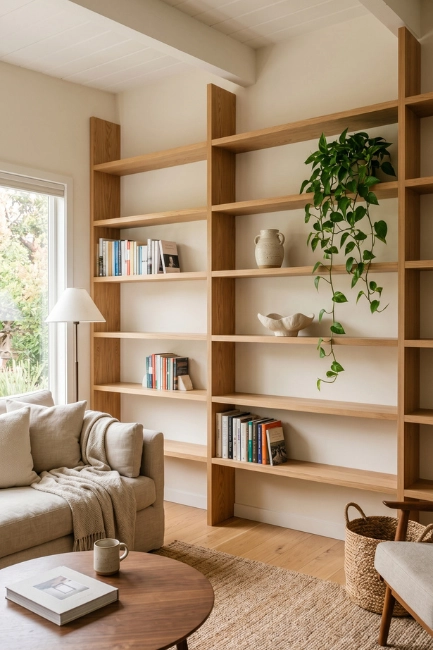
Built in shelving offers one of the most architecturally integrated japandi living room ideas because it provides essential storage while maintaining the clean, uncluttered lines that define the overall aesthetic. Choose simple open shelving in natural wood without ornate trim or hardware, built directly into an alcove or along one wall of the room. Style the shelves with a restrained mix of books, one or two ceramic objects, and a single trailing plant, leaving generous empty space between each grouping. This integrated storage approach keeps everyday items organized without disrupting the calm visual rhythm of the room.
Cozy Reading Corners With Quiet Comfort
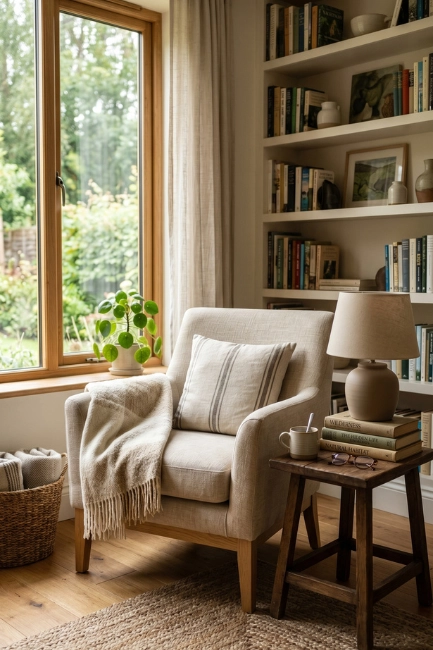
A dedicated reading corner adds a deeply personal and comforting dimension to a Japandi living room while remaining entirely consistent with the calm, restrained aesthetic found throughout the rest of the space. Position a single low slung accent chair near a window and pair it with a small wooden side table holding a simple lamp and a stack of books. Add one soft textured throw in a natural fiber draped over the arm of the chair. This quiet corner becomes a personally meaningful retreat within the larger living room, inviting slower and more intentional moments throughout the day.
Layered Natural Textures for Genuine Sensory Depth
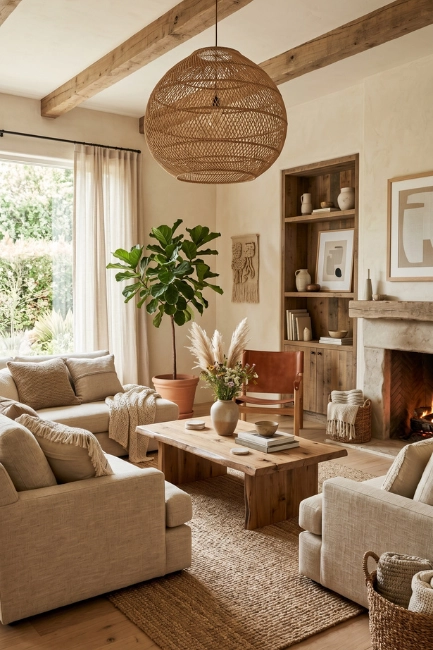
Layering multiple natural textures throughout a single room is one of the most effective japandi living room ideas for creating genuine sensory depth without relying on color or pattern to generate visual interest. Combine linen upholstery, a wool or jute rug, a raw wood coffee table, and a woven rattan light fixture within the same neutral color family. Each material introduces its own subtle variation in texture and light reflection, creating a room that feels rich and considered even within its deliberately restrained color palette and minimal decorative approach.
Black Accent Combinations for Subtle Contrast
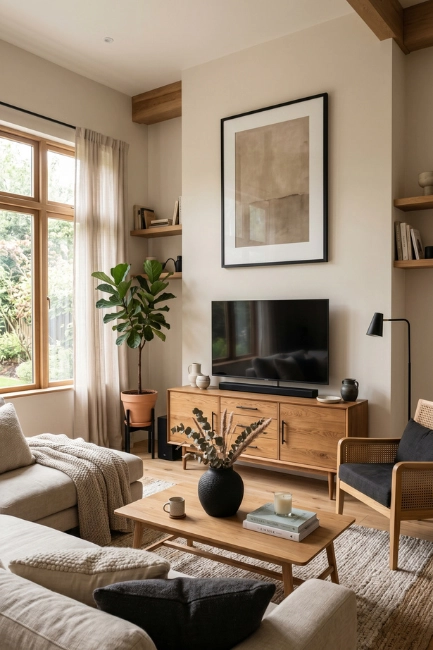
Introducing small touches of black creates a quiet but confident contrast against the otherwise warm and neutral palette found throughout most japandi living room ideas. Choose matte black hardware on a media console, a black metal frame on a piece of wall art, or a single black ceramic vase on the coffee table. Keep these accents minimal and intentional rather than introducing black as a dominant color throughout the room. This restrained use of contrast adds visual definition and a touch of modern sophistication without disrupting the calm and grounded atmosphere of the space.
Serene Conversation Areas Designed for Genuine Connection
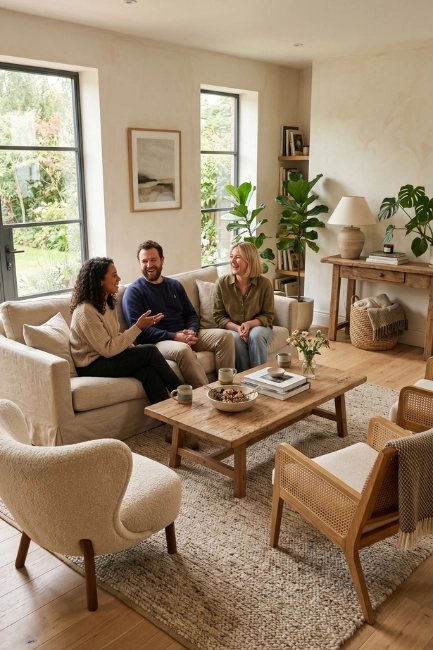
Designing a seating arrangement specifically for genuine conversation rather than simply facing a television screen reflects the deeper intention behind every successful Japandi living space. Angle two low profile chairs toward a sofa rather than lining all seating against the walls, creating a more intimate and connected circular conversation area. Place a low coffee table or floor cushion at the center of the grouping to anchor the space. This thoughtful arrangement encourages genuine connection and slower, more present interaction among the people who gather within the room.
Timeless Japandi Elegance That Never Falls Out of Style
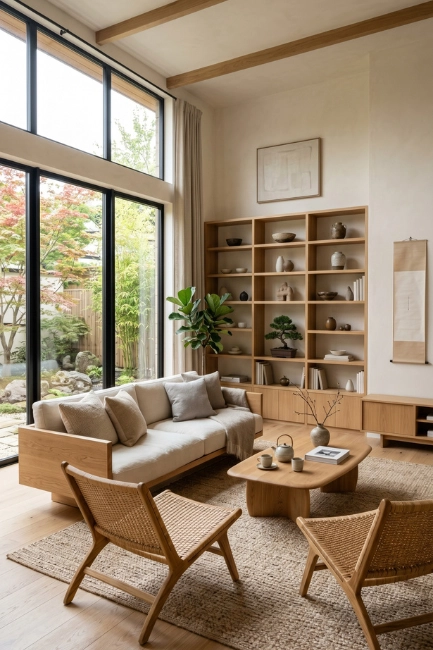
The most successful japandi living room ideas are ultimately built on principles of natural material honesty, intentional restraint, and quiet craftsmanship rather than passing decorating trends that quickly feel dated. A living room composed of low profile wooden furniture, warm neutral tones, and handmade ceramic details will continue to feel relevant and beautifully calm regardless of changing design fashions. This enduring approach rewards homeowners with a space that deepens in character and warmth with every passing year rather than requiring constant updating to remain visually and emotionally satisfying.
Conclusion
A Japandi living room offers a rare combination of warmth, restraint, and quiet sophistication that feels genuinely calming to live within every single day. The japandi living room ideas explored throughout this article demonstrate how natural materials, thoughtful texture layering, and intentional simplicity can transform any living space into a sanctuary of peaceful design. Whether you favor low profile furniture, wabi sabi inspired details, or serene conversation areas, every approach shared here offers a genuine and achievable starting point for your own interior transformation. Zendecora is always here to bring you the freshest modern home decor inspiration and interior styling trends to help you create spaces that feel calm, elegant, and beautifully considered.