
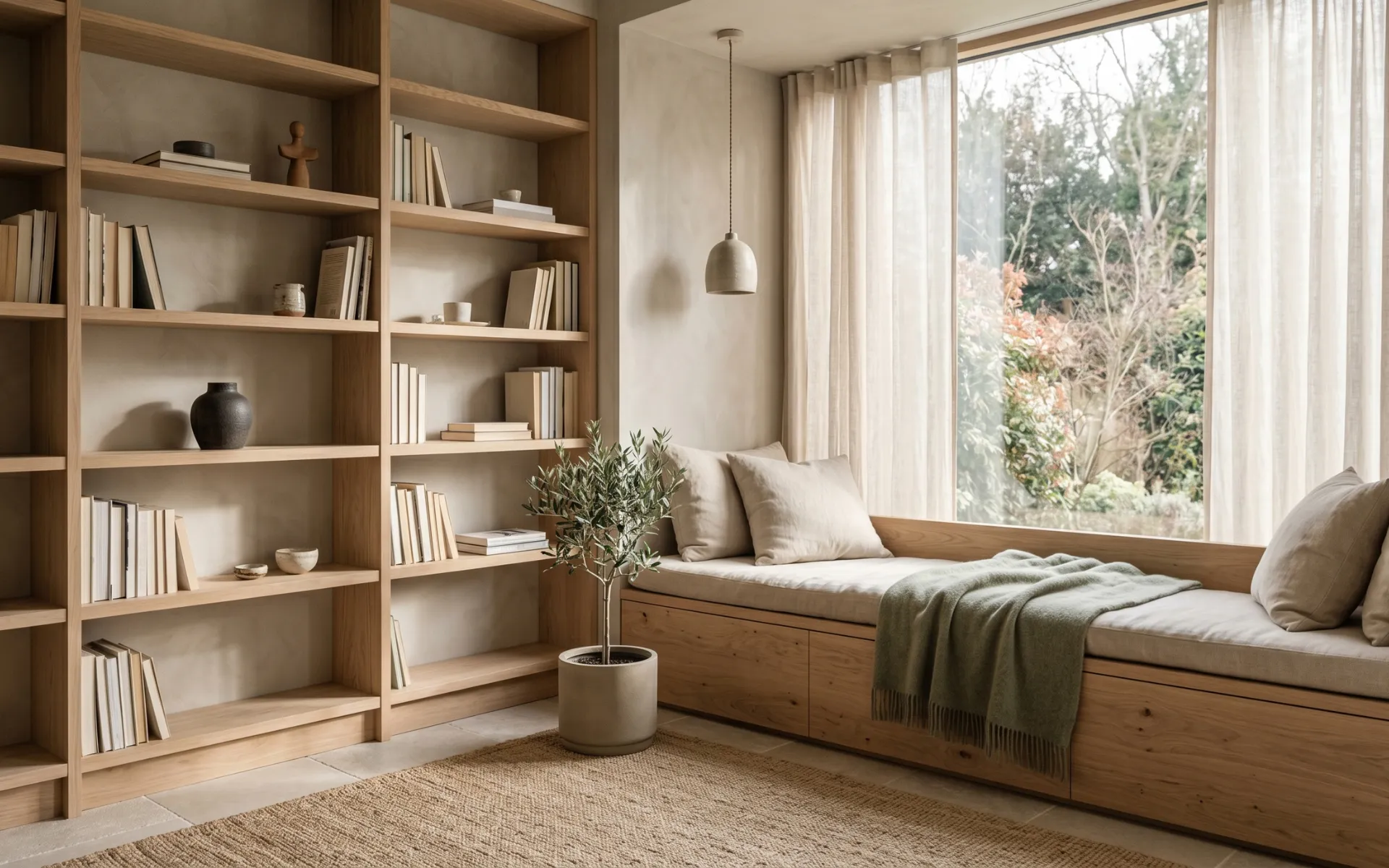
Still, Simple, and Beautiful: Japandi Reading Nook Ideas That Transform Any Corner of Your Home
A reading nook should feel like a pause from the world, and japandi reading nook ideas offer exactly that kind of quiet, intentional sanctuary. The Japandi aesthetic, born from the marriage of Japanese minimalism and Scandinavian warmth, creates spaces that feel both serene and deeply livable. Whether you are working with a spacious home or a compact apartment, this design approach helps transform an ordinary corner into a calming retreat for reading and relaxation. Zendecora is a modern home decor inspiration website that shares the latest interior styling trends and ideas.
The Calming Philosophy Behind Japandi Reading Nook Ideas
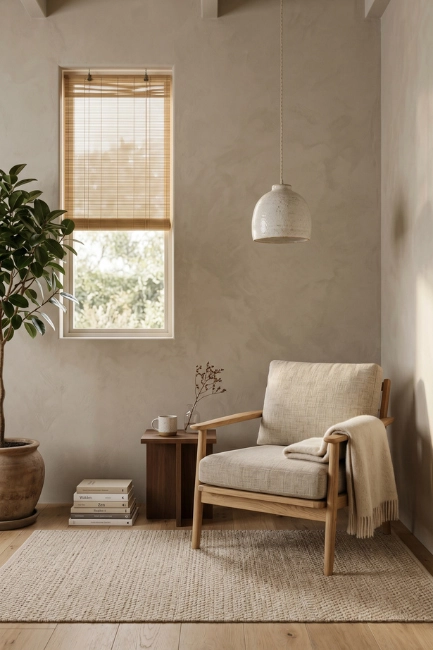
Understanding why japandi reading nook ideas feel so uniquely restful begins with understanding the design philosophy itself. Japandi is not just a visual style. It is a way of curating space that values stillness, function, and beauty in equal measure. Japanese wabi sabi embraces imperfection and impermanence while Scandinavian hygge celebrates warmth and comfort. Together they produce interiors that feel neither cold nor cluttered. A reading nook built on these principles becomes more than a chair in a corner. It becomes a deliberate retreat where every material, every proportion, and every detail earns its place without apology.
Floor Cushion Reading Corners That Feel Grounded and Serene
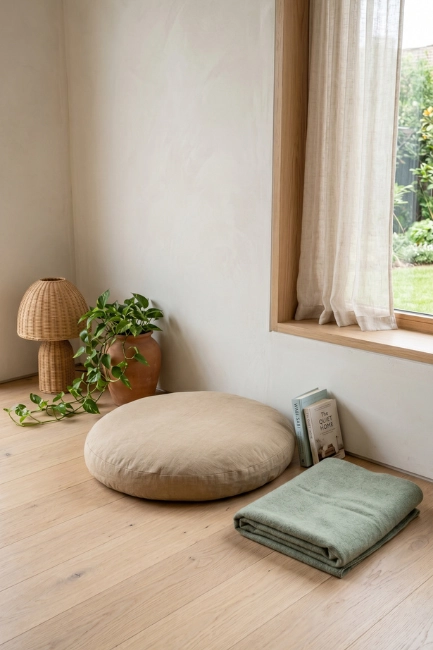
One of the most authentic expressions of japandi reading nook ideas is the floor cushion corner, drawn from Japanese tatami culture and softened with Scandinavian textile warmth. A large flat zafu style cushion in natural linen or undyed cotton sits low to the ground, inviting you to slow down and settle in. Layer a folded wool blanket beside it and lean two or three books against the wall nearby. The low seating arrangement changes your relationship with the room entirely, making even a small corner feel intentional and spacious. This approach works beautifully in apartments where floor space is more available than wall space.
Natural Wood Reading Benches With Minimalist Japandi Styling
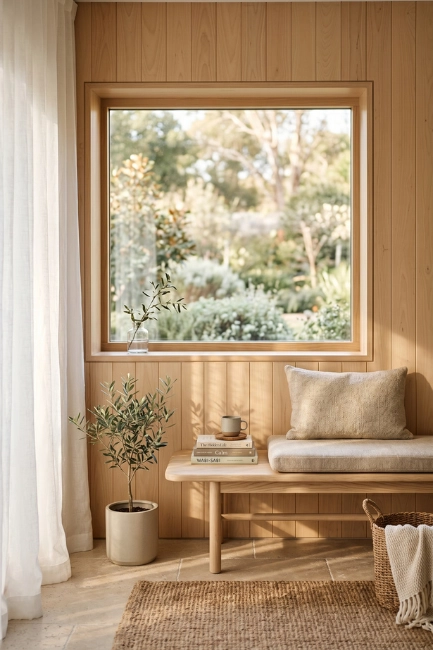
A solid wood reading bench is one of the most versatile and quietly beautiful furniture pieces you can introduce into a japandi reading nook. Choose one in pale ash, warm oak, or natural birch with a simple clean silhouette that has no unnecessary ornamentation. Add a single linen cushion in oat or stone tone for comfort, and position the bench beneath a window so natural light falls naturally across your reading space. The bench works equally well as a book display surface when not in use. This dual function quality is central to Japandi interior design, where every piece should serve more than one honest purpose.
Window Seat Japandi Nooks That Capture Natural Light Beautifully
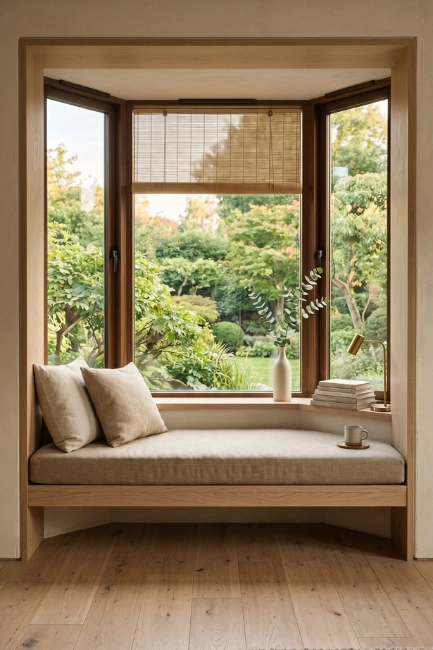
Natural light is one of the most defining elements in japandi reading nook ideas, and designing a window seat nook around it is one of the smartest approaches available. A built in bench seat along a bay window or a simple recessed window ledge transformed into a cushioned seat becomes the most naturally lit spot in the entire home. In Japandi styling, keep the window treatment minimal, perhaps a single bamboo roller blind or an unlined linen panel, so the light remains as honest and unfiltered as possible. Layering a thin wool throw and a single cushion is all the decoration this kind of nook ever needs.
Warm Neutral Color Palettes That Define the Japandi Mood
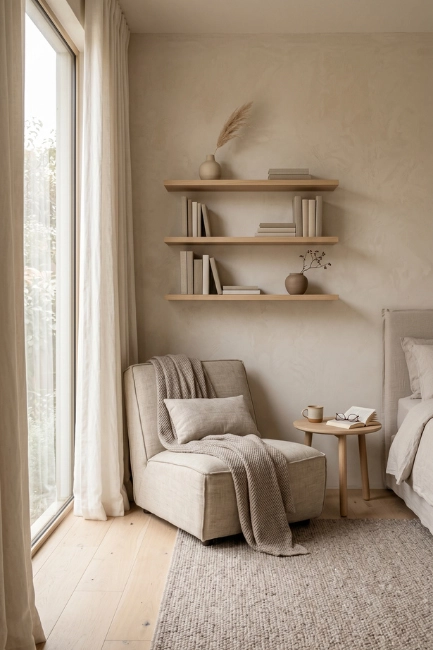
Color in a japandi reading nook should feel like it was borrowed from the landscape outside rather than chosen from a trend board. Warm neutrals including pale sand, soft mushroom, warm white, aged linen, and gentle greige form the backbone of this aesthetic. These tones create visual unity without monotony because their natural warmth shifts gently with the changing quality of light throughout the day. Avoid anything too bright, too saturated, or too stark. Even the books on the shelf, the cushion, the rug, and the ceramic objects nearby should all breathe within the same quiet family of tones for the space to feel genuinely cohesive.
Built In Bookshelf Styling for a Japandi Reading Corner
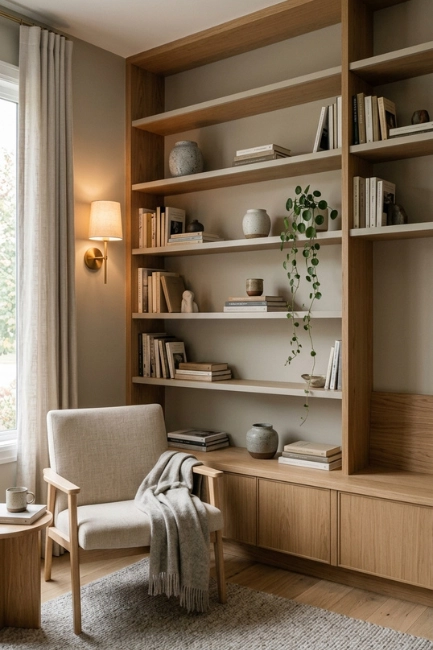
Built in bookshelves are one of the most powerful architectural tools in any japandi reading nook because they frame the space while keeping storage completely integrated and visually calm. In Japandi interior design, bookshelves are never overfilled. Books are arranged with breathing room between groups, with small ceramic objects, a single trailing plant, or a folded linen cloth acting as quiet punctuation between sections. Choose shelving in natural wood or a warm matte paint finish that matches the walls closely. The goal is for the shelves to feel like they grew from the room rather than being added as an afterthought to fill empty wall space.
Low Profile Furniture Arrangements That Open the Space
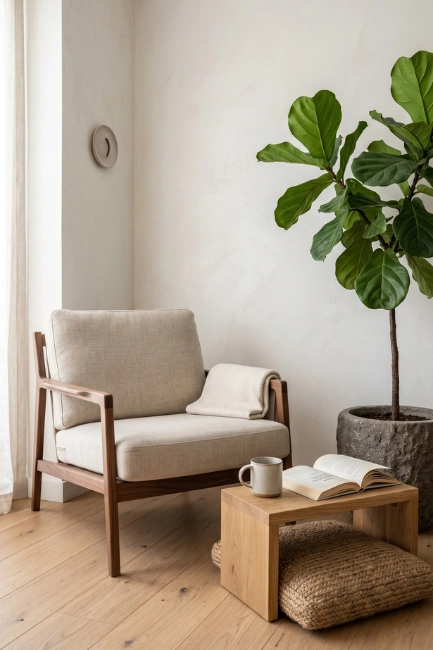
Low profile furniture is a defining characteristic of japandi reading nook ideas drawn from Japanese residential design, where proximity to the ground creates a sense of calm and visual spaciousness. A low slung armchair with a clean wooden frame and a slim linen upholstered seat immediately lowers the visual center of gravity in any room. Pair it with a small low side table in solid oak or natural walnut, positioned just within arm’s reach for a ceramic cup or a single open book. This kind of arrangement makes even a compact corner feel deliberate and open rather than cramped or cluttered by unnecessary vertical height.
Organic Textile Layering for Warmth Without Visual Noise
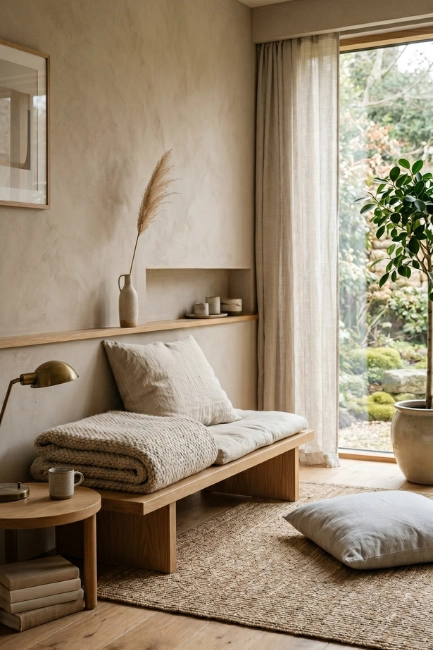
Textiles in a japandi reading nook should always feel generous in warmth but restrained in pattern and color. This balance is what separates Japandi from other cozy interior styles. Choose undyed or naturally dyed wool throws, washed linen cushion covers in warm neutral tones, and a flat woven cotton or jute rug underfoot. Avoid bold prints, graphic patterns, or anything that competes visually with the stillness of the space. The textures themselves, the roughness of linen, the softness of wool, and the weave of jute, provide all the visual interest the nook needs. Textile layering in this way creates warmth you can see as much as feel.
Japandi Reading Nook Ideas for Small Apartments and Compact Spaces
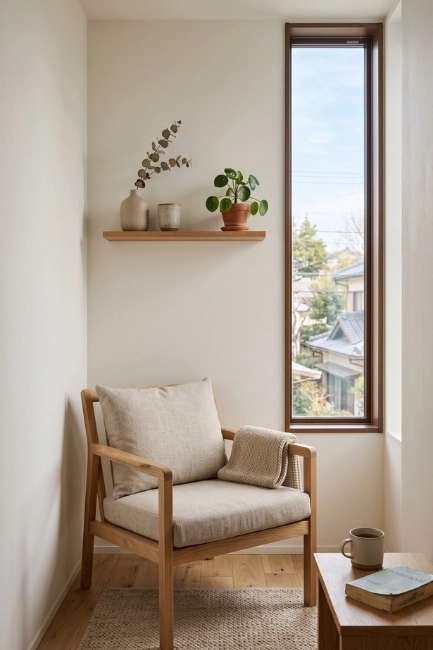
Small spaces are where japandi reading nook ideas truly shine because the philosophy is built for exactly this kind of constraint. In a compact apartment, a reading nook does not need a dedicated room or even a full wall. A single armchair tucked into an alcove, a window corner claimed with a floor cushion, or a narrow bench positioned beside a bookshelf can all become a complete and beautiful reading retreat. The key is editing ruthlessly. Remove everything that does not serve the act of reading or the experience of stillness. What remains will always be enough, and often it will be more beautiful for its restraint.
Rattan and Woven Accent Pieces That Add Organic Depth
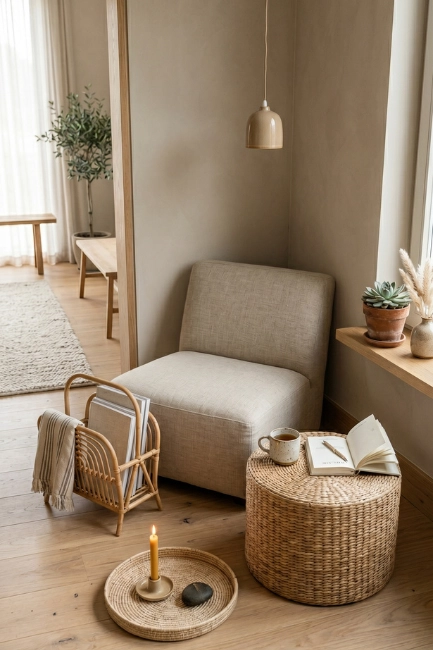
Rattan, woven seagrass, and natural fiber accent pieces bring an organic softness to japandi reading nook ideas without introducing color or visual complexity. A rattan magazine holder beside the reading chair, a woven floor tray holding a candle and a small ceramic object, or a seagrass side table used as a book surface each contribute texture and warmth in the most understated way. These natural woven materials connect the interior to the natural world in a way that feels entirely at home within the Scandinavian Japanese design blend. They also age beautifully over time, which aligns perfectly with the wabi sabi value of embracing the honest character of natural materials.
Minimalist Japandi Reading Nook Ideas With Intentional Simplicity
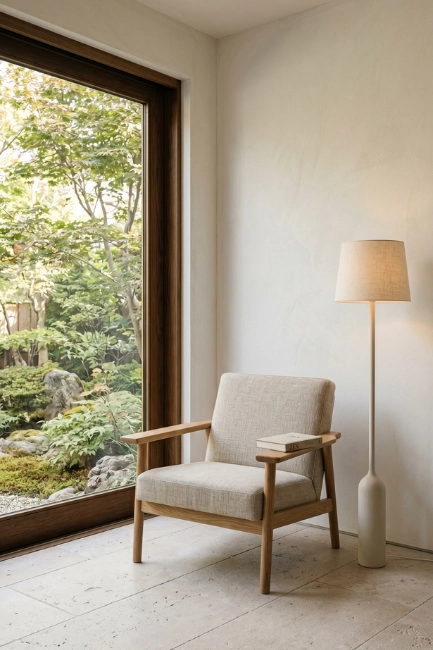
The most powerful japandi reading nook ideas are often the most pared back. Minimalism in the Japandi context is not about emptiness but about precision. Every single element in the nook is chosen because it adds something genuine, whether that is comfort, beauty, or function. A single well proportioned chair, one perfectly placed lamp, and a small side surface are genuinely all you need. The walls can stay bare. The floor can speak for itself. This level of intentional simplicity requires confidence as a decorator, but the result is a reading space that feels more peaceful and more complete than any heavily decorated corner ever could.
Nature Inspired Decor Accents That Keep the Nook Grounded
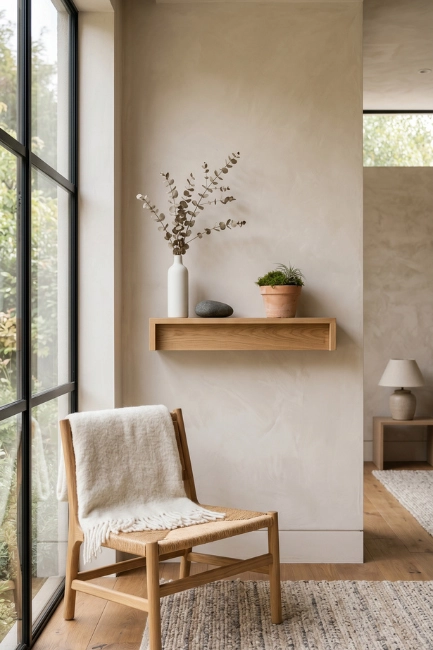
Small nature inspired accents are what give a japandi reading nook its soul without disrupting its calm. A single ceramic vase holding one dried eucalyptus stem, a smooth river stone used as a paperweight, a small potted moss arrangement on a low shelf, or a piece of driftwood resting against the baseboard all bring the quiet presence of the natural world into the reading space. These accents should feel found rather than purchased, simple rather than styled. In cozy reading nook design rooted in Japandi values, the most impactful decorative moments are always the ones that look like they barely tried at all yet feel entirely alive.
Tatami Inspired Japandi Reading Corners With Japanese Roots
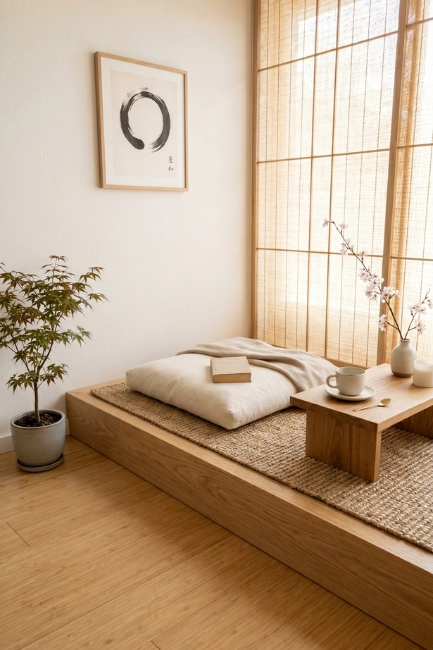
The tatami inspired reading corner draws directly from traditional Japanese residential culture, where floor level living creates a deeply grounded and meditative relationship with space. In a modern home, this translates to a low platform in natural wood topped with a thick woven mat in a natural fiber, a flat floor cushion in undyed cotton, and a small low table beside it. Keep the surrounding walls bare or feature a single piece of simple brushstroke artwork in a natural wood frame. This kind of japandi reading nook idea honors the Japanese half of the aesthetic most directly, offering a reading experience that feels both ancient and entirely contemporary.
Soft Ambient Lighting That Creates a Cozy Reading Atmosphere
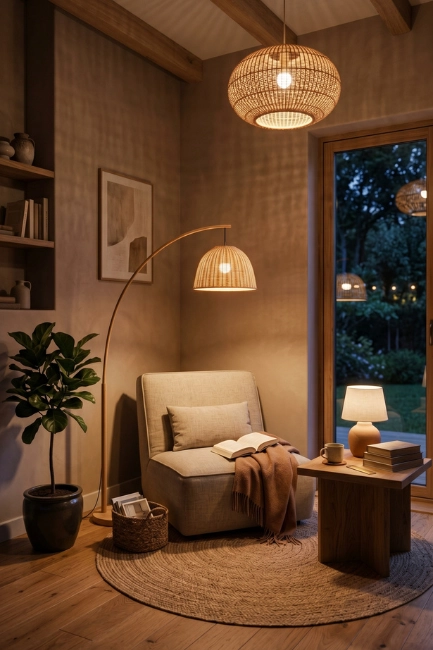
Lighting transforms a japandi reading nook from a functional corner into a genuinely immersive retreat, and the approach should always prioritize softness over brightness. A ceramic table lamp with a warm filament bulb, a slim wooden arc floor lamp positioned just above the reading chair, or a single woven pendant casting gentle downward light all create the kind of warm intimate glow that makes reading feel like a ritual. Avoid overhead lighting entirely if possible. In Japandi interior design, light sources are positioned low and close, mimicking the quality of candlelight and creating a sense of gathered warmth around the specific act of sitting and reading.
Compact Shelf Styling for a Japandi Reading Nook Corner
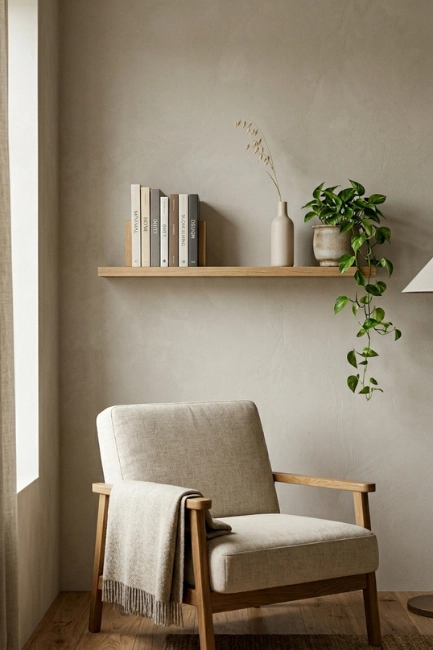
A compact floating shelf positioned beside or above a reading chair is one of the most practical and visually satisfying elements in japandi reading nook ideas. Rather than overwhelming the shelf with books, treat it as a curated surface. Arrange four or five books vertically on one side, leave a small gap, then place a single ceramic object. Add one small plant and allow the rest of the shelf to breathe. This restrained approach to shelf styling reflects the Japandi value of negative space, where what is left empty is just as intentional and beautiful as what is placed. A well styled shelf makes the entire reading corner feel considered from every angle.
Japandi Reading Nook Ideas Using Shoji Screen Dividers
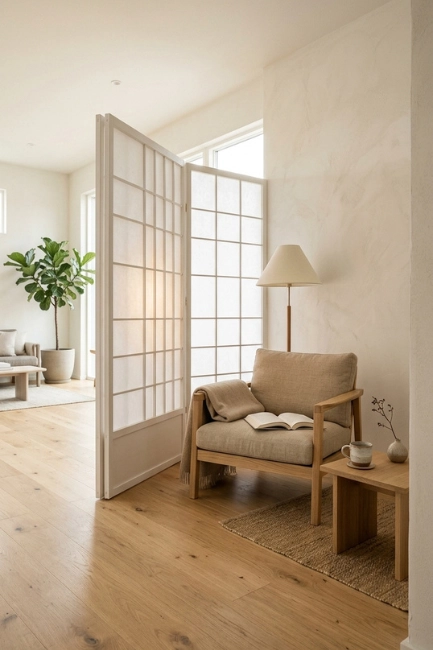
A shoji screen divider is one of the most elegant ways to define and separate a japandi reading nook from the surrounding living space without the permanence of a wall. The translucent paper panels of a traditional shoji screen filter light beautifully, creating a soft diffused glow inside the nook that feels genuinely meditative. Position the screen at an angle to carve out a cozy corner in a larger room, then furnish the enclosed space simply with a low chair, a small side table, and a single lamp. The screen itself becomes the primary design statement, honoring the Japanese roots of the Japandi style while dividing the room with quiet architectural grace.
Scandinavian Japanese Design Blend in a Reading Corner
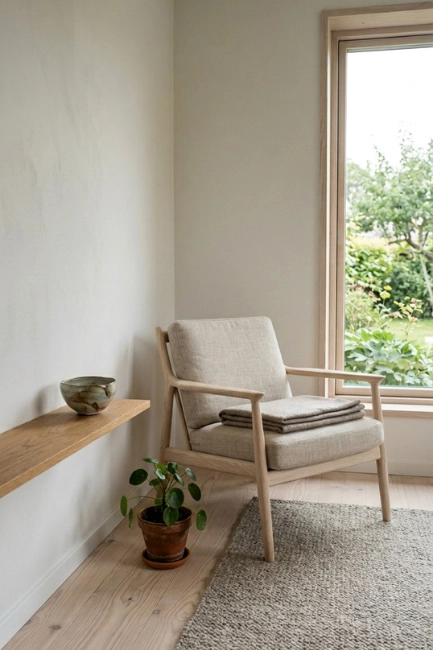
The beauty of japandi reading nook ideas lies in how seamlessly the Scandinavian and Japanese design traditions support each other. Scandinavian design brings the warmth of natural wood, the comfort of textiles, and the value of functional beauty. Japanese design brings discipline, negative space, and a reverence for natural materials in their most honest form. In a reading corner, this blend looks like a solid pale oak chair with a simple handmade linen cushion, positioned beside a bare wall with a single ceramic object on a low shelf. No excess. No decoration for decoration’s sake. Just two design traditions agreeing, quietly and beautifully, on what really matters in a well lived space.
Cozy Japandi Reading Nook Ideas for Hygge Inspired Evenings
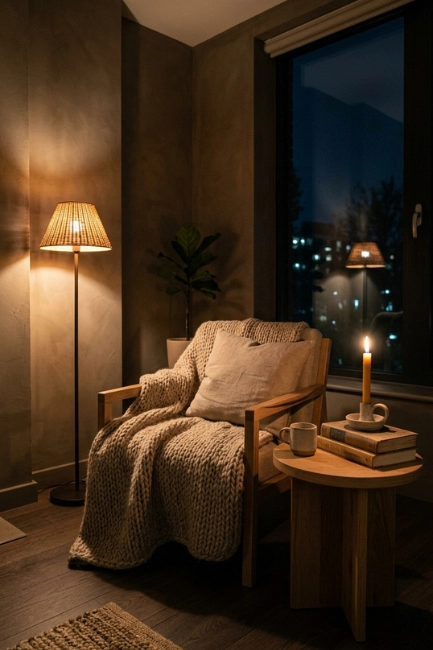
Hygge, the Scandinavian concept of cozy togetherness and personal warmth, finds a natural home within japandi reading nook ideas when applied to evening rituals. As daylight fades, the reading nook should shift into something even softer and more enveloping. Layer a generous wool throw across the chair. Light a single beeswax candle on the side table. Switch on a warm amber lamp and let the rest of the room fade into shadow. Stack two or three books you are currently reading within reach. This evening version of the japandi reading nook honors the hygge spirit while remaining entirely true to the clean and intentional minimalism that defines the Japandi aesthetic at every hour.
Japandi Reading Nook Ideas Inspired by Wabi Sabi Beauty
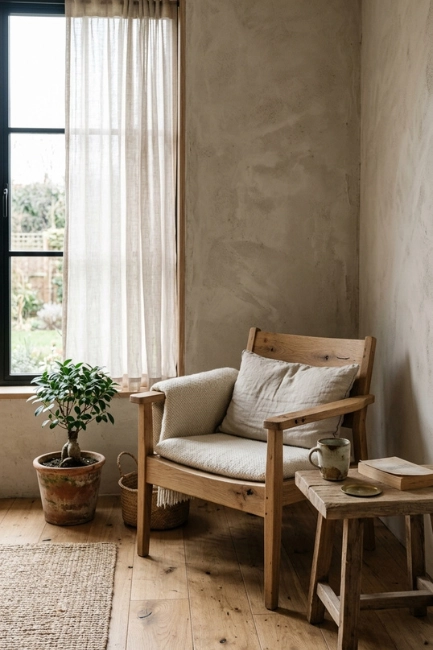
Wabi sabi is the Japanese art of finding beauty in imperfection, impermanence, and incompleteness, and it is one of the most quietly powerful influences within japandi reading nook ideas. In practice, wabi sabi means choosing a ceramic cup with an uneven glaze over a perfect mass produced one. It means appreciating the knot in a wood shelf surface rather than hiding it. It means leaving one corner of the reading nook intentionally bare rather than filling every surface. When a japandi reading nook is designed with wabi sabi awareness, it stops feeling like a styled space and starts feeling like a genuinely lived and deeply personal retreat that improves over time.
Conclusion
Every japandi reading nook idea explored in this article shares one common truth: the best reading corners are the ones that ask the least of you visually while giving the most back in terms of calm, comfort, and clarity. From floor cushion corners and tatami inspired platforms to window seat nooks and shoji screen dividers, japandi reading nook ideas prove that a small amount of intentional design always outperforms a large amount of decoration. You do not need a big space or an expensive renovation to create something genuinely beautiful. You need only the right materials, the right restraint, and a clear sense of what matters.
For more japandi reading nook ideas and interior styling inspiration, Zendecora is your trusted home for modern decor direction, always thoughtfully curated and completely free.






One Comment