Wabi-Sabi Meets Scandi Calm: Beautiful Japandi Bedroom Ideas to Inspire Your Next Refresh
There is something quietly powerful about walking into a room that feels both effortless and intentional, and that is exactly the feeling a Japandi bedroom creates. Born from the graceful union of Japanese minimalism and Scandinavian simplicity, this style has taken the interior world by storm. At Zendecora, a modern home decor inspiration brand dedicated to sharing ideas and styling trends, we are here to guide your journey. Whether you are refreshing a small apartment or transforming a full suite, these ideas will help you create a space that feels serene, soulful, and beautifully lived-in.
The Foundation of a Japandi Bedroom: Why Less Is Always More
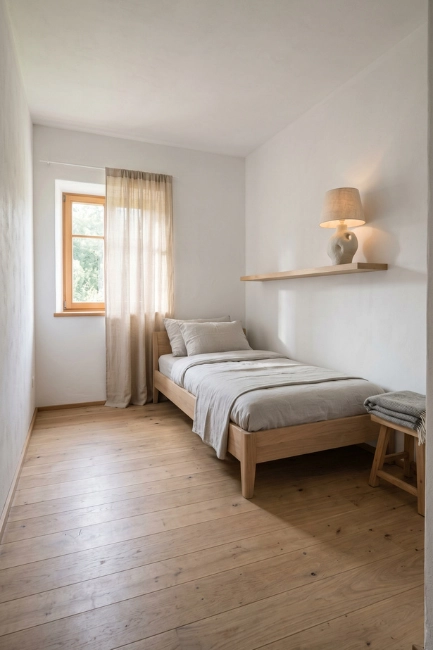
A Japandi bedroom is built on the philosophy that every single object in a room should earn its place. Unlike maximalist interiors that layer décor for visual effect, this style asks you to slow down and consider whether each piece serves a purpose functionally, emotionally, or aesthetically. The result is a space that breathes. Walls are left largely bare, surfaces are uncluttered, and negative space is treated as a design element in itself. This intentionality creates a room that feels genuinely restful, not just visually tidy. For anyone who finds themselves overwhelmed by a busy home environment, adopting this foundational mindset is the very first and most transformative step.
Warm Neutral Color Palettes That Anchor the Entire Room
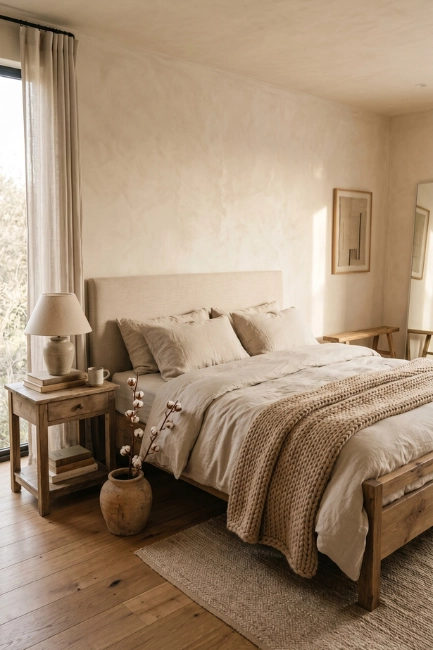
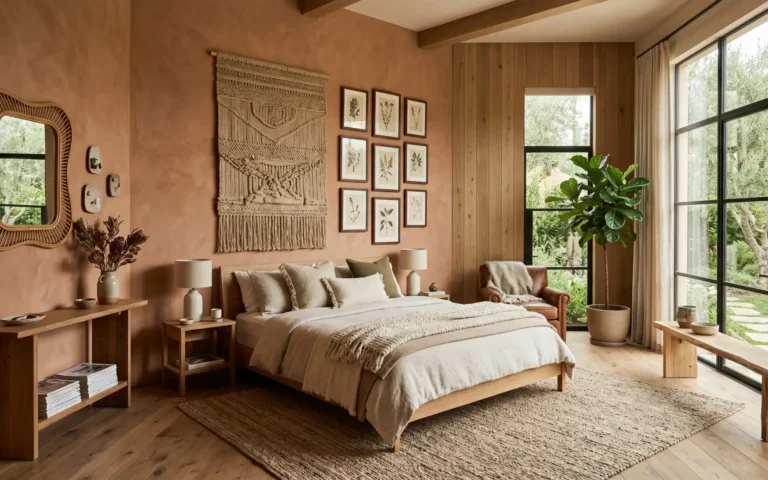
Color in a Japandi space is never loud, but it is far from lifeless. The most successful rooms in this style are built around warm, earthy neutrals think milky oat, raw linen, soft terracotta, warm taupe, dusty sand, and the palest blush grey. These tones are inspired by nature and carry a quiet warmth that feels deeply livable. Rather than painting all four walls a single shade, consider layering tones subtly a slightly warmer ceiling, a matte plaster feature wall behind the bed, soft-toned bedding that blends rather than contrasts. The depth that comes from these quiet tonal variations is what elevates a bedroom from simply beige to genuinely beautiful.
Low Platform Beds That Bring a Japanese Sense of Groundedness
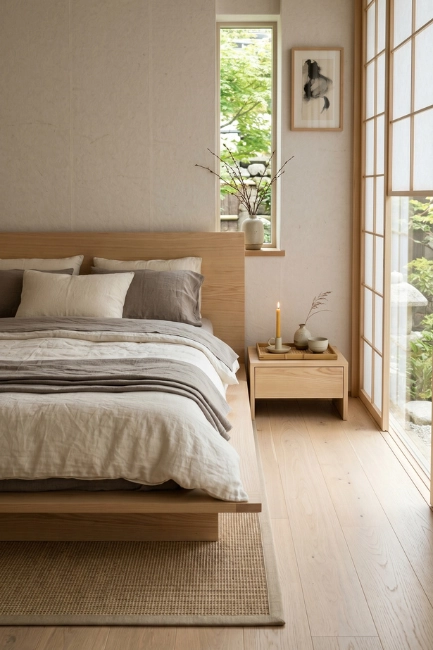
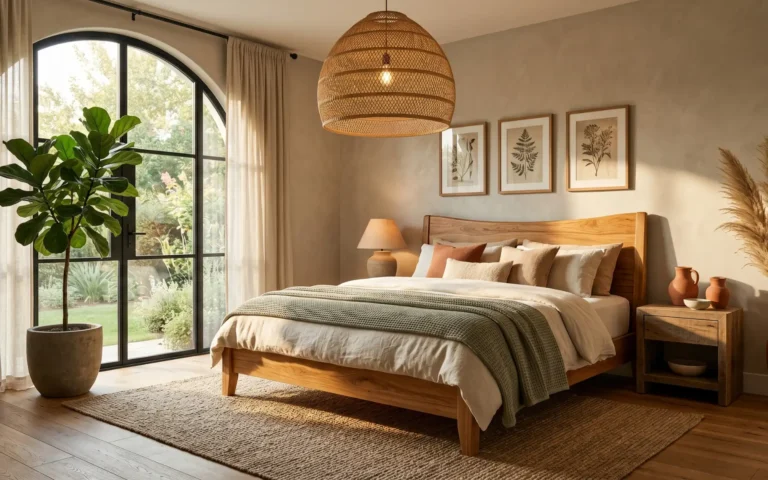
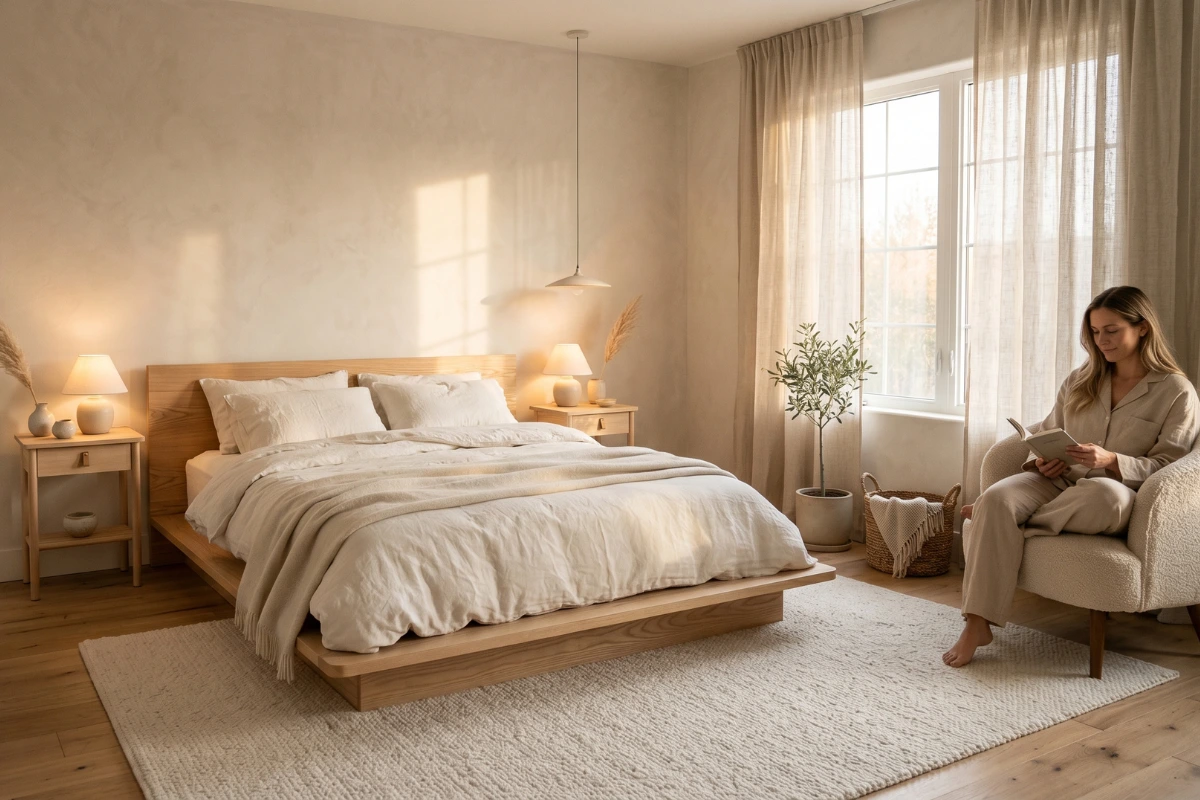
One of the most defining furniture choices in a Japandi design is the bed frame itself. Low-profile platform beds, often inspired by traditional Japanese sleeping arrangements, sit close to the floor and immediately change the visual energy of a room. They make ceilings feel higher, the room feel more spacious, and perhaps most importantly they feel grounding in the most literal sense. Look for frames crafted in natural wood like ash, walnut, or light oak, with clean straight lines and minimal detailing. Skip the ornate headboards. A simple slatted or solid-panel headboard in a warm wood tone is all the visual interest you need.
Bringing Nature Indoors With Raw Wood Textures and Organic Forms
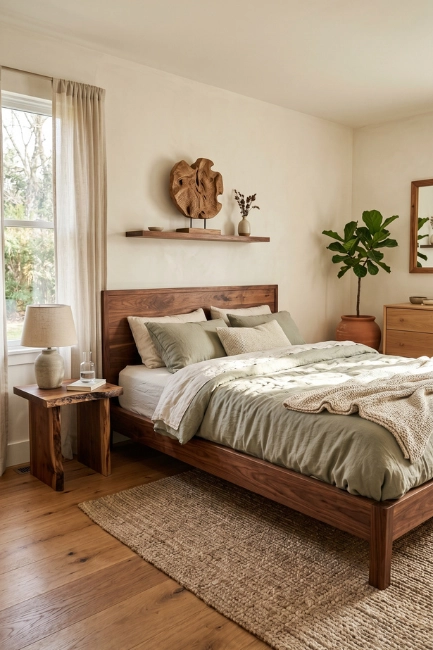
Wood is not just a material in Japandi design it is a living, breathing presence in the room. The grains, knots, and natural variations found in raw and lightly finished timber bring a sense of nature indoors that no paint or wallpaper can replicate. In a bedroom, incorporate wood through bed frames, floating shelves, side tables, and even small sculptural objects carved from a single block. Prefer lighter woods like birch and ash for a more Scandinavian brightness, or richer tones like walnut and teak for a Japanese depth. Avoid over-finishing slightly matte or natural oil finishes that let the grain breathe will always feel more authentic to this aesthetic.
Wabi-Sabi Accents: Finding Beauty in Imperfection
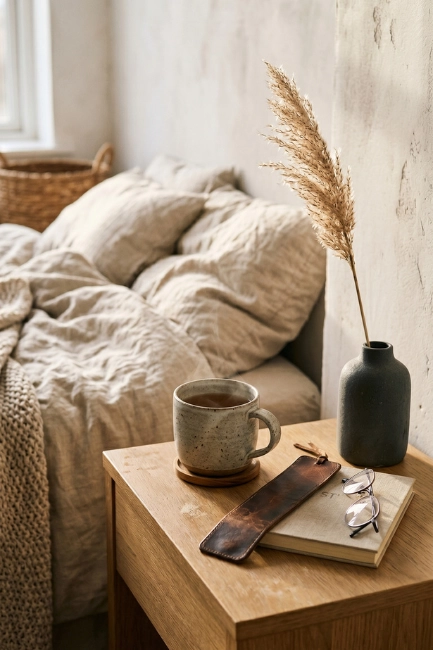
The Japanese concept of wabi-sabi appreciating beauty in imperfection, impermanence, and incompleteness is one of the most soulful contributions Japandi design borrows from its Eastern roots. In a bedroom, this translates to choosing objects that carry a handmade quality: a slightly uneven ceramic vase, a linen throw that is a little rumpled, a driftwood branch placed simply in a tall floor vessel. These imperfect elements soften what could otherwise feel like a cold, overly styled space. Wabi-sabi gives a Japandi bedroom its humanity. It is the reason these interiors look lived-in and loveable rather than like a showroom floor.
The Art of Soft, Layered Bedding in Muted Tones
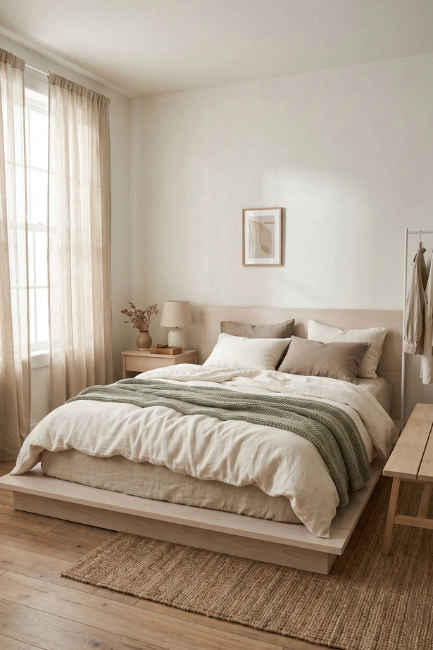
Bedding is one of the most tactile and comforting elements of the entire room. The goal is not a perfectly pressed hotel finish but an effortlessly layered look that invites you to sink in. Start with washed linen sheets in oatmeal or pale stone, layer a soft ivory duvet, then add a textured blanket in muted sage or deep charcoal folded loosely at the foot. Keep pillows to two or three in tone-on-tone shades. The result is a bed that feels both minimal and incredibly inviting.
Soft Ambient Lighting That Feels Like Candlelight
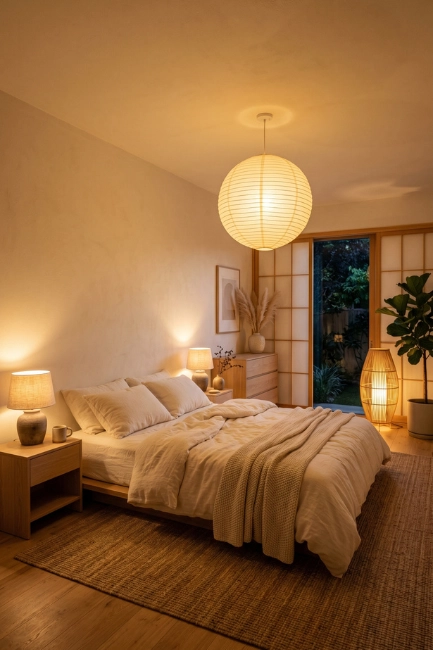
Lighting should never be harsh or overhead-dominant. The most beautiful spaces in this style rely on layered, warm-toned ambient light that mimics candlelight or the golden hour. Swap cool-white bulbs for warm 2700K alternatives, then layer across three levels: a table lamp on each side of the bed, a discreet wall sconce for indirect uplighting, and a floor lamp in the corner. Paper or linen shades diffuse light softly, and a candleholder on the nightstand adds quiet visual warmth to the entire room.
Small Japandi Bedroom Ideas That Make Every Inch Feel Intentional
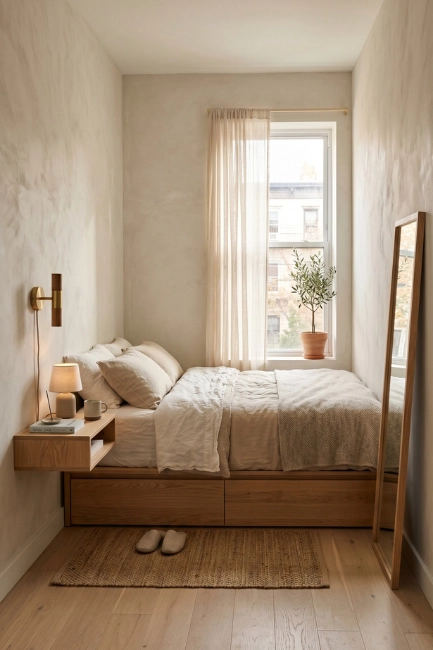
Designing a small bedroom in the Japandi style is not a compromise it is actually where this aesthetic truly shines. The philosophy of owning only what is necessary and using every surface wisely aligns beautifully with compact living. Choose furniture with double functions: a bed frame with under-bed storage drawers, a low bench at the foot that doubles as a place to lay out tomorrow’s outfit, a floating shelf that acts as both nightstand and display ledge. Keep the floor as clear as possible visible floor space visually expands a room beyond its physical dimensions. Mirrors placed thoughtfully can amplify light and depth without adding any visual clutter.
Tatami-Inspired Flooring and Natural Woven Surfaces
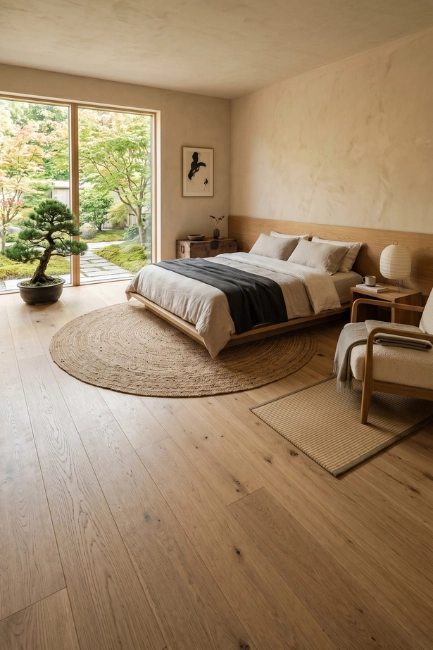
While few modern homes include authentic tatami mats, the spirit behind them natural fiber, warmth, texture underfoot is entirely achievable in a contemporary Japandi bedroom. Consider layering a natural jute or seagrass area rug beneath the bed to define the sleeping zone and introduce an organic texture. Woven rush floor mats placed near a reading nook or wardrobe area add tactile depth without pattern or color distraction. These natural surfaces bring the outdoors in and speak to the deeper Japanese appreciation for materials that age beautifully over time. Pair them with wide-plank wood flooring in a lighter stain for a floor treatment that feels both grounded and effortlessly stylish.
Shoji-Inspired Room Dividers and Privacy Screens
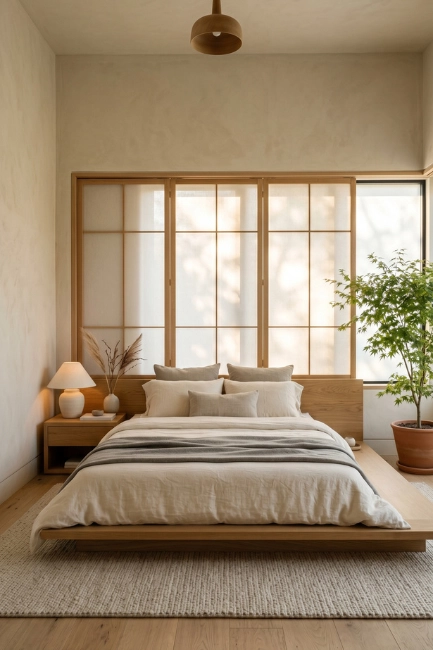
The shoji screen Japan’s beloved translucent paper panel framed in wood has become one of the most recognizable and elegant additions to a Japandi bedroom. In modern interpretations, you do not need the traditional rice paper panel. Contemporary versions in frosted glass, linen fabric, or simple slatted wood deliver the same sense of filtered privacy and architectural beauty. Use a screen to separate a sleeping area from a dressing zone, to soften a wall of built-in wardrobes, or simply as a decorative backdrop behind the bed. Even a single screen panel leaning casually against a wall adds an instant layer of sophistication and calm that feels distinctly Japandi.
The Japandi Bedroom Color Palette for Luxury Minimal Spaces
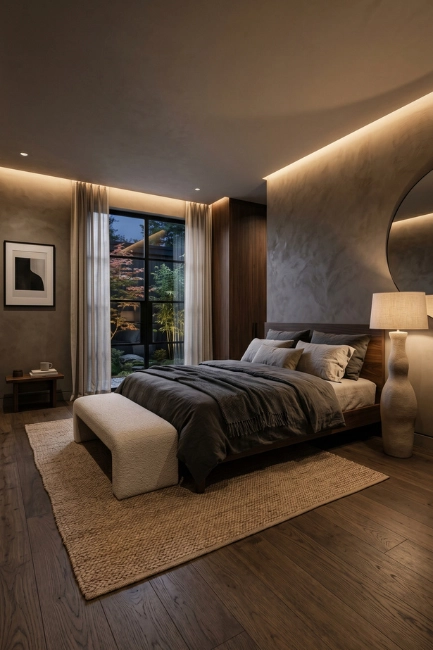
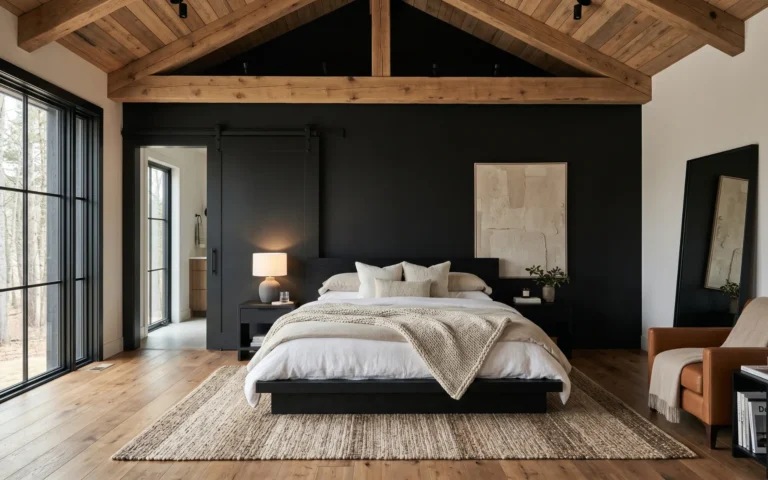
When Japandi meets luxury, the color palette shifts ever so slightly deeper without losing its calm. Think charcoal linen, deep mushroom, aged ivory, dark walnut, and barely-there sage. These are not bold colors; they are refined, sophisticated tones that communicate quality without announcement. A dark walnut bed frame against a deeply textured limewash wall in warm ash grey creates a visual richness that feels far more expensive than any decorative object could. Introduce a single muted accent a deep olive pillow, a graphite ceramic lamp base to add depth without disrupting the harmony. Luxury in a Japandi context is always whispered, never shouted.
Mindful Plant Styling: Green Without Overwhelm
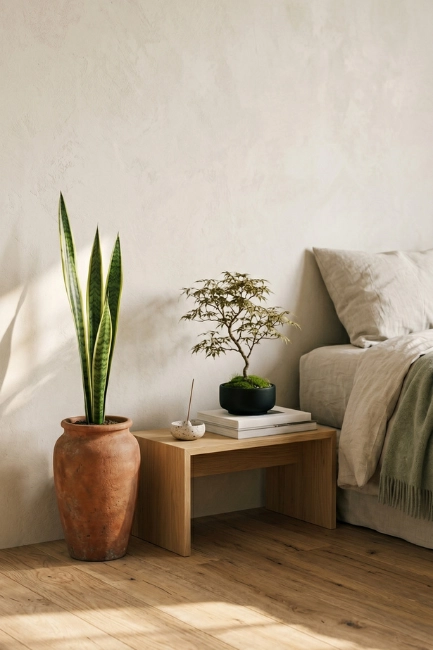
Plants are carefully chosen and sparsely placed in this style. The goal is one or two thoughtfully positioned pieces that bring a breath of life into a restrained space. A tall snake plant in a matte clay pot, a small bonsai on a low shelf, or a trailing pothos cascading from a floating ledge all work beautifully. Choose pots in matte earth tones and avoid colorful or pattern-heavy planters. The plant should feel like it belongs, not like it was placed as a styling prop.
Scent, Ritual, and the Role of Negative Space
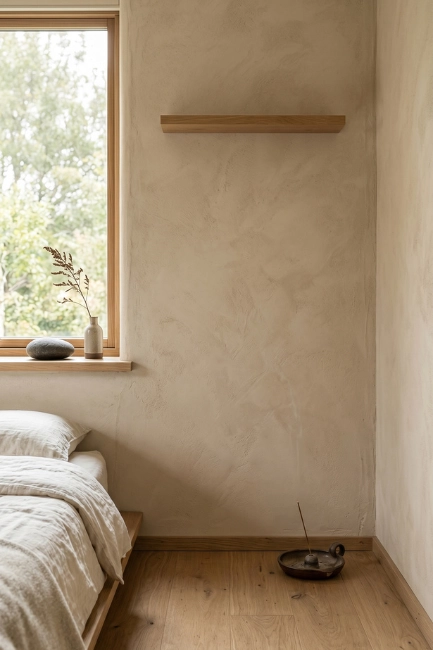
A Japandi bedroom is not only a visual experience it is a multi-sensory one. Negative space, the intentional emptiness left in a room, is as important as any piece of furniture. A bare wall is not a mistake; it is breathing room. An empty shelf is not unfinished; it is mindful restraint. Within this quiet spaciousness, small ritual objects take on great presence: an incense holder with a single charred stick, a smooth river stone on a windowsill, a tiny oil diffuser in a corner. These objects do not decorate the room so much as they anchor it. They invite a slowing down, a noticing, a sense that this space has been considered with great care and intention.
Scandinavian Hygge Meets Japanese Ma: The Cozy and the Empty
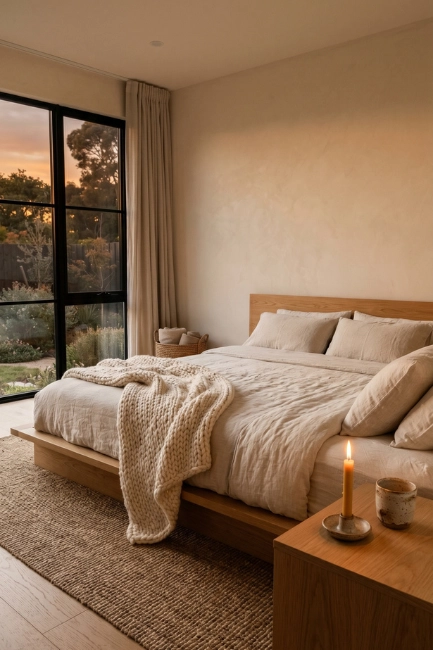
Scandinavian interior design brings the concept of hygge a warm, cozy, connected feeling while Japanese design philosophy offers ma, the meaningful appreciation of empty space. In a Japandi bedroom, these two ideas do not cancel each other out; they balance each other beautifully. Hygge shows up in the tactile softness of a chunky knit throw, in the warm glow of a bedside candle, in the slight imperfection of hand-thrown ceramics on the nightstand. Ma shows up in the empty stretch of wall above the bed, in the uncluttered floor, in the single plant instead of five. Together, they create a room that is both cozy enough to retreat into and spacious enough to let the mind rest completely.
Natural Fiber Textiles: Linen, Cotton, and Jute in Harmony
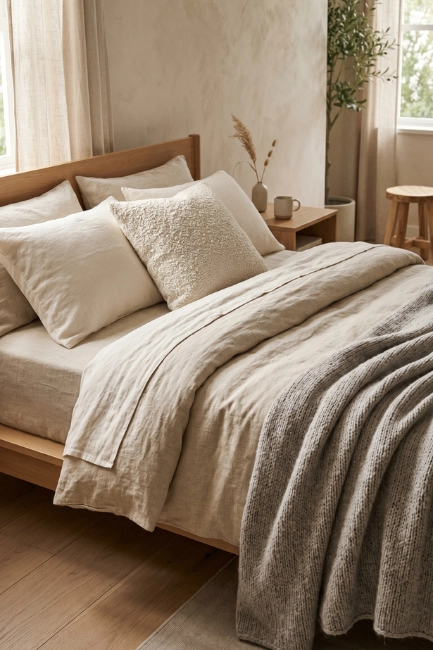
Textiles in a Japandi bedroom are chosen for their feel as much as their look, and natural fibers are the only option worth considering. Linen is the star it wrinkles beautifully, softens with every wash, and carries a casual elegance that no synthetic fabric can imitate. Layer it with cotton for breathability, add a jute or sisal accent through rugs or storage baskets, and introduce a touch of wool or boucle for winter depth. Avoid polyester, microfiber, and anything with a sheen or pattern. The textiles in this space should feel like they came from the earth because in the best versions of this aesthetic, that is exactly where they did.
Storage Without Sacrifice: Beautifully Concealed Clutter
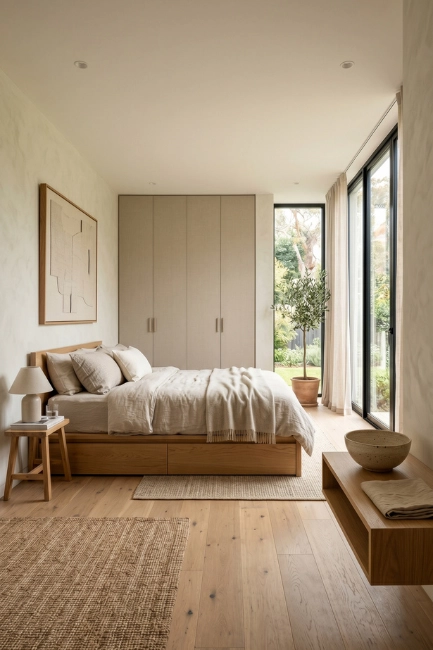
In a true Japandi bedroom, storage is not an afterthought it is part of the design system. The most elegant solution is always concealment: built-in wardrobes with flat panel doors in a matte finish, under-bed drawers, wide floating shelves with baskets in natural seagrass or undyed linen. Everything that is out on display should be intentionally beautiful. Everything else cables, extra pillows, reading glasses, chargers should be tucked away in a way that is easy to access but invisible to the eye. This is not about living with less for the sake of it; it is about understanding that visual peace is worth the small discipline of putting things away.
Japandi Bedroom Ideas for Couples: Balancing Two Personalities in One Space
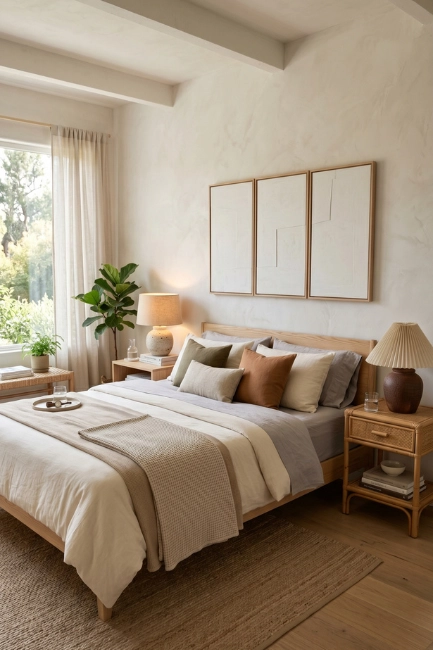
Creating a Japandi bedroom that works for two people requires a slightly different approach to styling. The key is symmetry without rigidity two matching nightstands that are not identically styled, two different lamps that share the same material family, a bedding arrangement that layers rather than matches perfectly. Each person might bring one personal element to their side: a favourite book, a particular plant, a meaningful object. These small expressions of individuality are held together by the shared neutral palette and the overarching commitment to calm and simplicity. The result is a bedroom that feels genuinely personal to both people without the visual chaos that often accompanies a two-person space.
Incorporating Handcrafted and Artisan Objects Thoughtfully
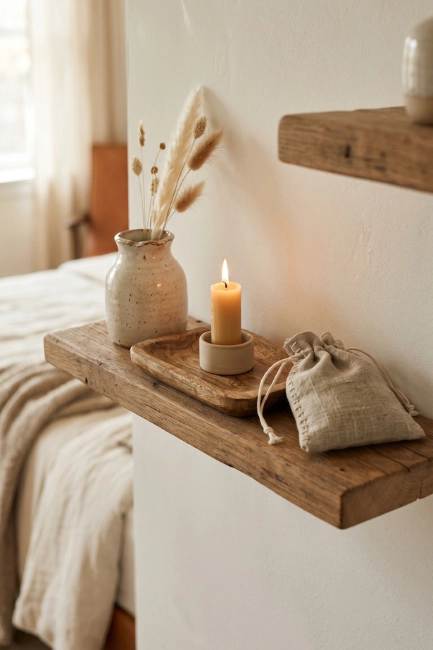
In a Japandi bedroom, mass-produced décor feels immediately out of place. The spirit of this style calls for objects that carry the evidence of human hands a slight asymmetry, a fingerprint in the glaze, the variation of handwoven threads. Seek out pieces from small artisan studios or local makers: a pinched clay bud vase, a hand-stitched linen cushion cover, a carved wooden tray, a hand-dipped beeswax candle in an organic form. You do not need many of these pieces. In fact, three or four genuinely crafted objects will elevate an entire room more effectively than a shelf full of generic décor. The craftsmanship speaks quietly, but the room hears it.
Window Treatments That Filter Light Like Poetry
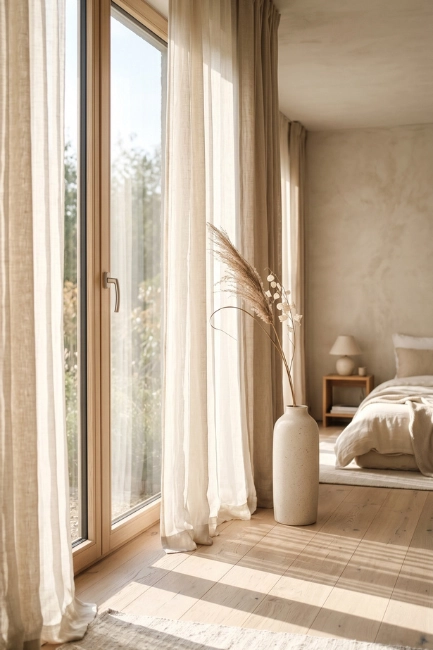
The way light enters a Japandi bedroom is one of the most overlooked design decisions. Skip heavy blackout curtains and synthetic sheers. The ideal solution is layered natural fabric, a sheer linen inner panel that glows softly in the morning, paired with a slightly heavier linen or cotton outer panel in a warm neutral for privacy. Avoid patterns and pleats. The curtain should frame the light, not compete with it. Morning sun filtering through undyed linen creates a warmth no light fixture can replicate.
Earthy Accent Colors That Add Depth Without Disrupting Calm
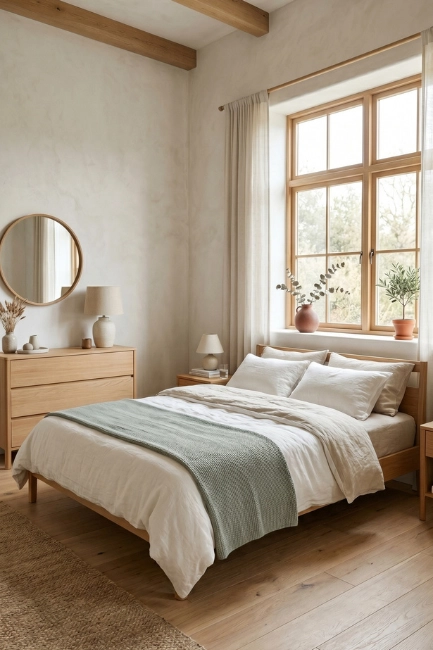
While a Japandi bedroom is predominantly neutral, a carefully placed accent color can deepen its character significantly. The best accent choices are always earthy and desaturated dusty sage, muted olive, aged terracotta, deep charcoal, warm rust, or a faded indigo. Introduce these accents in the smallest possible doses: a single cushion, a folded throw, the glaze of a ceramic lamp base, or the colour of a low floor pot. The accent should feel like it grew there naturally, not like it was placed for visual punctuation. A room that is 95 percent neutral with 5 percent of a quiet earthy accent will always feel more considered and complete than one that is relentlessly monochromatic.
Designing the Bed Wall as a Quiet Focal Point
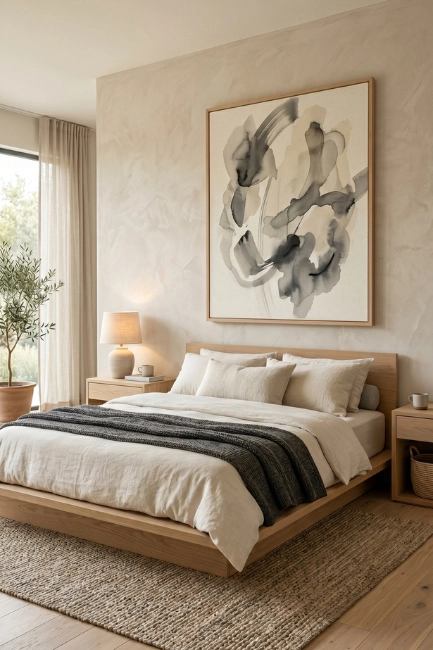
In most bedroom styles, the wall behind the bed becomes a gallery wall, a bold wallpaper feature, or a large statement piece of art. In a Japandi bedroom, the bed wall is treated with significantly more restraint. A single large artwork in muted tones an abstract ink wash, a landscape photograph drained of colour, a simple calligraphy piece hung at the right height above the headboard is entirely sufficient. Alternatively, a limewash or textured plaster treatment on the bed wall alone creates an architectural warmth that needs nothing placed on top of it. The bed wall should be the place where the eye rests, not where it is pulled and redirected. Give it quiet authority.
Bringing In Curves and Soft Lines to Soften the Minimal Framework
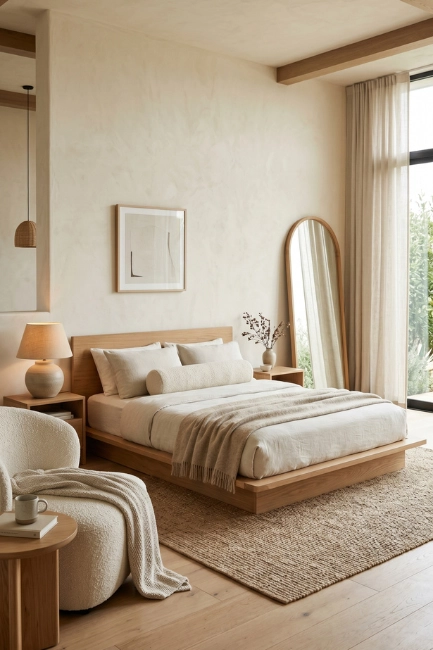
One of the most common mistakes in Japandi bedroom design is going too rigid too many straight lines, too many sharp corners, too much architectural severity. The most successful versions of this aesthetic know how to soften. Introduce curves through a round ceramic lamp base, an oval bedside mirror, an arched reading light, or a gently curved low lounge chair in the corner. Even the shape of a pillow a bolster roll instead of a square cushion adds a softness that breaks the monotony of the rectangular. These curves are not decorative excess; they are a necessary counterpoint to the clean lines of the furniture, and they make the room feel genuinely inviting rather than cold.
Seasonal Japandi Bedroom Transitions: Summer Lightness and Winter Depth
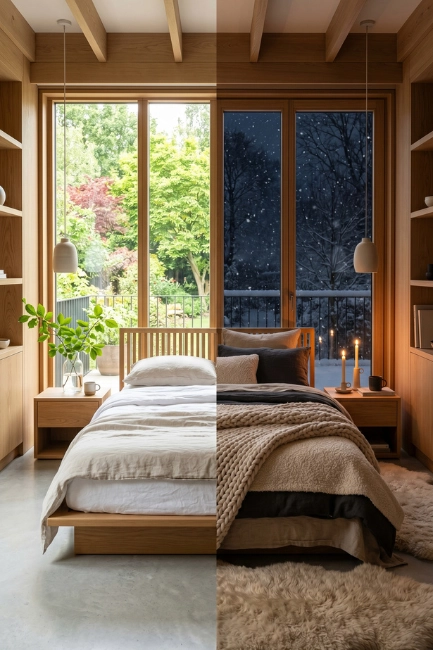
One of the most enjoyable aspects of styling a Japandi bedroom is how effortlessly it transitions between seasons. The base neutral walls, wood furniture, natural fiber rugs stays constant. In summer, strip back to the lightest linen layers, remove the heavier textiles, introduce a single vase of fresh branches or wildflowers, and let the windows stay open for natural air. In winter, layer in the boucle throws, add a sheepskin rug near the bed, introduce deeper tonal cushions in warm charcoal or forest green, and light the candles more readily. The room does not need to be redesigned just re-layered. This seasonal sensitivity is deeply Japandi in spirit and makes the bedroom feel alive throughout the year.
Japandi Bedroom Inspiration for Apartment Dwellers With Rented Walls
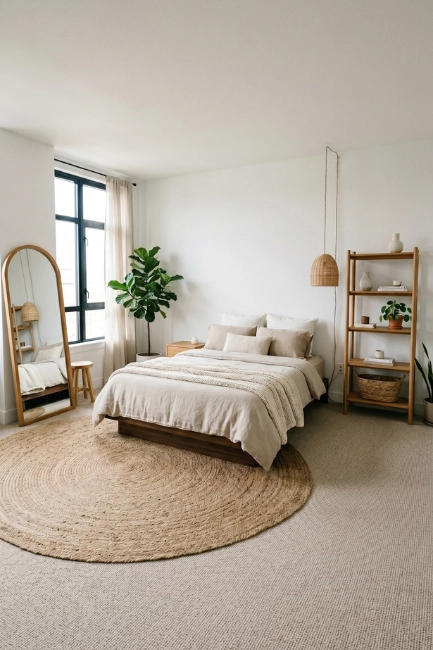
Living in a rented apartment does not mean giving up the dream of a Japandi bedroom. The most important principle here is designing without commitment to the walls: lean a large arched floor mirror instead of mounting one; use freestanding shelving in natural wood instead of drilling; choose a statement pendant light on a cord that can be moved rather than hardwired ceiling fittings. Area rugs over plain carpet, removable peel-and-stick textured wallpaper in the softest clay tones behind the bed, and furniture that looks built-in but is entirely freestanding these are the strategies that make a rental feel genuinely designed. The Japandi spirit of impermanence actually makes it the perfect aesthetic for a home you do not own permanently.
The Quiet Luxury of a Japandi Bedroom Done Right
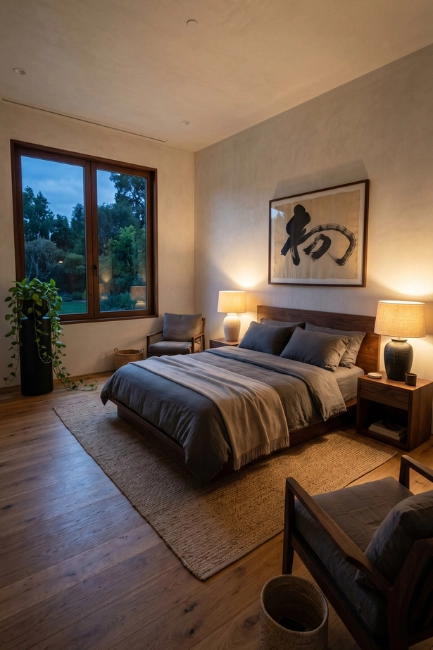
There is a kind of luxury that does not announce itself it simply settles around you, unhurried and certain. It is not the luxury of gold fixtures or crystal chandeliers; it is the luxury of genuinely rested sleep, of a room so considered that nothing jars the eye or the mind, of materials chosen for how they age rather than how they impress on first glance. This quiet luxury is accessible to almost any budget when the principles are applied with discipline. You do not need an enormous room or an expensive renovation. You need clarity of vision, restraint of hand, and the confidence to leave space empty.
CONCLUSION
A Japandi bedroom is more than a design trend it is an invitation to live more intentionally, to choose quality over quantity, and to find genuine rest in a space that has been built with care. Whether you are working with a grand primary bedroom or a compact apartment space, the principles remain beautifully consistent: neutral warmth, natural materials, mindful restraint, and a deep appreciation for the beauty of simplicity. Every idea shared in this article is designed to be adapted to your own home, your own rhythm, and your own version of calm.
At Zendecora, our purpose is to inspire you with modern home decor ideas and the latest interior styling directions and there is no aesthetic we find more timelessly inspiring than the quiet, soulful world of Japandi design. May your bedroom become the sanctuary you deserve.